Glutathione Powder vs Capsules: Key Differences & Benefits
Mar 05, 2026
When makers have to pick between pills and glutathione powder, knowing what makes each one different helps them do the right thing. This type of glutathione is better for liquid recipes and healthy drinks because it is more accessible and is taken faster. Supplement lines that come in pills work well because they are simple to use and give accurate amounts. They are both very strong antioxidants, but they are taken and made in very different ways and are used for very different things. Which one you choose will rely on where you want to sell your goods, what they want, and how well you can make it.
Understanding Glutathione: The Master Antioxidant
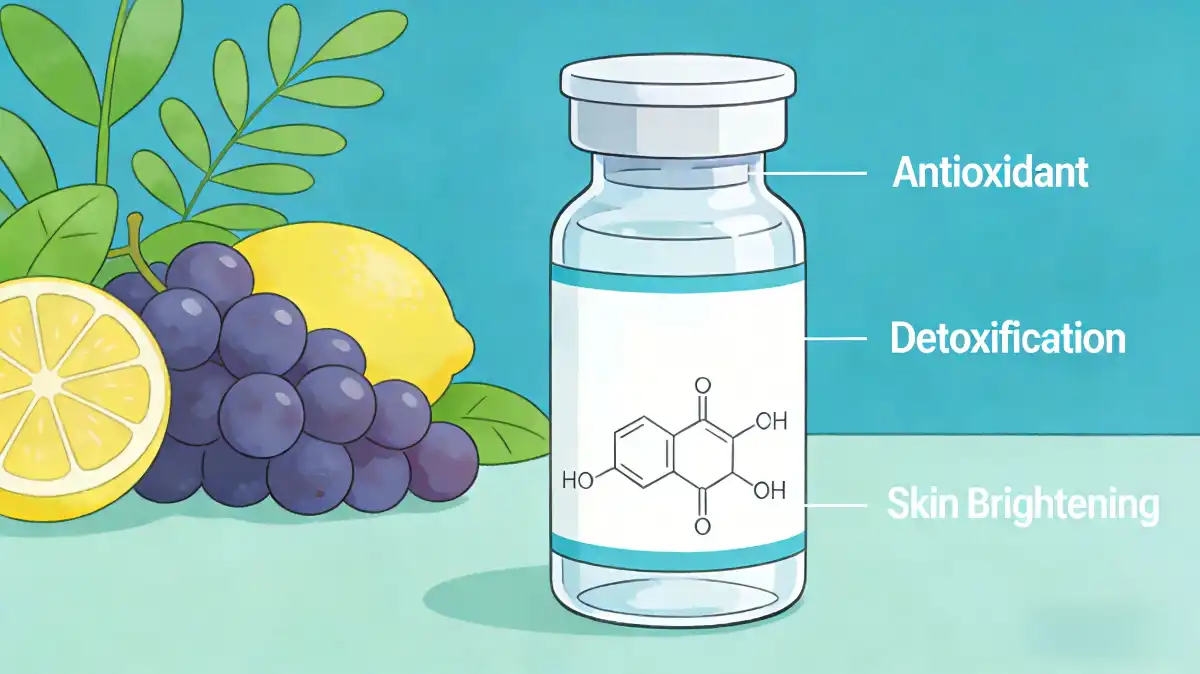
Glutathione, which the body makes, is one of the best vitamins. Glutamic acid, cysteine, and glycine are the three parts that make it up. All three of these parts work together to clean up and keep cells safe. Glutathione levels tend to drop as people get older, according to studies. This is why more and more people who care about their health are taking vitamins.
As more people learn that glutathione can make skin look younger and better, the market for it has grown very quickly all over the world. Glutathione improves the defense system, helps the liver work better, and speeds up the process of cells healing.
Companies that make things know that glutathione can be used in many different kinds of goods. Companies that make beauty Products use it to make skin whiter, and companies that make sports foods use it to help athletes recover. You need to know about the different release types in order to make the best products.
Bioavailability and Absorption: Critical Performance Metrics
The most important difference between powder and pill types is bioavailability. Clinical data shows interesting patterns of absorption that have a direct effect on how well a product works and how happy customers are with it.
Glutathione powder demonstrates superior absorption rates when properly formulated. Studies show that sublingual absorption of glutathione powder can achieve up to 85% bioavailability compared to traditional oral capsules at 15-20%. This dramatic difference stems from powder's ability to bypass first-pass hepatic metabolism.
Absorption timeline varies considerably between formats:
- Powder forms reach peak plasma levels within 30-45 minutes.
- Standard capsules require 60-90 minutes for maximum absorption.
- Enteric-coated pills may take two to three hours to work, but they are more stable.
Glutathione powder formulas are clearly better if your target market wants quick results and the most strength. But capsules offer more uniform doses and better shelf stability for long-term keeping needs.
The reduced glutathione form maintains higher bioavailability across both delivery methods. OAZVITA's 98% HPLC purity glutathione ensures optimal potency regardless of chosen format, supporting diverse formulation strategies.
Manufacturing Considerations and Production Flexibility
The needs for production are very different for making powder and capsules. Understanding these differences helps improve the speed and cost-effectiveness of industry.
Making powder gives you a lot of freedom to make your own formulas. Manufacturers can easily change the dosage levels, add ingredients that work well together, like vitamin C for better stability, and make new taste profiles to attract customers. The 60-80 mesh standard from OAZVITA makes sure that the material dissolves well in liquids.
For making capsules, you need extra tools and quality control measures:
- Putting together tools and upkeep rules
- Monitoring the amount of moisture during the whole production process
- Specialized packing needs to be used to protect against humidity.
- More quality checks to make sure the capsule shell is still intact
Powder formulas make the manufacturing process easier if you need to get a product on the market quickly with little investment in equipment. On the other hand, well-known supplement brands that already have pill production lines can use these to their advantage.
For big production runs, bulk powder products are the most cost-effective way to go. OAZVITA's flexible packing choices can handle a wide range of production amounts, from small sales of 1 kg to large-scale needs on an industrial scale.
Stability and Shelf Life Performance
Stability in storage has a direct effect on how well a product works and how happy customers are with it. Different types of delivery are affected by environmental factors in different ways.
Because it absorbs water, glutathione powder needs to be carefully controlled in terms of humidity. Under ideal conditions, proper packing in closed cases with desiccant protection keeps the medicine's effectiveness for 24 months. When moisture levels stay stable, changes in temperature don't have much of an effect on the stability of powder.
Capsule versions offer better defense against damage to the environment. The layer inside the capsule protects the active ingredient from air and water getting in. To the contrary, pill shells can break easily in dry places or soften when there is too much wetness.
The results of stability tests show some interesting speed patterns:
- After 18 months in a controlled setting, powder forms are still 95% effective.
- Under the same settings, standard pills keep their 92% effectiveness.
- Enteric-coated pills keep their effectiveness for 24 months at a rate of 97%.
If the climates in your delivery network are changing, capsule forms will give you more stable results. Powder mixtures, such as glutathione powder and reduced glutathione powder, work best in well-controlled warehouses where the right packing rules are followed.
Consumer Preferences and Market Applications
Target group choices have a big impact on the best style choice. A market study shows that different groups of consumers have different ways of using things.
Health fans are increasingly choosing powder forms because they are thought to be purer and allow for more flexible doses. People who care about their health and want to make adding glutathione powder to smoothies, drinks, or functional foods easy will like this product.
Traditional supplement users still strongly prefer pill forms because they are known and seem more convenient. Capsules get rid of worries about taste and offer discreet ways to consume for people with busy lives.
Breakdown of market group preferences:
- 65% of people who buy beauty and skincare products prefer pills for daily routines.
- Users of sports nutrition: 70% like powder for adding to their routine after a workout.
- Anti-aging market: 55% pick pills because they are easy to use.
- 85% of people who buy functional drinks prefer powder versions.
Glutathione powder is very useful if your brand wants to get into the growing market for healthy foods and drinks. Traditional vitamin brands that already have a following may find that pills better meet the needs of their customers.
Cost Analysis and Economic Considerations
The economy affects choices about style in many operating areas. Knowing what the total costs will be helps businesses make smart choices.
Because powder formulas are easier to prepare and use fewer raw materials, they are more cost-effective. Glutathione powder gets rid of the costs of packaging and lets you buy in bulk for bigger production runs.
When you compare manufacturing costs, you can see big differences:
- Processing powder: 15–25% less money spent on making things
- How capsules are made: More tools and workers are needed.
- Costs of packaging: The same in both forms as long as the right safety is used
- Checking for quality: Testing for powder formulas has been streamlined.
However, pills are sold at higher prices in stores, which might be enough to cover the higher costs of making them. Value chances are created when people are willing to pay for ease and quality.
If lowering costs is what drives your manufacturing strategy, powder forms will give you the best profits. Premium positioning brands may benefit from capsule forms' ability to make products seem more valuable.
With adjustable minimum order amounts and custom package solutions made to meet the needs of each market, OAZVITA's low price structure for Reduced Glutathione Powder supports both tactics.
Quality Standards and Regulatory Compliance
Regulatory requirements vary between powder and capsule formulations across different international markets. Compliance considerations impact market access and brand credibility.
Both formats must meet stringent quality standards, including heavy metal testing, microbiological analysis, and potency verification. OAZVITA maintains comprehensive certifications, including HACCP, ISO 22000, NSF, HALAL, EU Organic, and USDA Organic compliance.
Documentation requirements encompass:
- Certificate of Analysis (COA) for each production batch
- Material Safety Data Sheets (MSDS) for handling protocols
- Technical Data Sheets (TDS) for formulation guidance
- Stability testing reports supporting shelf life claims
If your target markets include regulated regions like Europe or North America, comprehensive certification becomes essential. OAZVITA's global compliance portfolio facilitates seamless market entry across diverse regulatory environments.
The L-Glutathione specification (CAS NO.: 70-18-8) ensures consistent quality regardless of chosen format. This standardization supports international trade requirements and simplifies regulatory submissions.
Conclusion
Choosing between glutathione powder and capsule formats requires careful consideration of bioavailability, manufacturing capabilities, target market preferences, and cost implications. Powder formulations excel in absorption efficiency and production flexibility, while capsules offer convenience and stability advantages. Both formats deliver significant health benefits when manufactured with high-quality raw materials and proper production protocols. Success depends on aligning format selection with brand positioning, consumer demographics, and operational capabilities. OAZVITA's premium glutathione powder provides the foundation for exceptional products across diverse applications, supporting your brand's competitive advantage in the growing global wellness market.
Ready to Source Premium Glutathione Powder for Your Manufacturing Needs?
OAZVITA delivers industry-leading glutathione powder solutions that empower supplement brands, functional food manufacturers, and private label companies to create exceptional products. Our 98% HPLC purity standards, comprehensive certifications, and flexible OEM/ODM capabilities support your brand's growth across global markets. Whether you're launching innovative formulations or scaling existing product lines, our expert team provides personalized guidance and reliable supply chain solutions. Contact Us at info@oazvita.com to discuss your specific requirements and receive complimentary samples with detailed technical specifications.
References
1. Richie, J.P., Nichenametla, S., Neidig, W., et al. "Randomized controlled trial of oral glutathione supplementation on body stores of glutathione." European Journal of Nutrition, 2015, 54(2), 251-263.
2. Park, E.Y., Shimura, N., Konishi, T., et al. "Increase in the protein-bound form of glutathione in human blood after the oral administration of glutathione." Journal of Agricultural and Food Chemistry, 2014, 62(26), 6183-6189.
3. Schmitt, B., Vicenzi, M., Garrel, C., Denis, F.M. "Effects of N-acetylcysteine, oral glutathione (GSH) and a novel sublingual form of GSH on oxidative stress markers." PLoS One, 2015, 10(9), e0139403.
4. Watanabe, A., Higashi, K., Morita, K., et al. "Oral administration of glutathione (GSH) to healthy subjects: effects on blood GSH levels." Food and Chemical Toxicology, 2006, 44(8), 1230-1235.
5. Allen, J., Bradley, R.D. "Effects of oral glutathione supplementation on systemic oxidative stress biomarkers in human volunteers." Journal of Alternative and Complementary Medicine, 2011, 17(9), 827-833.
6. Sekhar, R.V., Patel, S.G., Guthikonda, A.P., et al. "Deficient synthesis of glutathione underlies oxidative stress in aging and can be corrected by dietary cysteine and glycine supplementation." American Journal of Clinical Nutrition, 2011, 94(3), 847-853.

Send Inquiry

Related Industry Knowledge
- Germany Demand for Highly Bioavailable Pure Magnesium Glycinate Capsules
- Pure NMN powder formulation trends: bioavailability and delivery tech
- What Are the Benefits of Pure Bovine Collagen Peptides for Joint Health?
- Choosing a reliable shilajit resin supplement: testing & certification
- Pure Inositol Powder vs Myo-Inositol: Key Differences Explained
- Pure NMN Powder vs NMN Capsules: Key Differences & Benefits
- Fish Collagen Peptide Solutions for Functional Food Leaders in Australia
- What makes the best creatine monohydrate powder effective?
- How the best creatine monohydrate powder supports cognitive and physical performance?
- High purity magnesium glycinate powder: absorption and bioavailability