
A Guide To Using Hydrolyzed Keratin Protein Powder
Jul 09, 2026
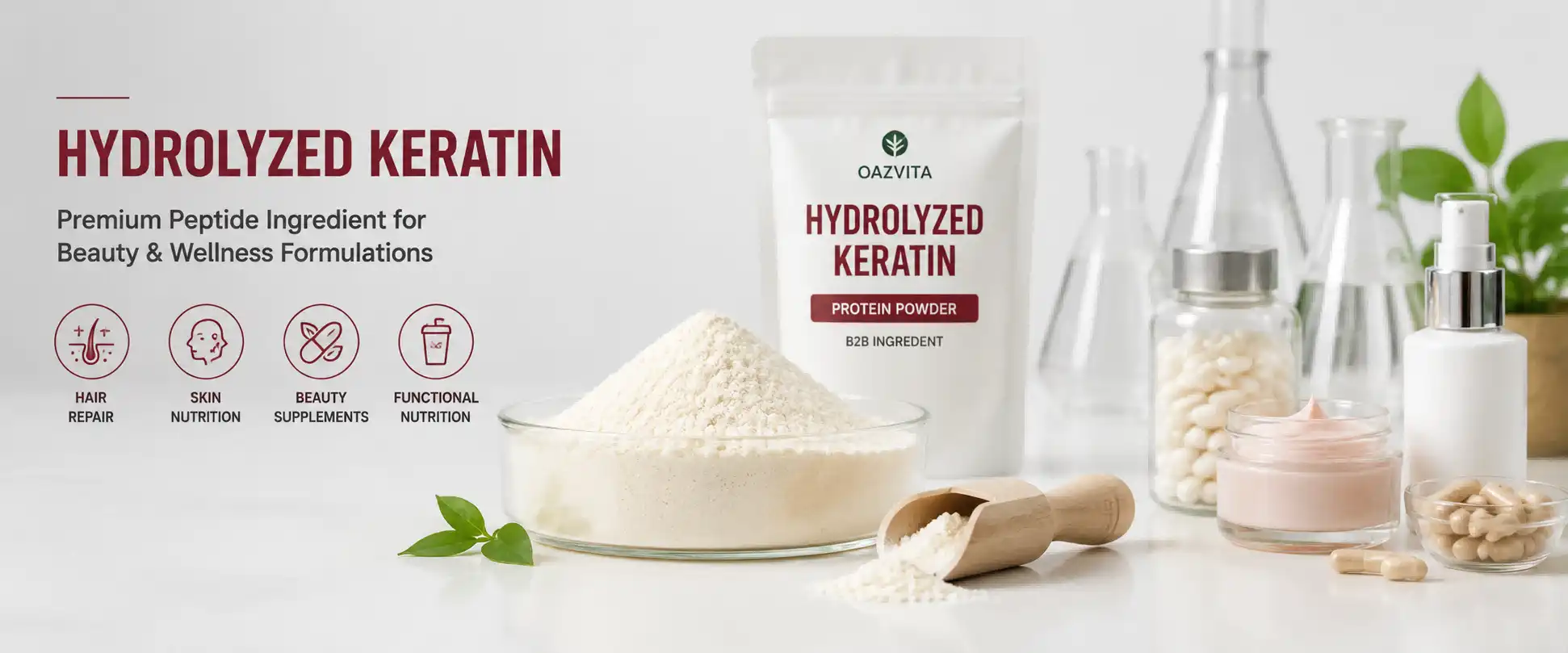
Hydrolyzed Keratin Protein Powder Hydrolysed Keratin Protein Powder is a new biomaterial that is breaking new ground for B2B formulators who want to make advanced skin and hair care Products. This powder is made by controlled enzymatic or acidic hydrolysis of wool or feather keratin. It is more bioavailable than native keratin structures. Its peptides with lower molecular weights (400 to 33,000 Daltons) reach deep into the hair cortex and protect the surface by making films. For supplement brands, functional food makers, and nutricosmetics businesses, knowing the right way to use their products is important for keeping the recipe stable, following the rules, and making claims about performance that can be measured and used to set their products apart in a crowded market.
Understanding the Molecular Architecture of Keratin Peptides
Native keratin is a stiff protein that doesn't dissolve in water and is held together by a lot of disulfide bonds. Manufacturers use hydrolysis to split these links into peptide pieces that can dissolve in water. The amino acid profile that was made is very similar to human hair; it is high in cysteine, glycine, and proline. Because of this molecular similarity, the powder can fill in tiny gaps in damaged hair cuticles and make the hair more flexible again.
Molecular weight has a direct effect on how something works. Fragments smaller than 1,000 Daltons can get into the brain and fix protein structures inside it. There is a balance between penetration and surface adhesion in peptides that are between 1,000 and 3,000 Daltons. Larger chains (above 3,000 Daltons) are very good at film-forming, which protects against environmental stressors. The amphoteric nature of keratin amino acids makes them useful for both dermal and oral uses, which is good for sports nutrition companies that make healing mixes.
Quality control is very important. High-purity amino acids with 90% HPLC-verified content make sure that all production batches work the same way. GMP-certified facilities keep things from getting contaminated, which is especially important for supplement brands that have to deal with FDA or EFSA scrutiny.
Formulation Integration Strategies for Different Product Categories
Hair care products are still the main area of application. Most shampoos and conditioners have doses between 0.5% and 5.0%. Lower amounts are used in daily-use products so that they can fix hair over time without pulling it down. In intensive repair treatments, higher percentages are used, and heat activation is often used to speed up peptide absorption.
Anionic surfactants, which are often found in cleansing bases, work very well with Hydrolyzed Keratin Protein Powder. Its amphoteric traits keep the formula clear and stop it from separating, which is important for presenting a premium product. Functional beverage companies that want to make protein-rich drinks like the neutral taste profile, which means that flavours don't have to be hidden as much as they do with collagen protein alternatives.
Nutricosmetic companies that make beauty-from-within products add 500 to 1,500 mg of keratin peptides to each dose. When enclosing powder in a capsule, it's important to keep the moisture level low because the powder's ability to absorb water can damage the shell. The material is great at mixing with water, which makes powder blends for smoothies or functional foods work better. However, if you stir it quickly, it will stay mixed for a while.
Concentrations of 1% to 3% are used in skin care products. The peptides work as natural moisturisers by imitating the amino acid structure of skin to help it hold on to more water. Anti-aging serums use keratin and antioxidants from plants to help repair damaged cells and fight free radicals. This mix is liked by clean-label beauty brands that want to use non-GMO, tracked products for health-conscious customers.
Optimizing Dissolution and Stability Across pH Ranges
Using the right dissolution method has a direct effect on how well the final product works. The powder melts best when mixed slowly with water that is 40 to 50°C. Peptide structures can become denatured when they are stirred quickly or heated above 60°C, which lowers their cellular activity. Private label buyers who are making turnkey formulas should standardise the mixing process to make sure that each batch is the same.
The pH range of stability is from 4.5 to 7.5, which is wide enough for most cosmetic and nutritional uses. Peptides may clump together in acidic conditions below pH 4.0, while hydrolytic degradation may happen in alkaline conditions above pH 8.0. Using citric acid or sodium citrate as a buffer, systems keep the right pH levels throughout the shelf life.
It's important to be careful when choosing a preservative. It's fine for phenol and potassium sorbate systems to work together without precipitation. Formulators should stay away from EDTA amounts that are too high because they can absorb the cysteine groups that are needed for hair binding to work. Before production is scaled up, stability tests at high temperatures and high humidity (75% relative humidity) make sure that the preservatives are working well.
Methods of cold processing keep all of the bioactivity. Heat-sensitive peptide bonds work better when they are added at room temperature during the final stages of formulation. This method works especially well with enzyme-sensitive ingredients that are common in plant extract mixes. It lets functional food companies make health products that work better together without lowering the effectiveness of any individual ingredient.
Regulatory Compliance and Certification Requirements for Global Markets
Certain certifications are needed for international markets. Food safety management systems must be certified by HACCP and ISO 22000 in order for dietary supplement brands to enter the European Union. Retailers in North America are asking for NSF approval more and more because it offers third-party proof of label claims.
The HALAL approval opens up markets in the Middle East, where religious rules about food and drink control the use of supplements. Organic certifications from the USDA and the EU are for high-end customers who want to buy food that is free of pesticides and GMOs. Keratin from wool is considered organic if it comes from certified farms that treat their animals well.
Each batch of Keratin Protein Powder comes with a certificate of analysis (COA) that lists the number of microbes, heavy metals, and amino acids that were used. These papers are needed by exporters and distributors to get goods through customs and make sure the quality of the goods later on. Handling, storage, and emergency procedures are covered in MSDS sheets, which are very important for warehouse workers who deal with bulk ingredients.
The TDS documentation lists technical details like particle size distribution, solubility curves, and moisture content. Formulation scientists can use this information to make models of how the product will behave during the scale-up stages. Private label buyers get full technical support that speeds up product launches and lowers the risks of having to change the formula.
Storage Protocols and Shelf Life Management
Peptides stay intact when stored in cool, dry places. The best temperatures are between 15°C and 25°C, and the humidity should be less than 60%. The powder needs to be packed in a way that keeps air out, because wetness getting in causes it to clump and become less soluble. Laminate pouches that can be resealed or drums that are sealed with desiccant packets make things last longer.
If stored correctly, it can last for 24 months. Oxidation is the main process of breakdown, especially for amino acids that contain sulphur. Oxygen exposure is kept to a minimum by flushing the package with nitrogen. For best results, containers should be resealed right away after being opened and the contents should be used within three months.
Peptide chains break apart faster when they are exposed to light. Photodegradation can be stopped with opaque or amber packaging. This is especially important for clear finished goods that are shown off in stores with bright lights. Brands that stress clean labels might want to think About Using extra packaging that blocks UV light to keep their potency claims true across all channels of distribution.
International shipping involves changes in temperature, so strong packing is needed. Thermal insulation and temperature-monitoring tools help wholesalers make sure that the goods are still good when they arrive. Speedy air freight is best for summer shipments to tropical areas because it keeps the goods from being exposed to too much heat that could damage them before they get to their final destinations.
Addressing Common Implementation Challenges
Achieving the best dose combines effectiveness with low cost in Keratin Protein Powder. Higher concentrations give faster, more noticeable results, but they also make the cost of formulation go up. Moderate amounts can work well for brands that want to appeal to price-conscious customers when combined with active ingredients that work well together, such as panthenol or amino acid complexes.
Manufacturing variations can sometimes cause problems with solubility. Differences in particle size affect how quickly things dissolve. Smaller particles hydrate more quickly, but they may make dust when they're handled. When buying, specifying particle size ranges (usually 80–200 mesh) ensures that the processing will work with the equipment that is already in place.
Formula cloudiness means that some ingredients don't work well with others. Anionic keratin peptides can form crystals when cationic polymers are used for conditioning. This problem can't happen if you dissolve the keratin in water first and then add the conditioning agents. When functional food developers mix protein powders with acidic fruit extracts that need to be carefully adjusted for pH, they face similar problems.
The smell is different depending on the source material and how it was processed. Some made from wool have mild lanolin notes, and some made from feathers may have slightly sulphurous undertones. Aromatherapy or natural masking agents like vanilla extract can help with sensory issues without going against the "clean label" positioning that many brands value.
Conclusion
When B2B brands learn how to use hydrolysed keratin protein powder properly, they can make high-performance goods that are backed by scientific evidence. When it comes to hair repair products and beauty supplements that you eat, choosing the right molecular weight, using the right manufacturing methods, and following the rules can give you an edge in a crowded market. The material can be used in a lot of different areas, and it has strong supply chain skills, which makes it an important factor for brands that want to give measurable results. Strategic partnerships with certified suppliers guarantee consistent quality, faster time-to-market, and the technical support needed for new ideas in wellness sectors that are always changing.
Partner with OAZVITA for Premium Hydrolyzed Keratin Solutions
OAZVITA stands as a trusted hydrolyzed keratin protein powder supplier, offering GMP-certified, internationally compliant ingredients for supplement brands, functional food manufacturers, and nutricosmetics companies. We provide flexible MOQs, comprehensive COA documentation, and free samples to validate formulation compatibility. Our 24/7 global support team and fast DHL shipping ensure seamless project execution. Contact info@oazvita.com to discuss custom keratin peptide solutions tailored to your brand requirements.
References
1. Robbins, C. R. (2012). Chemical and Physical Behavior of Human Hair. Springer Science & Business Media.
2. Feughelman, M. (1997). Mechanical Properties and Structure of Alpha-Keratin Fibres: Wool, Human Hair and Related Fibres. UNSW Press.
3. Bolduc, C., & Shapiro, J. (2001). Hair care products: waving, straightening, conditioning, and coloring. Clinics in Dermatology, 19(4), 431-436.
4. Popescu, C., & Höcker, H. (2007). Hair—the most sophisticated biological composite material. Chemical Society Reviews, 36(8), 1282-1291.
5. Fernández, E., Barba, C., & Coderch, L. (2013). Hydrolyzed keratin: uses in cosmetics and pharmaceutical formulations. International Journal of Cosmetic Science, 35(3), 227-233.
6. Swift, J. A. (1997). Morphology and biochemistry of human hair. In Formation and Structure of Human Hair (pp. 149-175). Birkhäuser Basel.

Send Inquiry


Related Industry Knowledge
- Is acai good for cortisol?
- Pure Cacao Benefits: Why It's More Than Just Chocolate?
- How to Make Super Greens Powder Packets Part of Your Daily Routine
- The Ultimate Chewable Collagen Gummies Guide
- Best creatine monohydrate powder: mixing, absorption and bioavailability tips
- How to Choose the Best Pure NAD+ Powder Supplier in 2026?
- Best Pure MCT Powder Uses for Energy Boost in the Fitness Industry
- Multi-Region Supply Strategies for NAD+ Ingredients in Asia
- Brazil Consumer Trends Driving Premium Black Seed Oil Softgels
- What Is Pure Inositol Powder and How Does It Support Mental Health