Ashwagandha: Uses and Benefits + Tasty Recipes
Sep 23, 2026
Ashwagandha (Withania somnifera), widely recognized as Indian Ginseng, has earned its place as one of the most sought-after botanical adaptogens in modern nutraceutical manufacturing. Organic ashwagandha extract powder—standardized to measurable withanolide levels via HPLC analysis—represents a significant advancement over raw root material, offering formulators consistent potency, cleaner microbial profiles, and reliable bioactive density. Whether you are developing adaptogenic capsules, functional beverages, or sports recovery blends, this concentrated botanical extract delivers what raw biomass simply cannot: precision and reproducibility at scale.
Understanding Organic Ashwagandha Extract Powder
What Makes It Different from Raw Root Powder
Not every ingredient in ashwagandha is the same. The amount of withanolide in raw root powder varies a lot—sometimes it's as low as 0.1%—which makes formulation targeting very hard. Organic ashwagandha extract powder, on the other hand, goes through a normal water or hydro-ethanolic extraction process that raises the concentration of withanolides to levels that can be checked, usually between 2.5% and 10%, as shown by HPLC. Manufacturers who work with waste that hasn't been removed no longer have to guess what to do.
Withanolides are steroidal lactones that are only found in large amounts in Withania somnifera. A study released in the Journal of the International Society of Sports Nutrition in 2015 proved that standardized ashwagandha root extract helped people who resistance trained recover muscles and gain strength more than a placebo. This level of proven, compound-specific effectiveness can only be achieved with properly standardized extracts, not raw powders.
There are a lot of practical benefits for B2B formulators. High bulk density lets at least 500 mg of active ingredient fit into a standard-sized pill without using too many fillers. Synthetic pesticides, herbicides, and biosolid amendments are not allowed in organic farming. This greatly lowers the risks of heavy metals and agrochemical residues, which is necessary for markets with rules, like the U.S. and EU.
Comprehensive Buying Guide for Organic Ashwagandha Extract Powder
Key Certifications and Sourcing Criteria
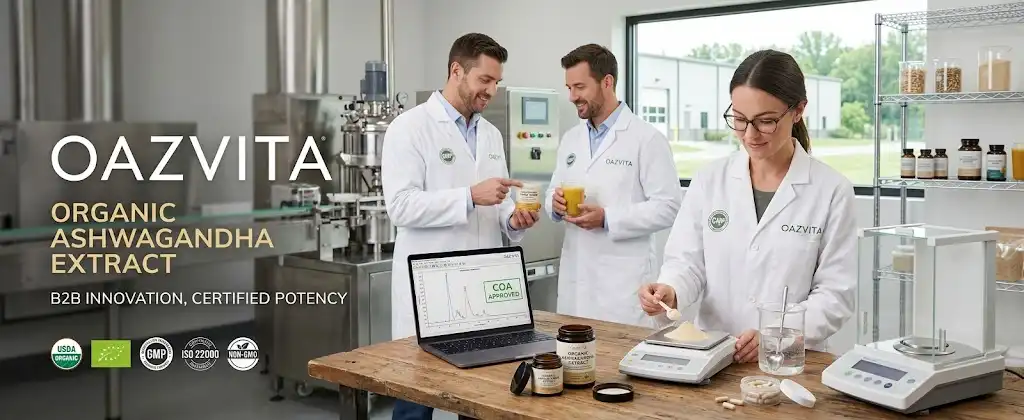
Buying decisions in this area depend on how trustworthy the certifications are and how open the suppliers are. When looking for a supplier of organic ashwagandha extract powder, it's best to go with one that has GMP compliance, ISO 22000 food safety management, and both USDA and EU organic certifications. These badges can't be used in place of each other because they each cover a different level of quality control, from growing the crops to preparing them.
Here are the most important things that make a good source of ashwagandha extract:
- Withanolide testing methodology: Insist on HPLC-verified potency. Gravimetric methods measure a broader class of lactones, often inflating stated percentages. An ingredient claiming 10% by gravimetric analysis may only contain 2.5% active withanolides by HPLC—a meaningful gap for formulators targeting clinical dose ranges.
- Extraction solvent compliance: To retain organic certification, extraction must use only water or certified organic ethanol. Solvents such as acetone or hexane immediately compromise organic status and introduce residue risks that violate multiple international regulatory frameworks.
- Third-party documentation package: A credible supplier provides a complete dossier: Certificate of Analysis (COA), Material Safety Data Sheet (MSDS), Technical Data Sheet (TDS), and relevant certifications. Accepting verbal assurances without documentation is a supply chain liability.
These standards separate providers that are compliant and do a good job from those that don't do as well on regularity in potency or regulatory readiness. Each criterion must be confirmed in order for international distributors and contract manufacturers to protect both product quality and market access.
Practical Usage and Dosage Guidelines for Businesses
An important part of evidence-based formulation is recognizing the link between the concentration of the extract and the dose that is intended. The daily amounts used in most clinical studies of Withania somnifera extract have been between 300 mg and 600 mg of a standardized extract. This clearly translates to per-capsule specs when working with 2.5% to 5% withanolide extracts.
In several randomized controlled studies, ashwagandha root extract has been shown to help boost testosterone levels and speed up muscle repair after exercise for sports nutrition brands. A 2019 study published in Medicine & Science in Sports & Exercise found that people who took supplements had much better muscle power and recovery signs. This makes the ingredient a strong candidate for use in pre-workout and recovery blends.
Water absorption is a big problem for companies that make functional drinks. In RTD formats, standard spray-dried extracts may show some sedimentation. For drinks that need to be clear, water-soluble grades that have been processed with organic carriers or microencapsulated versions can help without compromising organic compliance. Taste masking is still very important. The natural bitterness of concentrated withanolides goes well with honey-, cocoa-, or chai-based flavor systems. This is something that OEM product developers should think about when they are prototyping formulas.
U.S. marketers usually use structure/function claims about helping with stress and physical endurance to stay within the rules. For Products made for the EU market, you need to know about new differences in food regulations based on the quantity of the extract. It is still necessary for both markets to have correct labeling, dosage information, and allergen statements.
Top Organic Ashwagandha Extract Powder Brands and Market Trends
Grand View Research says that the global ashwagandha market will grow at a compound annual growth rate (CAGR) of over 10% until 2030. In 2022, it was worth About UsD 897 million. This trend shows that there is steady demand from businesses in the Dietary Supplements, sports nutrition, beauty supplements, and functional food sectors working with an ashwagandha herb extract manufacturer.
Leading approved suppliers have set themselves apart by investing in clear supply chains, organic audits at the farm level, and new extract grades that are specifically designed for different use cases, like making gummies, capsules, or beverage integration. More and more, people who buy things are looking closely at not only the status of the certificate, but also the infrastructure for tracking it, such as GPS-tagged farm plots, archives of batch-level testing, and systems for keeping records that are ready for audits.
Certification as vegan and non-GMO has become a standard requirement for buying things in North America and Europe. End consumers' push for "clean labels" has made brands list ingredients in shorter forms. This makes a single high-potency extract even more valuable than a mix of raw botanicals.
Easy and Tasty Recipes Featuring Ashwagandha Extract
Managing the flavor is still a problem when it comes to adding ashwagandha to food. The high amount of withanolide in the extract gives it a strong earthy taste that makes it useful for medicine. This problem can be solved in consumer product development by strategically pairing flavors.
Here are three application ideas that can be used by OEMs or private labels:
- Adaptogenic Golden Milk Blend: Combine ashwagandha root extract powder (standardized, 2.5% withanolides) with organic turmeric, black pepper extract, and coconut milk powder. The fat-soluble matrix improves absorption while complementary spice notes fully mask the bitter botanical profile. This format suits premium sachet or single-serve pouch SKUs targeting wellness-focused retail channels.
- Recovery Protein Bar Matrix: Integrate ashwagandha extract at 300–500 mg per bar into a whey or pea protein base alongside cocoa, oats, and natural sweeteners. The strong chocolate or nut flavor profile effectively neutralizes the withanolide bitterness. This positions well for sports nutrition private label lines aiming for clean-ingredient, high-performance positioning.
- Functional Relaxation Tea Blend: Pair water-soluble ashwagandha extract with chamomile, passionflower, and lemon balm in a pyramid sachet format. The herbal base balances taste and creates a coherent adaptogenic-plus-calming narrative for evening wellness products targeting stress support positioning.
These ideas can be easily translated into SKUs that can be sold. When OEM makers use water-soluble extract grades, they can give the same dose in all three forms without affecting stability, which is a huge benefit when going from pilot to production.
Conclusion
Organic ashwagandha extract powder is no longer just used in traditional plant medicine. It is now a well-studied, widely used ingredient in food and medicine. For supplement brands, sports nutrition companies, functional food makers, and people who make beauty supplements, the extract grade, withanolide standardization method, and source certification stack they choose affects both how well the product works and whether it can be sold legally. Getting high-quality, certified organic Withania somnifera extract from a company that has been vetted and has all the paperwork ready is still the most important thing you can do when buying to make an adaptogenic product line that people will believe.
FAQ
1. What is the standard withanolide percentage in quality ashwagandha extract?
Extracts from reliable sources contain 2.5% to 10% withanolides, which can be proven by HPLC analysis. Gravimetric testing gives false results because it measures all lactone-type substances, not just active withanolides. Always ask your supplier for COA data that is specific to HPLC.
2. Is organic ashwagandha extract powder suitable for beverage manufacturing?
In RTD forms, standard spray-dried extracts may settle to the bottom. Water-soluble grades are made using enzymes or organic carrier spray-drying to make them, and they are designed to keep drinks stable and clear without affecting their organic certification status.
3. What shelf life and storage conditions should formulators plan for?
If you store ashwagandha extract below 25°C in airtight, moisture-barrier packaging that is properly sealed, it will stay effective for 24 months. The powder absorbs water and will harden or break down if it comes in contact with moisture. This will lower the amount of active markers and make the flow properties worse during encapsulation.
4. Does organic certification affect extraction method options?
For organic certification, the only solvents that can be used for extraction are water or approved organic ethanol. Chemical solvents like hexane or acetone are not allowed and would immediately make the product not organic and not in compliance for regulated market entry.
Source Your Ashwagandha Extract Through OAZVITA — Certified, Reliable, Ready to Ship
Brands and makers in North America, Europe, and other places buy high-quality organic ashwagandha extract powder from OAZVITA. Our product has been certified by the USDA, the EU, HACCP, ISO 22000, NSF, and HALAL. We offer free samples, full paperwork packages, and wait times of 1–5 working days. As a reliable company that makes organic ashwagandha extract powder, we work with OEM, private label, and large trade customers, and our minimum order quantity (MOQ) starts at 1 kg. To get your sample today, email us at info@oazvita.com.
References
1. Wankhede, S. et al. — Journal of the International Society of Sports Nutrition, 2015.
2. Ziegenfuss, T.N. et al. — Journal of the International Society of Sports Nutrition, 2018.
3. Raut, A.A. et al. — AYU: An International Quarterly Journal of Research in Ayurveda, 2012.
4. Grand View Research — Ashwagandha Market Size, Share & Trends Analysis Report, 2023.
5. Pratte, M.A. et al. — Journal of Alternative and Complementary Medicine, 2014.
6. Choudhary, D. et al. — Medicine & Science in Sports & Exercise, 2019.

Send Inquiry
Related Industry Knowledge
- Rhodiola Rosea: Exploring Health Claims Behind a Popular Supplement
- Kava for Beginners: Powder vs Extract vs Capsules Guide
- Chicken Collagen Peptides vs Bovine Collagen: Key Differences Explained
- Ginseng Extract Powder (Panax Root) – Benefits, Uses
- Why Pure Quercetin Powder Is a Bestseller in Nutraceuticals?
- 6 Health Benefits of Hericium Erinaceus Extract Powder
- Hericium Erinaceus Extract Powder: Dosage, Science & How to Choose
- What is coconut milk powder, and how do we make it?
- Does Pure Raw Cacao Powder help with cortisol?
- Shilajit Drops Benefits, Uses: The Ayurvedic Secret to Strength, Energy & Longevity