
Choosing a reliable shilajit resin supplement: testing & certification
Mar 17, 2026
Selecting a trustworthy Products/shilajit-resin-supplement">shilajit resin supplement requires a thorough evaluation of testing protocols and certification standards. The global market expansion of Himalayan Shilajit Products has created both opportunities and challenges for B2B procurement professionals. Quality assurance through verified testing and recognised certifications ensures product authenticity, purity, and regulatory compliance. This comprehensive guide examines essential criteria for evaluating suppliers, understanding certification frameworks, and implementing quality control measures that protect your brand reputation while meeting international regulatory requirements.
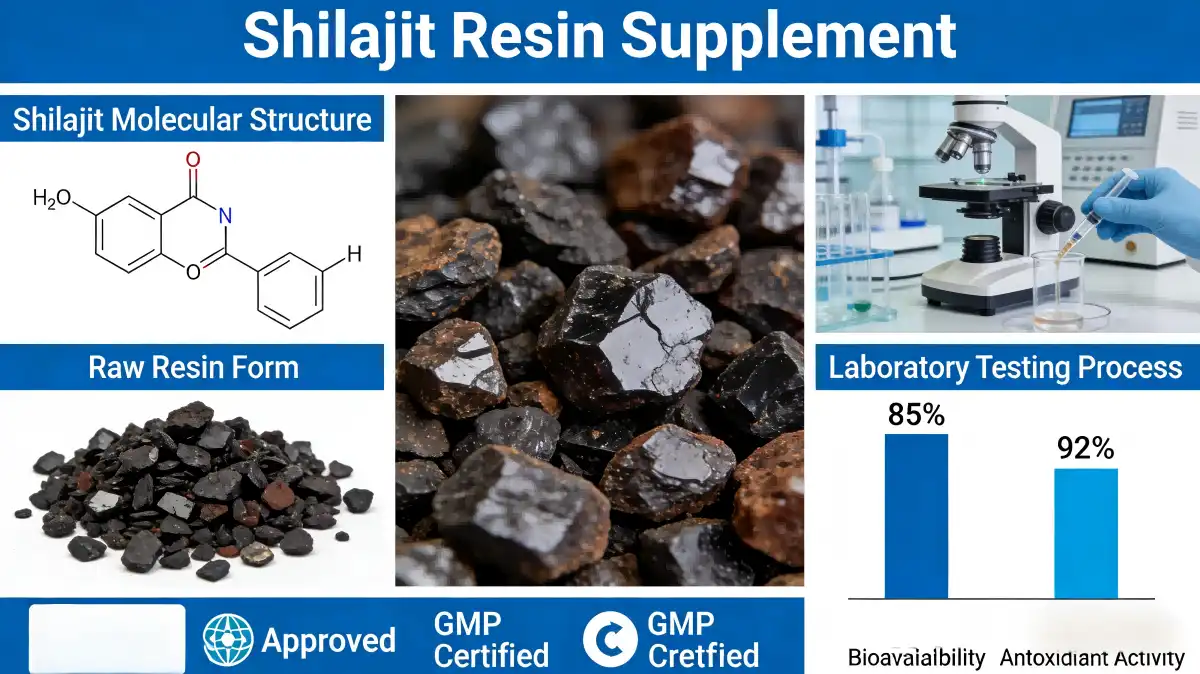
Understanding the Need for Reliable Shilajit Resin Supplements
Shilajit-based supplements are becoming more popular in the nutritional business, but this has also led to a rise in the number of fake and altered supplements. Fulvic acid, humic substances, and minor minerals are some of the beneficial compounds found in real shilajit wood. These compounds work together to give the vitamin its healing properties. If these things aren't there or aren't present in enough amounts, the product might not work as well or even be bad for people's health.
Supplements you can't trust often don't have enough of the healthy ingredients that are meant to help you or have fillers that are made of chemicals or heavy metals. There are effects of buying cheap things besides just thinking about quality. When bad items hit the market, B2B buyers might break the law, have to send things back, and lose a lot of money. Because it can take years to fix damage to a brand's image, it's very important to check out sellers before you hire them.
Quality Assurance Through Standardised Testing
Today's science methods allow us to exactly explain what shilajit resin is made of. Researchers use high-performance liquid chromatography (HPLC) to find and test the amount of fulvic acid in a product. This is a key way to tell how good the product is. Fulvic acid amounts in real shilajit wood products are generally between 15 and 20%. Fulvic acid is good for your health in many ways, like keeping your metabolism in check, fighting fatigue, and protecting cells from damage. It also helps your defence system and makes your brain work better.
A chemical fingerprint can be made with Fourier-transform infrared (FTIR) spectroscopy that can tell the difference between real and fake shilajit. This method finds unique groups of molecules that can only be found in shilajit that has been handled naturally. This lets buyers know for sure that the item is real and protects them from fakes that cost a lot of money.
Key Testing & Certification Standards for Shilajit Resin Supplements
Multiple testing methods that look at different aspects of a product's safety and effectiveness are needed for a full quality review of Shilajit Resin Supplement. When used together properly, each testing method gives specific information about the stability of the product, making a full quality picture.
Essential Safety Testing Protocols
Testing for harmful bacteria, yeast, and mould on goods using microbiology makes sure they meet strict safety standards. The number of plates, E. coli detection and Salmonella screening keep people from getting sick from food and show that manufacturers follow good manufacturing practices. Different places have different acceptable limits, but goods should always have microbial numbers that are well below the maximums allowed by law.
Heavy metal analysis finds amounts of lead, mercury, cadmium, and arsenic that could be harmful, which may build up in natural goods that come from polluted areas. Modern testing methods, like inductively coupled plasma mass spectrometry (ICP-MS), can measure accurately down to the parts-per-million level, making sure that safety standards around the world are met.
International Certification Frameworks
Several licensing programmes offer third-party checks of the safety and quality of products and the processes used to make them. Good Manufacturing Practice (GMP) approval shows that factories follow regular production standards, keep accurate records, and use enough quality control methods. Manufacturers who are GMP-certified use organised methods of production that lower the risk of contamination and make sure that each batch is the same.
ISO 22000 approval is all about food safety management systems and gives detailed plans for analysing risks and finding key control points. For this certification to stay valid, there must be regular audits and methods for ongoing growth. These steps boost quality assurance over time. Having ISO 22000 approval shows that a business is committed to worldwide quality standards that make it easier for products to be sold in markets around the world.
Organic approvals like USDA Organic and EU Organic give you more peace of mind about how the food is grown and processed. For these approvals to be valid, strict organic production standards must be followed. For example, synthetic pesticides, fertilisers, and processing tools that could change the purity of the product must not be used.
Third-Party Laboratory Verification
Independent lab testing is a fair way for manufacturers to back up their claims about the quality and makeup of their products. Third-party labs keep their licenses up to date with groups like the International Organisation for Standardisation (ISO) and show they are skilled by taking regular tests of their abilities.
Certificate of Analysis (COA) papers show full test results for every production batch, including the amount of active ingredients, contaminants, and microbes found. These papers leave audit trails that help businesses follow the rules and let people keep track of lots all the way through the supply chain. Reputable makers give COAs when asked and keep full records of all tests for regulators to look over.
Evaluating Shilajit Resin Suppliers and Brands
When evaluating a supplier, you need to look at their manufacturing skills, quality processes, and business practices that are good for building long-term relationships. Because making shilajit resin supplements is so complicated, providers need to have a lot of specialised knowledge and high-tech quality control systems.
Manufacturing Process Evaluation
Traditionally, shilajit is made by carefully cleaning the raw materials that are taken from rock formations high in the mountains. Real processing methods keep medicinal chemicals while getting rid of impurities and contaminants. Modern facilities use both old-fashioned knowledge and cutting-edge methods of cleaning, like filtration, concentration, and standardisation, to make sure that the quality of the products is always the same.
Controlling the temperature during processing has a big impact on how stable and effective the result is. Too much heat can break down sensitive chemical molecules, which makes therapies less effective. Leading producers use low-temperature processing methods that keep the structure of molecules while meeting the standards for cleanliness.
Supplier Certification and Compliance
A full study of a supplier looks at the facility's certifications, past following of the rules, and quality control systems. Implementing HACCP (Hazard Analysis and Critical Control Points) shows organised ways to keep food safe by finding and managing possible risks throughout the production process.
Halal certification meets the religious dietary needs of Muslim customers, making the market more accessible in places where it is desired or needed. To get this approval, the ingredients, preparation methods, and building practices have to be checked to make sure they follow Islamic dietary rules.
Supply Chain Transparency and Traceability
Traceability systems that work well can keep track of goods from where the raw materials come from to how they are packaged at the end. This lets companies quickly respond to quality problems and regulatory questions. Leading providers keep accurate records of where their raw materials come from, how they are processed, and how they are distributed, which allows for full lot tracking.
The authenticity of raw materials for Shilajit Resin Supplement starts at the beginning, with checking the places where they were collected and the times of the year that affect the makeup of shilajit. When it comes to quality control and tracking, suppliers who work directly with collectors are often better than those who use middlemen like dealers.
How to Verify and Test Shilajit Resin Supplements Before Procurement?
Multiple testing methods that look at different parts of a product's safety and trustworthiness are needed for effective quality proof. This thorough method gives you faith in what the seller says and finds possible quality problems before they hurt your business.
Visual and Sensory Evaluation
Shilajit resin that is real has a certain look, feel, and smell that can be quickly identified by experts. At room temperature, good resin is shiny and looks dark brown to black. Its consistency is like tar. When heated, the cloth should soften and become bendable without losing its strength.
A unique earthy smell with mineral notes means that the product was processed and stored correctly. Products that smell like chemicals, have strange colours, or don't have a uniform texture could be adulterated or handled incorrectly, which lowers their quality and safety.
Chemical Composition Analysis
Quantification of fulvic acid is the most important way to tell if a shilajit resin supplement product is real and effective. The fulvic acid level in OAZVITA's Himalayan shilajit products is always 20%, so the therapeutic effects are the same from batch to batch. This standardisation makes it possible for makers of finished goods to predict the effects of formulations.
Mineral profile research finds important trace elements in shilajit, like iron, copper, zinc, and manganese, which help the healing qualities of the herb. Real products have a wide range of minerals that come from their different natural sources, while fake products usually don't have this variety.
Contaminant Screening
As part of a full chemical analysis, heavy metals, herbicide residues, and mycotoxins that could make the product unsafe are tested for. Modern analytical methods can find pollution at very low levels, which means that goods are guaranteed to meet or beat safety standards set by the government.
Microplastic contamination is becoming more of a problem in natural goods, especially those that come from places where people might be exposed to plastic waste. Microplastic bits can be found and measured using advanced testing methods, which ensure that goods meet changing safety standards.
Procurement Insights: Ensuring Long-Term Supply Security and Quality
Strategic purchase planning takes into account both short-term quality needs and long-term business goals, such as controlling costs, making sure supplies are safe, and following all regulations. A good buying strategy, like incorporating a Shilajit resin supplement, takes a lot of things into account and sticks to high standards at all times.
Contract Terms and Quality Specifications
Good contracts for buying things include clear quality standards that say what levels of active ingredients, contaminants, and physical properties are okay. It is important that these specifications include clear language about the testing methods and acceptance factors that will be used to make sure the quality meets all objectives.
In buying contracts, certification standards should be made clear, including the exact certifications that are needed and when they need to be renewed. To keep supplies from running out, suppliers should let customers know ahead of time when certifications expire and when they need to be renewed.
Supplier Relationship Management
When compared to switching suppliers often, long-term relationships often offer better quality, consistency and cost security. Having established relationships makes it easier to talk about quality issues and work together to solve problems when they come up.
Regular checks of suppliers make sure that quality standards are still being met and look for ways to make things better. These checks should look at the ways that products are made, how they are checked for quality, and how they are documented in a way that helps keep product quality uniform.
Cost-Quality Balance Optimisation
It costs more to get premium certifications and testing protocols, but they offer useful benefits like lowering risk and easier entry to markets. The cost of getting certified should be weighed against the money that could be lost due to poor quality, breaking the law, or damage to the brand's image.
Buying in bulk can lower unit costs and make sure there are enough items in stock for production plans. But when you buy in bulk, you need to think carefully about how long the product will last and how to store it so that the quality doesn't go down over time.
Conclusion
To choose shilajit resin supplements that you can trust, you need to look closely at the testing methods, approval requirements, and seller skills that make sure the products are real and follow all the rules. Because the ingredients in shilajit are so complicated, they need to be analysed using complex methods and quality control measures that set premium goods apart from cheaper ones. Procurement strategies that work well match the need for quality with the need to save money, all while staying committed to safety standards. Spending money on evaluating and checking the quality of suppliers is a good way to protect a brand's image and make sure that customers can always get real, effective products that meet regulations and buyer expectations.
FAQ
1. What certifications should I look for in a reliable shilajit resin supplement?
Good Manufacturing Practice (GMP), ISO 22000, USDA Organic, EU Organic, HACCP, and NSF standards are some things you should look for. These show that they follow quality and safety standards set by the world community. There are places where HALAL approval might be important.
2. How can I verify the purity of shilajit resin supplements?
You should ask for Certificate of Analysis (COA) papers that show the heavy metal testing results, microbial testing results, fulvic acid level (should be 15-20%), and chemical makeup analysis. Third-party test verification is an independent way to back up what the maker says.
3. What is the difference between raw and processed shilajit supplements?
To get rid of impurities and make sure the active ingredient level is consistent, raw shilajit needs to be cleaned. Processed vitamins are cleaned in a way that keeps the bioactive chemicals while making sure they are safe and consistent. Processed forms usually offer better quality control and follow the rules better.
4. What testing should be done before procurement?
Some important tests are measuring fulvic acid, analysing heavy metals, screening for microbes, checking for pesticide residue, and judging the quality based on taste and smell. FTIR spectroscopy can tell the difference between real shilajit and fake versions of it.
5. How do I evaluate shilajit resin suppliers?
Check the production certifications, facility audit records, quality control systems, ability to track products, and history of compliance. Ask to see tours of the plant and look over records of batch testing to get an idea of how well quality control is working.
Partner with OAZVITA for Premium Shilajit Resin Supplements
OAZVITA is ready to help you buy approved, high-quality Himalayan shilajit resin supplements that have been tested thoroughly and have foreign certifications to back them up. Because we've been a trusted seller for a long time, we can offer custom formulations, a range of flexible packaging choices, and dependable global shipping. If you email our team at info@oazvita.com, you can get full product specifications, certification paperwork, and reasonable bulk prices. We offer dedicated account management and technical help to make sure that we can easily fit into your supply chain processes.
References
1. Carrasco-Gallardo, Carlos, et al. "Shilajit: A Natural Phytocomplex with Potential Procognitive Activity." International Journal of Alzheimer's Disease, 2012.
2. Pandit, Swapnil, et al. "Clinical Evaluation of Purified Shilajit on Testosterone Levels in Healthy Volunteers." Andrologia, 2015.
3. Bhattacharya, Salil Kumar, et al. "Shilajit Attenuates Behavioural Symptoms of Chronic Fatigue Syndrome." Journal of Ethnopharmacology, 2009.
4. Ghosal, Shibnath. "Shilajit in Perspective: Chemical Composition and Therapeutic Uses." Natural Product Research, 2006.
5. Wilson, Elizabeth, et al. "Review of Shilajit Used in Traditional Indian Medicine." Journal of Ethnopharmacology, 2011.
6. Agarwal, S.P., et al. "Shilajit: A Review of its Traditional Uses, Phytochemistry and Pharmacology." Asian Pacific Journal of Tropical Biomedicine, 2007.

Send Inquiry
Related Industry Knowledge
- What Are the Benefits of Pure Bovine Collagen Peptides for Joint Health?
- Top Nicotinamide Riboside Chloride Powder Uses in Healthcare You Should Know in 2026
- China OEM Manufacturing of Premium Black Seed Oil Softgels for Export
- Chicken Collagen Peptides: The Ultimate Guide for Health Enthusiasts
- India’s Growing Demand for Pharmaceutical-Grade Inositol Powder
- Top 10 Pure NMN Powder Manufacturers in China For 2026
- Germany Market Focus on Beta-Glucan Standardized Lion’s Mane Extract Capsules
- United States Longevity Market Demand for High-Purity NMN Supplement Capsules
- Typical dosage and timing for the best creatine monohydrate powder
- How shilajit resin supplement supports anti-aging and longevity?