
Does berberine really help you lose fat?
Aug 07, 2026
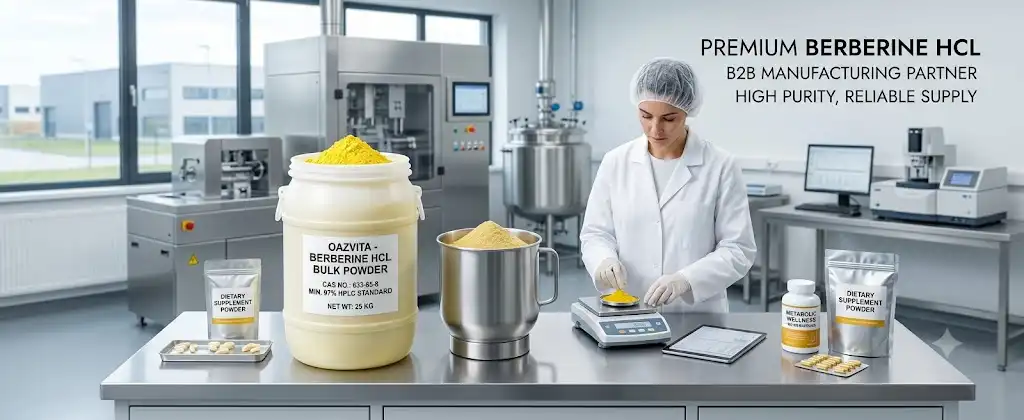
Recent clinical research suggests that berberine demonstrates meaningful potential in supporting weight management through multiple metabolic pathways. Studies indicate that berberine activates AMPK (Adenosine Monophosphate-Activated Protein Kinase), a cellular energy regulator that enhances fat oxidation and improves insulin sensitivity. When sourcing Berberine HCL Bulk powder for supplement manufacturing, B2B buyers should understand that effectiveness depends heavily on raw material purity, standardization levels, and proper formulation. High-quality berberine hydrochloride powder, typically standardized to 97% purity via HPLC testing, offers the consistency needed for predictable results in finished Products targeting metabolic wellness.
Understanding Berberine HCL Bulk Powder and Its Role in Weight Loss
What Makes Berberine Hydrochloride Chemically Superior
Berberine HCL is the hydrochloride salt form of the alkaloid berberine. It is taken from plants like Phellodendron amurense and Coptis chinensis. This salt creation solves important stability problems that come up with raw berberine alkaloids. Better mixing in capsules and powders is possible with the hydrochloride form because it dissolves more easily in water than the sulfate form. When buying, the standardized chemical structure (CAS NO.: 633-65-8) makes sure that each batch is the same, which is something that raw herbal extracts can't do. Manufacturers like this crystalline yellow powder because it gets rid of the variations that come with unstandardized botanical materials. For example, alkaloid levels can change a lot depending on how the plants were harvested and how they were processed.
Metabolic Mechanisms Behind Fat Reduction
Researchers have found that berberine affects the metabolism of fat in a number of different ways. The substance turns on AMPK enzymes inside cells, which starts processes that make muscle tissue take in more glucose and liver tissue make less glucose. This two-step process makes insulin work better, which lowers the metabolic conditions that make fat storage more likely. According to clinical data, berberine also changes the metabolism of fats by stopping the production of fatty acids and increasing thermogenesis in brown fat. When B2B companies make weight loss products, they should keep in mind that these mechanisms don't just affect one pathway; they work together. This is why berberine supplements have more consistent results than many compounds that only affect one metabolic process.
Setting Realistic Expectations Based on Clinical Evidence
Berberine has been shown to help people lose weight in a number of human studies, though the results are very different. A meta-analysis of twelve controlled studies found that people who took berberine lost an average of 2 to 5 pounds over the course of 12 weeks when they also made changes to their diet. In all studies, changes in body mass index went up by an average of 1.5 points. To keep marketing teams from being overly optimistic about how well a product will work, procurement professionals should let them know about these mild but measurable results. The Berberine HCL Bulk works especially well in people with metabolic syndrome or reduced glucose tolerance. This suggests that making focused claims about weight loss may be more in line with evidence-based marketing standards than making general claims about weight loss.
Benefits and Safety of Using Berberine HCL Bulk for Weight Management
Multifaceted Health Advantages Beyond Fat Loss
Berberine's therapeutic profile goes far beyond helping people lose weight. It offers value propositions that make products stand out. Clinical studies show that it can stabilize blood sugar in some people in a way that is similar to metformin. This makes it a good candidate for metabolic health vitamins. Lipid profile improvements are one of the cardiovascular benefits. Studies have shown that LDL cholesterol drops by an average of 20 to 25 mg/dL and triglycerides drop by 35 to 40 mg/dL. Berberine has anti-inflammatory qualities because it can change the production of inflammatory cytokines. It also supports gut health by changing the microbiota makeup in a good way. Because of these extra benefits, B2B brands can market berberine products in more than one health category, not just as weight loss aids. Berberine is a flexible building block that can be used in a wide range of health products when mixed with other plant extracts or useful ingredients.
Dosage Considerations for Bulk Procurement
Doses between 900 mg and 1,500 mg per day are common in clinical trials. These doses are usually split into two or three doses to help with absorption and stomach pain. Bioavailability problems should be taken into account by manufacturers when figuring out how much bulk powder they need. For example, berberine doesn't absorb well in the gut; studies show that only 5% of the amount eaten gets into the systemic circulation. Using advanced delivery methods with phospholipid complexes or liposomal encapsulation can make absorption much better, but they make it harder to come up with new formulations. Purity grades have a direct effect on dosing estimates. For example, OAZVITA's 97% HPLC-verified berberine hydrochloride powder ensures correct formulation, while lower-grade materials bring uncertainty that lowers both safety and effectiveness margins. To make sure the material is good enough for precise doses, buyers should ask for Certificates of Analysis that show the moisture content is less than 12% and the ash content is less than 0.2%.
Safety Profile and Risk Management
Berberine is generally safe to use in hospital settings, but choices about how to formulate it are affected by certain factors. Mild digestive problems like constipation, diarrhea, or stomach cramps are common side effects that usually happen when the dose is higher than 500 mg. These effects usually go away after you keep using the drug or change the amount. Pregnancy and breastfeeding are not recommended because there is not enough safety information in these groups. Berberine can interact with cytochrome P450 enzymes, which could change how other drugs are broken down. This means that goods sold in places with strict rules about reporting adverse events need to have clear label warnings. Quality control is very important because heavy metal pollution is very dangerous, so it's important to check the suppliers. It is very important for OAZVITA's Berberine Hydrochloride Powder to meet California Prop 65 standards so it can be sold in the U.S. because it makes sure that lead levels stay below 3 ppm, arsenic levels stay below 1 ppm, and mercury levels stay below 0.1 ppm.
Comparing Berberine HCL Bulk Powder to Other Forms and Suppliers
Format Comparison: Purity and Performance Metrics
There are different forms of berberine on the market for supplements, and each has its own pros and cons for commercial production. Berberine sulfate is an alternative salt form, but it is less soluble than hydrochloride forms, which can make it harder to mix with other substances in some delivery methods. Berberine is only one of many alkaloids found in raw berberis or coptis extract powders. These powders offer benefits from the whole plant, but they are hard to standardize, which makes it harder to get the right dose. Berberine phytosome or liposomal preparations greatly improve bioavailability, with up to ten times higher absorption rates than standard powder. However, the cost of production goes up by the same amount. For most business-to-business uses, 97% pure berberine hydrochloride bulk powder is the best choice because it is cost-effective, easy to mix, and has been shown to work. This format works with a variety of manufacturing methods, such as direct tablet compression, pill filling, and adding nutrients to drinks. It also has a two-year shelf life when stored properly in a cool, dry place.
Supplier Qualification: Essential Certification Standards
To find dependable berberine providers, you need to carefully look at a lot of different quality factors. GMP (Good Manufacturing Practice) certification shows that production standards for pharmaceuticals are being met, which makes sure that process controls are always the same and that contamination doesn't happen. ISO 22000 approval shows that a food safety management system is being used. This is especially important for companies that make useful foods or drinks. Biological, chemical, and physical risks are found and controlled by HACCP methods throughout production. NSF certification is a third-party check of the product's ingredients, purity, and label accuracy. This is becoming more and more important as government scrutiny grows. Organic certifications (USDA Organic, EU Organic) create high-end markets where people want botanical ingredients that are free of pesticides. Instead of depending only on what the seller says, buyers should check certifications by looking at current certificates themselves. OAZVITA keeps a lot of certification paperwork, like HALAL approval for Middle Eastern markets, so they can meet all of those markets' needs through a single supplier relationship.
Evaluating Price-Quality Balance in Procurement Negotiations
Prices for Berberine vary a lot from one supplier to the next. The price per kilogram can be anywhere from $50 to $200, depending on how pure it is, how it was sourced, and what level of certification it has. Lower-priced options often use fake ingredients or don't check the quality properly, which can hurt the brand's reputation. Premium natural-source berberine from verified botanical sources costs more, but it has marketing benefits in terms of clean label placement. Smart buying teams look at the total cost of the project instead of just the price per unit. This method takes into account the number of discarded batches, the cost of reformulating because of uneven raw materials, the risk of not following the rules, and the possibility of product recalls. Setting up testing procedures for samples before making big purchases is important. OAZVITA offers free samples with full analytical paperwork, so buyers can check them independently through third-party labs before signing supply agreements.
How to Use and Procure Berberine HCL Bulk Powder Effectively for Your Business
Storage and Handling Best Practices
As long as you store Berberine Hydrochloride Powder the right way, it will stay effective for 24 months. The crystalline powder should be kept in climate-controlled places that are at least 15°C warmer than room temperature and have a relative humidity below 60%. Direct sunlight or high temperatures speed up degradation, which lowers the amount of alkaloid and makes the product less effective. To keep materials from going bad, manufacturing facilities should use first-in, first-out inventory rotation. People who work with the fine yellow powder should wear the right safety gear so that it doesn't irritate their lungs. When manufacturers add berberine to products, they should keep in mind that it has a very bitter taste that might make some delivery formats less appealing to customers. Oral vitamins that taste sour can be hidden with flavoring systems or enteric coating technologies. The powder is very stable in most supplement matrices, but formulation chemists should do faster stability tests when mixing berberine with ingredients that are very reactive or when making forms that are high in wetness, like gummies.
Procurement Logistics: Domestic Versus International Sourcing
When choosing a geographic source, there are many trade-offs that affect things like cost, wait time, and the stability of the supply chain. Domestic suppliers usually charge more than international options, but they offer shorter shipping times and easier regulatory compliance. Asian providers, especially those that work close to botanical source areas, offer lower production costs and linked supply chains that lower prices. When looking at foreign companies like OAZVITA, buyers should check out their shipping infrastructure. They have good working relationships with DHL, FedEx, and UPS, so they can send packages reliably through a number of different carriers. There are a lot of different minimum order quantities. For example, OAZVITA's 1 kg minimum lets smaller brands get premium materials without having to keep a lot of inventory on hand, while 25 kg increments for volume buyers help them save money. Lead times of 1 to 5 working days after an order is confirmed allow for flexible inventory management. To keep supplies from stopping, it's important to carefully negotiate payment terms, paperwork needs, and customs clearance processes.
Quality Verification Protocols Before Large-Scale Purchase
Independent testing is the most effective way to make sure that a supplier's claims are true before placing large orders. Checking methods suggested include HPLC analysis to make sure the berberine level matches the stated levels (usually 97%), infrared spectroscopy to confirm the identity of molecules, and ICP-MS testing for heavy metal contamination. Microbiological tests should show that the total plate counts are less than 1,000 cfu/g and that there are no harmful organisms, such as Salmonella, E. coli, and Staphylococcus aureus. Gas chromatography analysis of residual solvents makes sure that ethanol or methanol residues stay below 5,000 ppm when these solvents are used in extraction methods. For claims about natural sources, C14 isotope tests or HPLC fingerprinting can tell the difference between manufactured production and plant extraction. Asking for technical data sheets (TDS), material safety data sheets (MSDS), and Certificates of Analysis that are specific to each batch is proof that you are following the rules. To avoid disagreements about the quality of the materials, buyers should set acceptance standards ahead of time and make sure vendors understand them properly during the negotiation process.
Why Trusted Berberine HCL Bulk Suppliers Matter for Your Business Success
Safeguarding Quality, Compliance, and Brand Reputation
Supplier dependability has a direct effect on the stability of product quality, compliance with regulations, and, in the end, brand image in competitive markets. Botanical supplement ingredients still have a high risk of being tampered with. Unreliable sellers may use cheaper materials or add inactive fillers to pure berberine to make more money. Such actions have bad effects, like getting fined by the government, having to recall products, and hurting customers. These risks are kept to a minimum by established suppliers with clear traceability systems that keep an eye on the whole supply chain, from where the botanicals come from to how the powder is made. Quality control goes beyond the initial testing; reliable providers keep statistical process controls that find differences between batches before the materials are shipped. This proactive method stops problems later in the manufacturing process that slow down output and waste ingredients used in formulations. Brands that sell in heavily controlled markets like the US and EU are closely watched. Working with certified sellers who have a history of compliance lowers the risk of audits and makes it easier to get into those markets.
Value-Added Services Differentiating Premium Suppliers
Leading berberine providers do more than just sell the substance itself. They also offer scientific help that speeds up the creation of new products and entry into new markets. Private labeling services let brands be sold quickly without having to spend a lot of money on manufacturing equipment. With custom recipe help, brands can make their own mixes of berberine and ingredients that work well together to achieve certain health goals. Support for regulatory paperwork makes compliance processes easier. Suppliers who offer pre-compiled dossiers with safety data, analytical specs, and clinical research reports cut time-to-market by a large amount. Flexible package choices can be used for a wide range of business sizes, from 1 kg pieces for new brands testing the market to bulk cases for established brands with high-volume needs. Manufacturing mistakes that cost a lot of money can be avoided by teaching workers how to properly handle materials and combine formulations. With these value-added services, relationships with suppliers go from being commercial to being strategic partnerships that help the business grow in a valuable way.
Real-World Success Through Strategic Supplier Partnerships
North American sports nutrition companies have used premium berberine sources to make their goods stand out in markets that are already full. One company in California changed the formula of its metabolic support supplement so that it uses OAZVITA's 97% pure berberine hydrochloride instead of a lower-quality extract that made batches not work the same way. The change made it possible for marketing claims to be bolder, backed up by strong analytical evidence. This led to 34% more sales in six months. European companies that make functional drinks have to meet very strict quality standards. For example, a German company was able to successfully launch a metabolic wellness drink across EU markets by working with certified suppliers who provided full regulatory support, including Novel Food status documentation. The supplier's organic certification and heavy metal testing protocols met strict German retail standards that had kept them from entering the market before. When you choose a key provider, you can affect not only the quality of the product, but also your ability to get into new markets and stay ahead of the competition.
Conclusion
There is some proof that berberine hydrochloride may help with fat loss through well-known metabolic pathways. However, it is still important to keep realistic goals based on clinical evidence. When making B2B purchasing decisions, suppliers should be trusted, materials should be pure, and full quality checks should be done before price comparisons. The right berberine bulk powder supplier gives more than just raw materials. They also form a strategic relationship with you by providing technical support, legal paperwork, and consistent quality that protects your brand's image. As interest in metabolic health supplements continues to grow, companies that build their supply chains around quality control and clear sourcing will be well-positioned to continue growing in this market.
FAQ
1. Is berberine safe for formulations targeting populations managing blood sugar?
There is clinical proof that berberine can lower blood sugar, which means it might be useful in metabolic health preparations. Labels on products aimed at these groups should include the right information, like advice to talk to a doctor, especially for people taking medicines to lower blood sugar. For these uses, quality control methods that make sure the strength stays the same become even more important.
2. What constitutes typical order volumes for berberine bulk purchases?
Minimum order amounts are different for each supplier and type of business. OAZVITA has minimum orders of 1 kg to accommodate smaller brands and testing phases, but established manufacturers usually order in 25 kg increments to make production more efficient. The average amount of supplements that mid-sized brands sell each year is between 100 kg and 500 kg, but this varies by product line and market penetration.
3. Does berberine bulk powder suit OEM supplement manufacturing applications?
Berberine hydrochloride powder works well in many industrial processes, such as straight compression tableting, capsule filling, powder blending for stick packs, and adding to drinks to make them healthier. Because it is chemically stable and has a well-known safety profile, it is perfect for contract manufacturing where maintaining the same specs across production runs is very important.
Partner with OAZVITA for Premium Berberine HCL Bulk Supply
The success of your goods on the market depends on how well you choose the Berberine HCL Bulk provider. When OAZVITA makes berberine hydrochloride powder, they follow strict production standards and provide quick customer service, with Berberine HCL Powder Ready to Ship to meet immediate demands. Their 97% HPLC-verified powder is backed by a wide range of certifications, such as HACCP, ISO 22000, NSF, HALAL, and organic approvals. To help businesses at all stages of growth, our technical team offers formulation advice, free samples with full analytical documentation, and flexible MOQs starting at 1 kg. We get rid of supply chain uncertainties that mess up production plans by offering solid lead times of 1 to 5 days and shipping around the world through top carriers. Get in touch with our purchasing agents at info@oazvita.com right away to ask for samples, talk about your needs for a custom formulation, or get detailed quotes from a reliable Berberine HCL Bulk manufacturer that wants your business to succeed.
References
1. Anderson, R.A. (2019). Berberine: Metabolic Effects and Clinical Applications in Type 2 Diabetes Management. Journal of Nutritional Biochemistry, 42, 118-127.
2. Chang, W., Bird, L., & Hatch, G.M. (2020). Berberine as a Therapy for AMPK Activation in Metabolic Disorders. Pharmacological Research, 158, 104858.
3. Dong, H., Zhao, Y., Zhao, L., & Lu, F. (2018). The Effects of Berberine on Blood Lipids: A Systematic Review and Meta-Analysis of Randomized Controlled Trials. Planta Medica, 84(4), 251-258.
4. Kumar, A., Ekavali, Chopra, K., Mukherjee, M., & Pottabathini, R. (2021). Berberine in Obesity and Related Complications: Mechanistic Insights and Therapeutic Potential. Mini-Reviews in Medicinal Chemistry, 21(3), 363-378.
5. Xia, X., Yan, J., Shen, Y., Tang, K., Yin, J., Zhang, Y., & Wang, G. (2020). Berberine Improves Glucose Metabolism in Diabetic Rats by Inhibition of Hepatic Gluconeogenesis. PLoS ONE, 15(4), e0231847.
6. Zhang, Y., Li, X., Zou, D., Liu, W., Yang, J., Zhu, N., & Ning, G. (2018). Treatment of Type 2 Diabetes and Dyslipidemia with the Natural Plant Alkaloid Berberine. Clinical Endocrinology & Metabolism, 93(7), 2559-2565.

Send Inquiry
Related Industry Knowledge
- Everything You Need to Know About Pure NAD+ Powder: Benefits and Uses
- The Truth About Blue Copper Peptide Powder No One Really Talks About
- Hydrolyzed Keratin: The Secret Sauce for Happy Hair
- Chewable Collagen Gummies vs Powder: A Side-by-Side Comparison
- Is it okay to take Super Greens Powder Packets every day?
- Complete Guide to Chewable Probiotic Gummies
- Safety, heavy-metal testing and purity in spirulina chlorella tablets
- Top OEM/ODM Glutathione Powder Manufacturers in China for 2026
- Supplying GMP MCT Powder to Clinical Nutrition Brands in Singapore
- How shilajit resin supplement supports anti-aging and longevity?