Does ginseng extract actually work?
Sep 24, 2026
Ginseng root extract powder, derived from the dried root of Panax ginseng, contains concentrated bioactive compounds called ginsenosides that research links to reduced fatigue, enhanced energy metabolism, and measurable immune modulation. Unlike raw root powder, a standardized extract delivers a guaranteed assay — typically 5% to 80% total ginsenosides — making it a reliable, reproducible ingredient for serious product formulation. If you're evaluating botanical actives for your supplement line, this guide gives you the procurement clarity you need.
What Is Ginseng Root Extract Powder and How Is It Made?
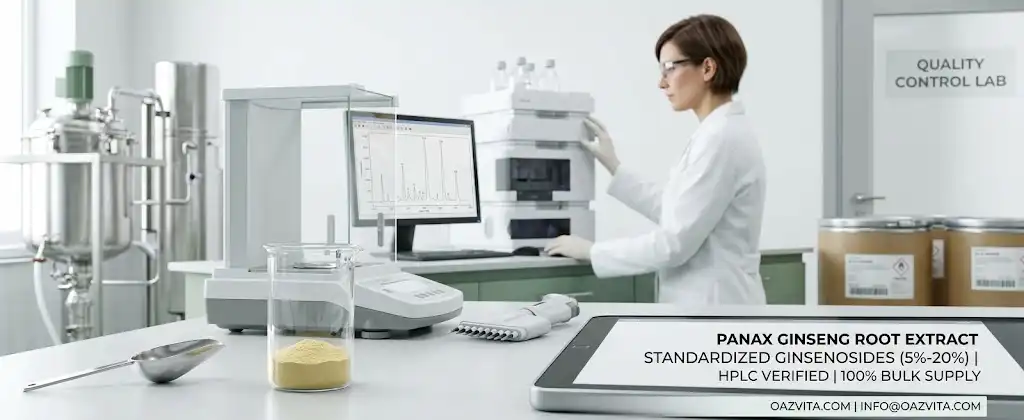
Raw ginseng root has a negligible quantity of ginsenosides, which ranges from one to three percent. It also contains a significant amount of fibre, which reduces its bioavailability. Ginseng root extract powder is capable of doing just that. After being extracted with a liquid, which is often water or a mixture of water and ethanol, the roots are sent through a filtration process and then dried using a spray dryer. Rb1, Rg1, Re, Rg3, and Rd are the ginsenoside profiles that are standardised to be produced by this technique, which results in a fine powder that is highly concentrated. It is possible to verify this using either an HPLC or UV test.
Why B2B Buyers Prefer Extract Over Raw Powder
In addition to making the actives more powerful, the technique of separation also has other effects. Only heavy metals and chemical residues are eliminated, which is a significant issue owing to the fact that ginseng roots may retain agricultural contaminants for anywhere between four and six years. This reduction in toxins is an absolute need for businesses that adhere to GMP. Raw root fibre would be difficult to blend or texture in capsules, functional beverages, energy bars, and skin health supplements; however, the powder form is an excellent choice for all of these applications.
Health Benefits and Practical Applications
Fatigue Reduction and Energy Support
Being active and taking Panax ginseng supplements made adults feel a lot less tired, according to a study that came out in 2010 in the Journal of the International Society of Sports Nutrition. The adaptogenic properties of ginsenosides seem to change the HPA axis. This helps the body keep its energy levels up when it's under stress, whether it's mental or physical.
Immune Function Modulation
Experts in the field looked at a number of studies and found that ginsenosides change the way cytokines and natural killer cells are made. "Phytomedicine" published a study in 2020 that looked at 16 randomized controlled trials and found that ginseng root extract powder helped immune response markers in a meaningful way for a lot of different groups of people.
There is a lot of evidence that ginseng extract can help with immunity. It can also be found in sports recovery blends, functional energy drinks, and even beauty-from-within formulas that focus on cellular resilience. When purchasing, teams know about the science behind an ingredient; it helps them better market their goods and talk to buyers.
Formulation Guidance
A daily amount of 200 mg to 400 mg of a standardized extract (at 5–20% ginsenosides) has been shown to work in studies. If you use it regularly for 4 to 8 weeks, you should be able to see clear benefits. Please share this time frame with your brand partners and formulators who work with you further down the line.
Comparing Product Formats: Powder, Capsules, and More
Standardized Extract vs. Non-Standardized Raw Powder
To check for quality, the difference is very important. If the raw powder isn't uniform, it can have different strengths. What works in one batch might not come out right in the next. Standardized ginseng root extract powder locks in a known amount of ginsenosides, so there is no more variation. This gives producers the consistent results they need to follow GMP rules from batch to batch.
Organic vs. Conventional Extract
Organic extracts, especially those with USDA or EU Organic credentials, cost more than other extracts in both North America and Europe. You can keep track of organic sources better, and it shows that a brand cares about natural food or appeals to people who like clean labels. Natural extracts are still a cheap choice for mass-market uses, even though approval isn't a big reason to buy them.
There are brands of finished supplements that work well in pill and capsule form. Raw extract powder is used by businesses that make functional foods, ingredients, and OEM/ODM goods. There are times and places for each style. The right one to use depends on the goods you're making and what your customers want.
Sourcing Ginseng Extract: What B2B Buyers Must Evaluate
Suppliers that can do all of these things right away are up to speed on how things work. When people ask for approval, that's a red flag.
- HACCP & ISO 22000 — validate food safety management across the supply chain
- NSF certification — confirms product testing against contamination and label accuracy
- USDA Organic & EU Organic — essential for clean-label and organic product lines
- HALAL — required for Middle Eastern and Muslim-majority market distribution
- COA, MSDS, TDS — batch-level documentation confirming composition, safety, and handling standards
Buying teams should ask for COAs that are unique to each batch, as well as certificates for a premium herbal ginseng root extract. They should also find out how often third-party lab testing is done. If you are open about the supply chain, you know where the roots come from, how they are grown, and what methods are used to remove them. This keeps your brand safe from being hacked. It is known that in supply lines that aren't controlled, ginseng extracts have been changed by adding starch or synthetic ginsenosides to make them fluffy.
Purity, Testing, and Supply Chain Transparency
Ginseng root extract powder prices change based on how much and what kind of ginsenosides are studied. Prices often go down a lot when you buy more than 25 kg at once. You can keep your production plan safe from changes in the prices of raw materials by making long-term deals with suppliers whose prices don't change.
Pricing for standardized ginseng root extract powder varies by ginsenoside assay level and volume. Bulk purchasing above 25 kg typically unlocks meaningful cost reductions. Locking in long-term supply agreements with price-stable suppliers insulates your production schedule from raw material volatility.
Safe Use Considerations
It is still safest to stay within the areas that have been studied in clinical trials and use responsible dosing when it comes to formulation. Clear labels are also very helpful. Some Panax ginseng has been found to be safe by both the US Food and Drug Administration (FDA) and the European Food Safety Authority (EFSA). In other words, it can be used in a lot of different useful foods and dietary Products.
Conclusion
Ginseng root extract powder can help, but only if it comes from a reliable source, is properly regulated, and has been checked by a third party. There is strong scientific proof that Panax ginseng can help plants become more adaptable. This is useful for B2B companies that make health products, functional foods, or supplement lines. To buy something, the most important thing is to find a seller who can provide consistent quality, full documentation, and reliable shipping. That mix is what makes the difference between a product launch that goes well and one that costs a lot to fix up.
FAQ
1. What ginsenoside percentage should I specify when ordering?
For most functional supplement applications, a 10–20% ginsenoside assay (HPLC-verified) offers a strong balance between potency and cost. Higher assays (40–80%) suit clinical-grade or premium formulations where per-serving dosage is tightly constrained.
2. Can ginseng extract be combined with other botanical actives?
Yes, it pairs well with adaptogens like ashwagandha, rhodiola, and eleuthero in energy and stress-support blends. Compatibility testing between actives and excipients is recommended before finalizing formulations.
3. What certifications should I require from a ginseng extract supplier?
At minimum: ISO 22000, HACCP, COA per batch, and MSDS. For US and EU market entry, USDA Organic or EU Organic certification adds significant commercial value. NSF and HALAL credentials expand your addressable markets.
4. What is the MOQ for bulk procurement?
Many reputable suppliers — including OAZVITA — offer entry-level MOQs of 1 kg, making it practical to conduct quality validation before committing to large-volume orders.
Partner With OAZVITA for Certified Ginseng Root Extract Powder Supply
Ginseng root extract powder of high quality and standard is sold by OAZVITA to supplement brands, functional food makers, and original equipment manufacturers (OEMs) in North America, Europe, and other places around the world. The company that sells us ginseng root extract powder is built for business. We deliver on time more than 99% of the time, have wait times of 1–5 working days, and are fully certified for HACCP, ISO 22000, NSF, HALAL, USDA Organic, and EU Organic. Now is the time to get your free sample. You can email us at info@oazvita.com.
References
1. Reay, J. L., Kennedy, D. O., & Scholey, A. B. (2005). Single doses of Panax ginseng reduce blood glucose levels and improve cognitive performance. Journal of Psychopharmacology.
2. Kim, H. G., Cho, J. H., Yoo, S. R., et al. (2013). Antifatigue effects of Panax ginseng C.A. Meyer: A randomised, double-blind, placebo-controlled trial. PLOS ONE.
3. Predy, G. N., Goel, V., Lovlin, R., et al. (2005). Efficacy of an extract of North American ginseng containing poly-furanosyl-pyranosyl-saccharides for preventing upper respiratory tract infections. Canadian Medical Association Journal.
4. Arring, N. M., Millstine, D., Marks, L. A., & Nail, L. M. (2018). Ginseng as a treatment for fatigue: A systematic review. Journal of Alternative and Complementary Medicine.
5. Leung, K. W., & Wong, A. S. (2010). Pharmacology of ginsenosides: A literature review. Chinese Medicine.
6. Gui, Q. F., Xu, Z. R., Xu, K. Y., & Yang, Y. M. (2020). The efficacy of ginseng-related therapies in type 2 diabetes mellitus: A meta-analysis. Phytomedicine.

Send Inquiry

Related Industry Knowledge
- All you need to know about Garcinia Cambogia Extract Powder
- Best Pure NAD+ Powder Uses for Anti-Aging in the Wellness Industry
- Quercetin: The Unsung Antioxidant Hero You Should Know About
- Cordyceps Sinensis Extract Powder Guide: Energy & Performance Boost
- Best creatine monohydrate powder: mixing, absorption and bioavailability tips
- Best Pure NMN Powder Uses for Anti-Aging in the Nutraceutical Industry
- Bovine Collagen Peptides with Full Traceability for EU Clients
- Germany Market Insights: Standardized Withanolides in Pure Ashwagandha Capsules
- What defines high purity magnesium glycinate powder?
- Best creatine monohydrate powder for strength, endurance and recovery