High purity magnesium glycinate powder: elemental composition and chelation
Jun 03, 2026
A fully chelated magnesium source, High Purity Magnesium Glycinate Powder has one magnesium ion linked to two glycine molecules. This makes a stable substance that is sometimes called magnesium diglycinate or magnesium bisglycinate. In terms of magnesium content, pure material usually gives about 11.7% to 14.1% magnesium, but business requirements may be different for each grade. Chelation is useful because it helps protect magnesium in formulation systems, supports a milder tolerance, and improves stability when compared to many basic magnesium salts. Elements and chelation are important for business-to-business buyers because they have a direct impact on label claims, production performance, purity control, and buyer trust in the purchase.
Introduction
It's clear that people are searching for more than just "what is magnesium glycinate?" when you look at the search terms that come up. They need a quick answer about elemental magnesium, a scientific description of chelation, and advice on where to find it. That's how Google's highlighted snippets work: describe the ingredient, explain the connection, and show how purity affects choices about what to buy.
When buying things from other businesses around the world, high purity is important because it affects nutritional standards, formulation behaviour, contaminant control, and the readiness of documents. OAZVITA works with private label buyers, supplement brands, sports nutrition companies, functional food manufacturers, and distributors who need uniform quality, quick lead times, and paperwork that is easy to follow.
Understanding High Purity Magnesium Glycinate Powder
What it is and how it is identified
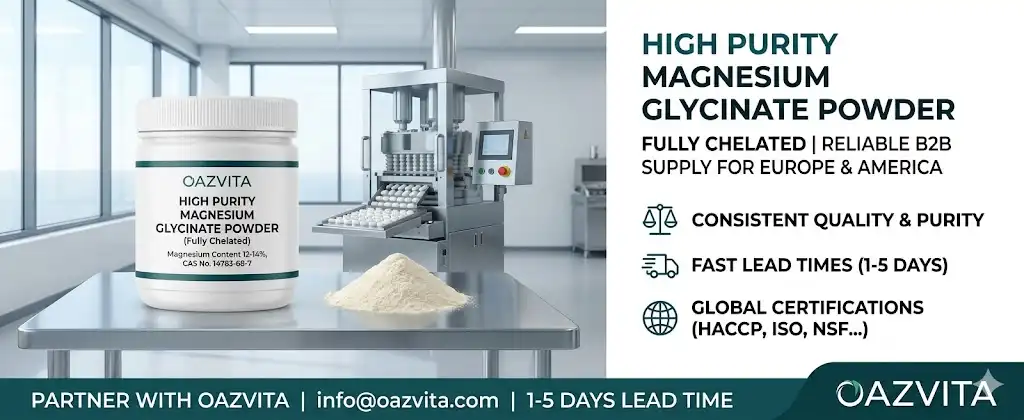
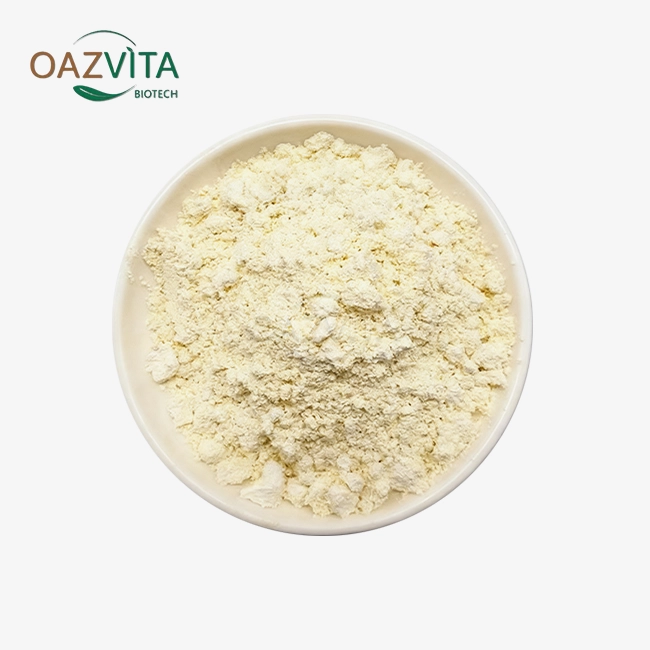
Best magnesium bisglycinate, also called Magnesium Diglycinate (CAS No. 14783-68-7), is what "High Purity Magnesium Glycinate Powder" means. It is a fine, off-white powder that flows easily and is made for advanced use in pills, tablets, powders, and drink mixes.
At OAZVITA, the product comes with magnesium levels between 12% and 14% and between 18% and 22%, based on the grade and the needs of the recipe. It is kept in a cool, dry place and has a shelf life of 24 months. The wait time is usually between 1 and 5 working days.
What “high purity” means for B2B buyers
It's not just a marketing term for buying teams when they talk about "high purity." What you see it as is a mix of:
- checked the raw materials
- Chelation response under control
- low risk of contamination
- Help with testing at the batch level
- The production process is in line with HACCP, ISO 22000, NSF, HALAL, EU Organic, and USDA Organic standards. You can also get a COA, an MSDS, and a TDS.
This is important for projects like "clean label," "premium nutraceuticals," "functional foods," and "export-focused product development," where accuracy and tracking are very important.
Elemental Composition and Chelation Mechanism
Elemental magnesium content explained
A simple question that many buyers have is: how much magnesium does magnesium glycinate really give you? Based on its chemical structure, magnesium bisglycinate that has totally reacted is thought to contain about 14.1% elemental magnesium. In real life production, assay results may be different depending on how much water is present, the processing conditions, and the grade that is being used.
This is why professionals should look at "elemental magnesium per assay" instead of just the name of the product when comparing it. OAZVITA offers different standard choices to meet different formulation goals. These include magnesium content grades ranging from 12% to 14% and 18% to 22%.
How chelation works
When magnesium ions chelate, they form a chemical bond with glycine partners. This structure helps the material stay stable and sets it apart from simple magnesium salts like oxide or chloride. Chelation can stop unwanted interactions in formulation and digestion settings and make final goods easier to use.
From the point of view of SERPs, this is the most likely featured-snippet answer: magnesium glycinate is chelated because magnesium is linked to two glycine molecules, creating a more stable complex than many kinds that are not chelated.
Why chelation matters in formulation
Chelation is especially useful when buyers need consistent results across different dose forms. It helps with:
- smoother capsule and tablet development because the powder often shows practical flowability and bulk density around 0.6 to 0.9 g/mL, which helps fill-weight calculations and production planning. It also offers a more neutral taste profile than some other magnesium forms, which can help with powder sticks, flavoured mixes, and systems that are ready to mix.
- stronger compatibility in mixtures with more than one ingredient, where mineral interactions can make the mixture less stable. A fully reacted chelate can help formulators keep processing consistent and lower the risk of performance differences between runs in high-end lines that contain vitamins, amino acids, or plant actives.
Benefits and Applications of High Purity Magnesium Glycinate Powder
Why manufacturers choose it
A lot of people use High Purity Magnesium Glycinate Powder because it has stable chemistry, a high positioning value, and a lot of different ways to be used in formulations. Compared to many common magnesium ingredients, this one is often chosen for high-end goods that want to show they are gentle on the body and supply minerals more efficiently.
It works well in:
- pill forms and tablets
- Drink mixes made of powder
- Blends of sports diet
- customised premix development to make health gummies
- supplements with private labels and healthy foods
Application fits across buyer segments
A number of different B2B groups are looking for different benefits. Label positioning and quality guarantee are two things that supplement brands often focus on. Solubility, blend consistency, and taste integration are all things that sports nutrition brands care about. Manufacturers of functional foods want to make sure their Products meet food safety standards and have a steady supply of bulk goods. Brands that sell cosmetics and foods with clean labels may ask for choices for verification, traceability, and low contaminants.
These needs are met by OAZVITA's large product line, OEM/ODM service, formula creation, flexible dosing forms, and free samples that can be tried.
Comparing High Purity Magnesium Glycinate Powder with Alternatives
Magnesium glycinate vs oxide, citrate, and chloride
This search is about business and comparisons. Buyers want to know which form helps them reach their goals for design and profit.
Magnesium oxide is often used because it has a lot of magnesium by weight, but it is not chelated. Magnesium chloride is useful in some liquid systems, while magnesium citrate is commonly used in powders and fizzing drinks. High Purity Magnesium Glycinate Powder sticks out because it is linked to chelation, gentle product marketing, and a strong appeal to the high-end market.
Procurement-focused comparison points
These factors are commonly used as evaluation criteria when comparing B2B sourcing options:
- Performance and positioning value: Magnesium glycinate often supports a more expensive story around chelated minerals, product quality, and tolerance that is easy for users to handle. In the U.S. supplement market, where names like "bisglycinate," "chelated magnesium," and "high absorption magnesium" are becoming more common, this can help brands stand out. When you're in a better position, you can charge more for your finished goods.
- Manufacturing and supply practicality: Buyers also need paperwork, a flexible minimum order quantity, and reliable transportation. OAZVITA has a minimum order quantity (MOQ) of 1 kg and ships by air, sea, DHL, FedEx, UPS, and airmail post. Packaging options depend on customer needs. Stable supply, global support, and arrival on time more than 99% of the time help lower the risk of buying, both for repeat orders and for new products.
Procurement Guide for High Purity Magnesium Glycinate Powder
What to verify before purchase
A serious buyer should ask for and look over:
- CoA with values for measurement and contamination
- sheet of identification and specifications
- GMP or papers that back up a food safety system
- Information about the package and the shelf life
- Lead time and a plan for logistics
- Samples can be used for spot tests.
OAZVITA gives away free samples, helps with batch-level COA, and gives out technical papers like MSDS and TDS.
How would you assess supplier strength?
Reliable supply goes beyond the specs of the goods. Another thing you would look at is how quickly and deeply the supplier's operations are. Advanced production lines, an experienced research and development team, fast prototyping, one-on-one account service, multilingual support, and the ability to send to North America, Europe, South America, Asia, and Africa are some of OAZVITA's strengths that set it apart from its competitors.
The company also says that its yearly sales and exports are more than USD 15 million, that it has a stable supply chain, and that it takes an active role in foreign trade events. Buyers are more likely to trust that mix for long-term work.
Conclusion
High Purity Magnesium Glycinate Powder of high quality is useful because it has a set amount of elemental magnesium and really binds with glycine. For B2B buyers, these traits affect how stable the recipe is, how the product is positioned, how ready the paperwork is, and how confident the buyer is in the supply. It seems like a good choice for exclusive vitamins, sports nutrition, useful foods, and creating your own brand. When buying teams do both technical study and due research on suppliers, they have a much better chance of finding a magnesium ingredient that supports quality, stability, and business growth.
FAQ
1. What purity standard should pharmaceutical or premium supplement buyers look for?
Buyers should look for a chelate that has fully reacted, a clear test range, contaminant control, and full paperwork, such as a CoA, MSDS, and TDS. In some markets, buying with more trust can also be helped by certificates like HACCP, ISO 22000, NSF, HALAL, EU Organic, and USDA Organic.
2. Is magnesium glycinate better absorbed than magnesium oxide or citrate?
Chelated magnesium glycinate is well known for having high absorption because magnesium is linked to glycine. People usually choose it when they need a high-end chelated mineral choice that is easier for the market to understand and works better with other ingredients.
3. Is certified organic bulk material available?
Yes, approved choices might be available, but it depends on the project's needs and the specifications. When needed, OAZVITA can help with paperwork requests for EU Organic and USDA Organic products. They can also offer flexible packaging and sample review for programs that buy in bulk.
Partner with Factop for Superior Pharmaceutical Capsule Filling Solutions
Need a reliable company that makes or sells High Purity Magnesium Glycinate Powder in bulk? With free samples, certificates, and fast shipping around the world, OAZVITA can help you reach your goals for formulation, sourcing, and private label. Email our team at info@oazvita.com right now to get a price, technical papers, or a custom solution for a large supply.
References
1. National Institutes of Health, Office of Dietary Supplements. Magnesium Fact Sheet for Health Professionals.
2. United States Pharmacopeia and National Formulary. USP Monographs and General Chapters.
3. European Pharmacopoeia Commission. European Pharmacopoeia.
4. Food Chemicals Codex. FCC Standards for Food Ingredients.
5. Ranade, V. V., and Somberg, J. C. Bioavailability and pharmacokinetics of magnesium after administration of magnesium salts to humans. American Journal of Therapeutics.
6. Schuette, S. A., Lashner, B. A., and Janghorbani, M. Bioavailability of magnesium diglycinate vs magnesium oxide in patients with ileal resection. Journal of Parenteral and Enteral Nutrition.

Send Inquiry



Related Industry Knowledge
- Top 7 Benefits of Using Pure NAD+ Powder in Wellness
- How to Choose the Best Chicken Collagen Peptides for Your Skin
- What defines the best spirulina chlorella tablets?
- Complete Guide to Choosing the Best OEM/ODM Pure MCT Powder for Supplements
- High purity magnesium glycinate powder: purity testing and certifications
- Complete Guide to Choosing the Best Nicotinamide Riboside Chloride Powder for Health Supplements
- Best Pure MCT Powder Uses for Energy Boost in the Fitness Industry
- China-Based Expertise in High-Purity Glutathione Powder for Global Markets
- How shilajit resin supplement supports anti-aging and longevity?
- How does pure NMN powder support cellular energy and repair?