
How purity and certification define the best creatine monohydrate powder?
Jul 10, 2026
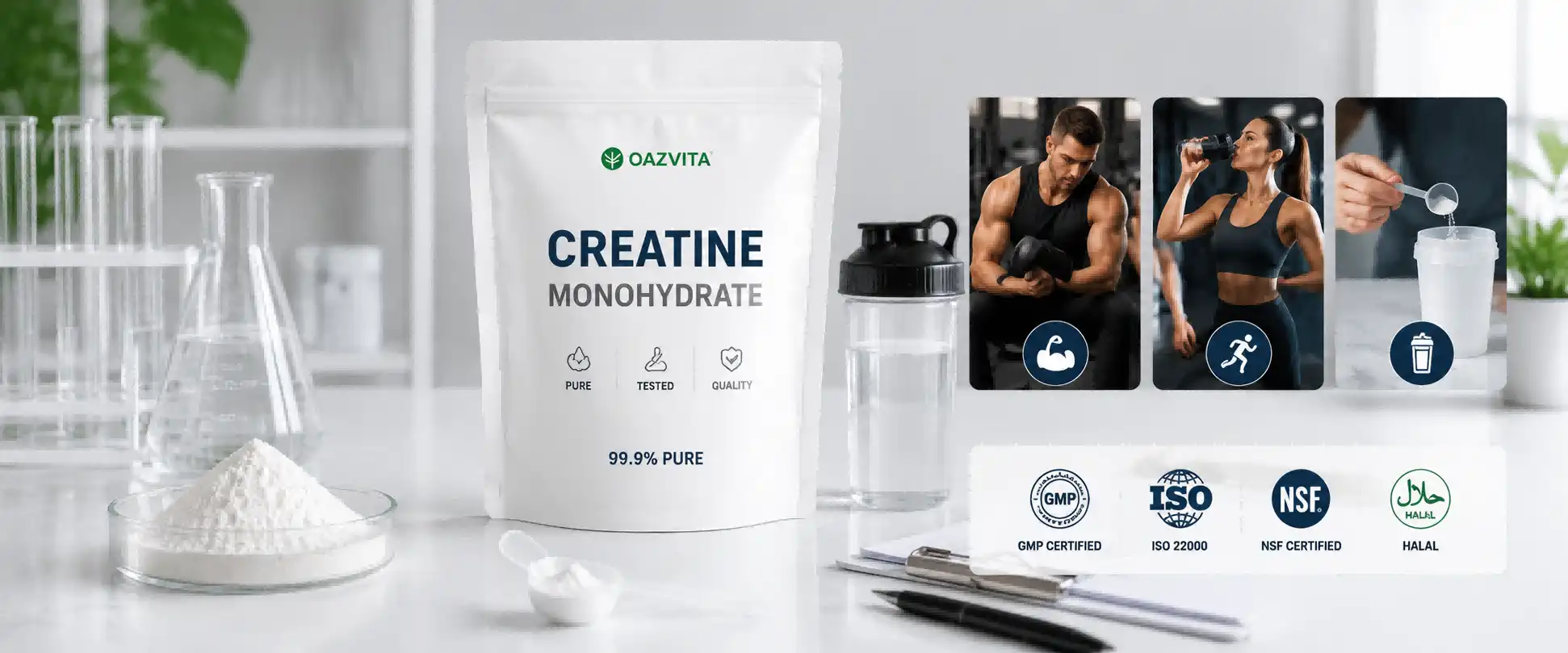
The two most important things that determine the best creatine monohydrate powder in today's supplement market are purity and certification. For business-to-business buyers like health supplement brands, sports nutrition companies, and OEM/ODM partners, these factors directly affect how safe, effective, and in line with regulations the product is. High-purity creatine—usually more than 99.9%, as shown by HPLC—removes dangerous byProducts of synthesis like dicyandiamide and dihydrotriazine. Strong certifications like GMP, ISO 22000, NSF, and HALAL provide proof of production integrity and global market readiness.
Introduction
In sports nutrition, Dietary Supplements, and functional food products, creatine monohydrate powder is one of the most important ingredients. Purchasing managers, OEM partners, and foreign wholesalers are under more and more pressure to find ingredients that meet strict purity standards and have certifications that can be checked. Bad raw materials can hurt the performance of the finished product, lead to extra scrutiny from regulators, and hurt a brand's reputation in markets with a lot of competition.
This guide will carefully look at how purity metrics affect product consistency and bioavailability, why licenses are important for international trade and customer trust, and what buying strategies B2B clients can use to make sure they have supply chains that are reliable and follow the rules. When industrial buyers know about these factors, they can make decisions that meet operational needs and market expectations in North America, Europe, and new wellness markets around the world.
Understanding the Role of Purity in Creatine Monohydrate Powder Quality
When looking at creatine monohydrate for large-scale production, purity is the most important quality standard. High-performance liquid chromatography tests, which can find even the smallest contaminants, show that products at the top of their field need purity levels above 99.9%.
Why Purity Matters for Brand Owners and OEM Clients?
Not meeting standards for purity creates a number of operating and business risks. Products with high amounts of creatinine (an inactive breakdown product), dicyandiamide, or dihydrotriazine can make people sick to their stomachs, which can lead to bad reviews and product returns. When finished products are tested by a third-party lab and found to be contaminated, brands face immediate customer complaints as well as long-term damage to their reputation. Nutritional supplements are closely watched by regulators in both the US and the EU. Batches that don't follow the rules can lead to market recalls, fines, and problems in the supply chain.
Industry Benchmarks and Testing Protocols
To keep byproducts to a minimum, premium suppliers use strict synthesis pathways, like the sarcosinate-cyanamide route under controlled GMP conditions. Particles made by advanced micronization methods have sizes between 200 and 500 mesh. This makes them much easier to dissolve and less gritty, which is bad for the user experience. When buying in bulk, procurement teams should give preference to suppliers who can provide full Certificates of Analysis (COAs) that show purity tests, moisture content (ideally 10–12%, which is the stoichiometric water molecule), and organic impurity profiles with limits below 50 mg/kg for both creatinine and dicyandiamide.
Real-World Impact on Product Performance
Researchers have found that high-purity creatine monohydrate improves the efficiency of ATP resynthesis during high-intensity anaerobic exercise. This is directly linked to gains in muscle power and recovery metrics that can be measured. On the other hand, formulas made with lower-quality raw materials don't work the same way from batch to batch, which hurts the scientific claims that sports nutrition brands use to stand out in the market.
The Importance of Certification for Global Procurement and Compliance
Certifications are very important for making sure that promises about quality are true. They turn vague claims into written proof of excellent manufacturing and following the rules. For business-to-business buyers doing business in more than one country, these credentials make clearing customs easier, lower their risk of liability, and build trust with partners further down the line.
Core Certifications That Drive B2B Confidence
There are now a number of certification standards that must be met in professional buying settings for Best Creatine Monohydrate Powder. GMP (Good Manufacturing Practice) certification shows that factories have controls in place to keep things clean, make sure their equipment is working right, and keep records of every batch they make. These rules are made stricter by ISO 22000 certification, which includes food safety management systems that look at risks and set critical control points all along the supply chain. The NSF Certified for Sport and Informed Choice programs make sure that goods don't contain any WADA-prohibited drugs. This is very important for sports nutrition brands that sell to professional athletes.
There is also a lot of value in religious and specialty qualifications. HALAL certification lets you sell your products in Muslim-majority markets in the Middle East and Southeast Asia. Meanwhile, USDA Organic and EU Organic certifications meet the growing demand from customers for clean-label foods that aren't contaminated with GMOs or synthetic pesticides.
How Do Certifications Facilitate International Trade?
Certifications do more than just make claims to customers; they also make global supply chains run more smoothly. Customs officials see ISO and GMP certifications as proof of legal production. This speeds up the approval process for imports and lowers the chance of delays or checks for shipments. Working with certified suppliers makes it easier for private label buyers and OEM clients to launch products in multiple markets at the same time. This is because they don't have to deal with the paperwork that comes with figuring out different countries' rules, and the quality standards stay the same.
Verification Best Practices for Procurement Teams
Smart buyers use multiple steps of verification before finalizing their relationships with suppliers. The standard is to ask for up-to-date certifications with acceptable end dates. Cross-referencing certification numbers with databases of issuing bodies, doing supplier audits to see directly how the goods are made, and needing batch-specific testing reports that show ongoing compliance, rather than just getting certified, are all examples of more advanced procurement strategies.
Comparing High-Purity and Certified Creatine Powders: Market Trends and Buyer Insights
The global creatine market is still changing. Purity guarantees and certification portfolios are becoming more important than just price competition as a way to set products apart. Knowing about these factors helps business-to-business buyers carefully place their product lines.
Creatine Monohydrate Versus Alternative Forms
There is a lot of study behind creatine monohydrate; it's cost-effective to use on a large scale, and it has been shown to be bioavailable. Different types of creatine, like ethyl ester and buffered creatine, came out claiming to be better at absorption. However, clinical studies consistently show that properly micronized monohydrate is just as good as or better than these other types at getting into muscle tissue. The micronization process makes particles that can pass through 200-mesh screens. This increases the surface area by twenty times compared to regular 80-mesh creatine, which makes it easier for it to mix quickly with cold liquids without getting gritty as older versions did.
Evaluating Supplier Offerings in 2026
Leading suppliers set themselves apart by providing a wide range of services in addition to raw materials. As an example, OAZVITA offers creatine monohydrate powder with CAS NO. 6020-87-7 in sizes ranging from 80 to 500 mesh, along with a number of certificates, such as HACCP, ISO 22000, NSF, HALAL, EU Organic, and USDA Organic. Free samples with full COA, MSDS, and TDS documentation are available so that buyers can test the products themselves before placing large orders. Starting at 1 kg, the minimum order quantity can be met by both new names testing the market and well-known brands needing container-load shipping.
Purity's Direct Impact on Bioavailability
How well something absorbs depends a lot on how pure the chemicals are and how they behave physically. Impurities mess up the metabolism, and bits that are too big don't dissolve easily, so less of the active ingredient gets to the muscle tissue. Brands that want to sell to professional athletes or doctors can't have potency that changes. Consistency between production batches affects both how well a product works and how many customers stay with the brand.
Procurement Strategies for Obtaining the Best Creatine Monohydrate Powder
Cost optimization and strict quality standards must be balanced in strategic buying, which calls for systematic review systems and supplier relationship management.
Leveraging Bulk Purchasing Without Quality Compromise
When you make a volume promise for Best Creatine Monohydrate Powder, you can get a better price, but procurement teams must fight the urge to put cost savings ahead of verifying certification. Setting up tiered supplier relationships is the best way to go. For example, certification credentials and purity testing results should be used to decide who can get bulk contracts. Asking for yearly supply deals with batch testing standards every three months protects buyers against quality drift and ensures stable pricing and allocation.
Supplier Verification Checklist
A thorough review of a seller includes a number of validation points. When you look over the paperwork, you should make sure that it has the latest GMP, ISO, and third-party testing certifications with numbers that can be checked. Physical checks look at the conditions of the production site, the rules for maintaining equipment, and the systems in place to stop contamination. For lab confirmation, sellers must show HPLC purity tests for each batch, microbial testing results that meet USP standards, and heavy metal screening results that show levels are below 10 ppm. Checking with current customers for references shows that the provider is reliable when it comes to on-time delivery, quick technical support, and batch consistency over long-term partnerships.
Negotiation Tactics for Long-Term Value
When you negotiate well, you look at more than just the unit price. You also look at the total value delivered. Lead time guarantees make sure that the production schedule is followed, and flexible MOQs allow for the growth of a product line and changes in seasonal demand. Customizable packaging choices lower the costs of secondary processing, and expert help for formula development is valuable for brands putting out new product combinations. Logistics coordination and flexible payment terms, such as options for air, sea, DHL, FedEx, UPS, and airmail post delivery, help global operations manage their working capital and inventory more efficiently.
Building Trust and Ensuring Quality: Partnering with Reliable Creatine Monohydrate Powder Suppliers
Transparency, consistent quality delivery, and a shared commitment to following the rules are the building blocks of long-lasting business-to-business relationships. Choosing providers who put these values first protects the purity of the brand throughout the lifecycle of a product.
Supply Chain Traceability and Documentation
Full traceability from where the raw materials come from to how they are packaged at the end makes sure that everyone is responsible at every stage of production. Leading suppliers keep detailed batch records that connect specific lots of raw materials to shipments of finished goods. This makes it easy to look into quality issues right away. This paperwork is very helpful when regulators or customers are looking into things, because it shows that proper care was taken and the quality system is strong.
Quality Control Measures That Matter
Professional manufacturers have a three-tier quality system that includes strict inspection of arriving raw materials, tracking of work in progress, and testing of final products. In production environments, automated monitoring systems keep an eye on important factors like temperature, humidity, and levels of contamination. Statistical process control finds trends before they lead to batches that don't meet specifications, and keeping samples from every production run lets you look back and analyze them.
Emerging Certification Trends
As the drug business continues to change, more openness is becoming expected. Organic certifications are becoming more popular because people want foods that aren't made with synthetic chemicals or genetically modified organisms. Even though Non-GMO Project verification is technically unnecessary for the best synthesized best-creatine-monohydrate powder, it addresses concerns about how consumers see the product. Carbon-neutral certifications and sustainability reports show that companies are being required to be more responsible, especially by buyers in North America and Europe who sell to environmentally aware people.
Conclusion
When looking for creatine monohydrate powder for making professional supplements, sports nutrition products, or functional foods, you have to make sure it is pure and certified. The product is 99.9% pure according to HPLC testing, and it has many certificates, such as GMP, ISO 22000, NSF, HALAL, and organic qualifications. These make sure that the product works well and follows all the rules in all global markets. B2B buyers can stay ahead of the competition if they use strategic procurement methods that focus on long-term partnerships, verify suppliers, and take advantage of the benefits of buying in bulk. As the market's demand for honesty and quality assurance grows, brands that want to be the best must work with certified providers who can back up their purity promises with proof.
FAQ
1. Is creatine monohydrate safe when sourced from certified high-purity suppliers?
When bought from sources with strict 99.9% purity standards and full certifications, creatine monohydrate has a very good safety record. Many years of clinical research with tens of thousands of participants have shown that products that meet pharmaceutical-grade standards are safe for a wide range of people. Certified sellers get rid of byproducts of synthesis that could cause bad effects, and third-party testing programs make sure there are no contaminants or banned substances.
2. How can buyers authenticate supplier certification documents?
Authentication needs more than one step of verification. Check certification numbers directly with groups that give them out, like NSF International, HALAL certification authorities, or organic program databases. Ask for reports on facility audits that include records of on-site inspections. Hire unbiased third-party labs to test samples of your products without knowing who made them. Then, compare the results to the COA paperwork that the seller gives you. Reliable sellers like this kind of proof because it shows that everyone is committed to quality standards.
3. What timing optimizes creatine supplementation effectiveness?
According to research, timing can be flexible, but consistent daily intake is more important than following strict timing rules. Many athletes like to eat something after a workout that includes carbohydrates to help insulin-mediated muscle uptake. The most important thing is to keep your muscle creatine levels high by taking supplements on a regular basis. Three to five grams of supplements a day are usually enough. Because of this consistency, manufacturers can make formulations that can be used for a variety of purposes.
Partner with OAZVITA for Certified High-Purity Creatine Monohydrate Solutions
OAZVITA is ready to be your reliable source for creatine monohydrate powder. We offer 99% HPLC-verified purity across a range of specifications, from 80 to 500 mesh. Our wide range of certifications, such as HACCP, ISO 22000, NSF, HALAL, EU Organic, and USDA Organic, meets the needs of different governing bodies in North America, Europe, and around the world. We offer free samples with full COA, MSDS, and TDS paperwork, adjustable MOQs starting at 1 kg, and quick lead times of 1 to 5 days to meet the needs of both small-scale production and product development. Our global logistics capabilities through DHL, FedEx, UPS, and dedicated shipping partners, along with our customer service team that is available 24/7, make sure that your orders get delivered reliably wherever they need to go. Get in touch with info@oazvita.com right away to talk about your unique buying needs and find out how our flexible OEM/ODM solutions can help you improve your product line with the Best Creatine Monohydrate Powder for sale.
References
1. Kreider, R.B., Kalman, D.S., Antonio, J., Ziegenfuss, T.N., Wildman, R., Collins, R., Candow, D.G., Kleiner, S.M., Almada, A.L., & Lopez, H.L. (2017). International Society of Sports Nutrition position stand: safety and efficacy of creatine supplementation in exercise, sport, and medicine. Journal of the International Society of Sports Nutrition, 14, 18.
2. Butts, J., Jacobs, B., & Silvis, M. (2018). Creatine Use in Sports. Sports Health, 10(1), 31-34.
3. Antonio, J., Candow, D.G., Forbes, S.C., Gualano, B., Jagim, A.R., Kreider, R.B., Rawson, E.S., Smith-Ryan, A.E., VanDusseldorp, T.A., Willoughby, D.S., & Ziegenfuss, T.N. (2021). Common questions and misconceptions about creatine supplementation: what does the scientific evidence really show? Journal of the International Society of Sports Nutrition, 18(1), 13.
4. Hall, M., & Trojian, T.H. (2013). Creatine supplementation. Current Sports Medicine Reports, 12(4), 240-244.
5. Persky, A.M., & Rawson, E.S. (2007). Safety of creatine supplementation. Subcellular Biochemistry, 46, 275-289.
6. Wyss, M., & Kaddurah-Daouk, R. (2000). Creatine and creatinine metabolism. Physiological Reviews, 80(3), 1107-1213.

Send Inquiry
Related Industry Knowledge
- Cordyceps Sinensis Extract Powder Guide: Energy & Performance Boost
- How To Use Cacao Powder?
- Best Chewable Collagen Gummies with Vitamin D, E & Biotin
- What are Shilajit drops used for?
- China OEM Production of Pure Ashwagandha Capsules with Scalable Supply Capacity
- Fish Collagen Peptide Quality Systems Meeting Australian Standards
- Pure NMN Powder vs NMN Capsules: Key Differences & Benefits
- Pure NMN powder: ingredient quality and purity standards
- Why Germany Chooses Our GMP-Grade NMN Powder for R&D Programs?
- High purity magnesium glycinate powder: absorption and bioavailability