
Liquid Shilajit Drops: Benefits, Dosage & Comparison
Jun 15, 2026
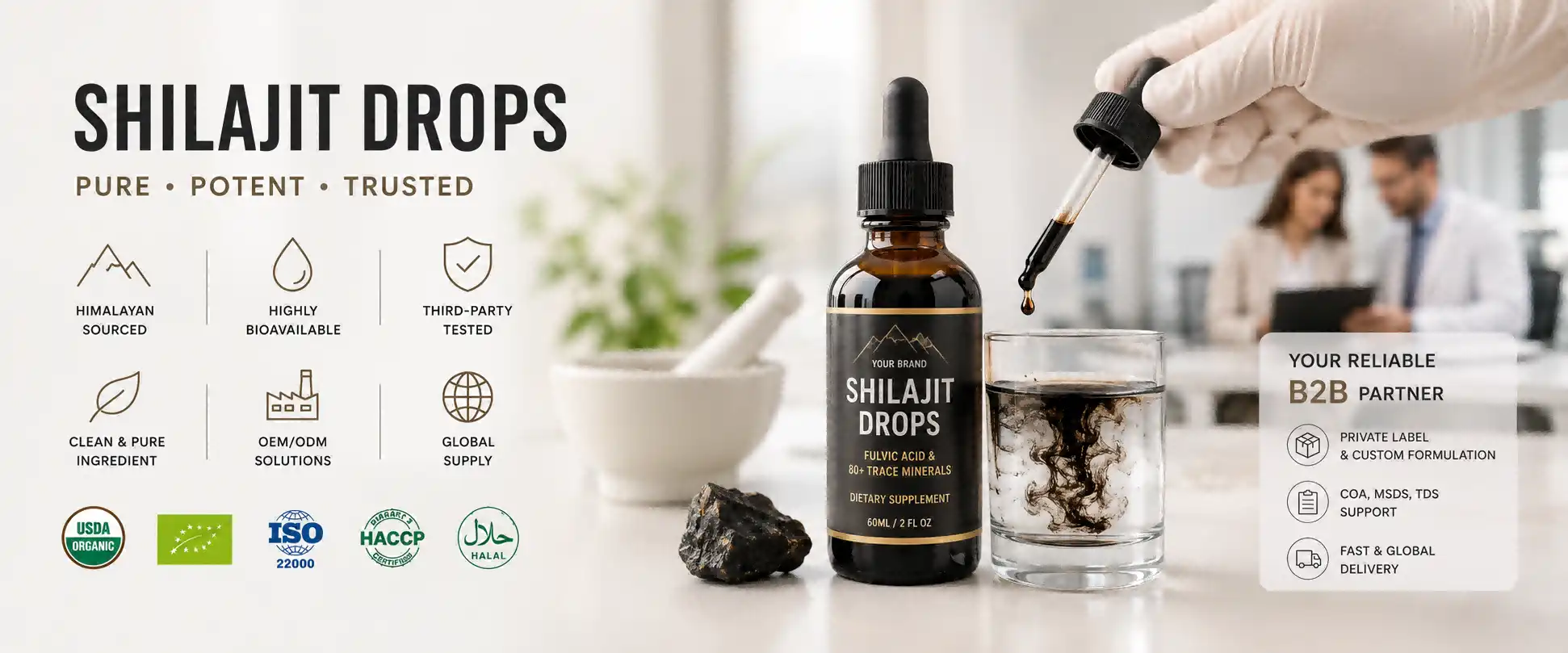
Products/shilajit-drops">Shilajit Drops are made from a refined, bioavailable product that comes from high-altitude mountain areas, mostly in the Himalayas and Altai. Unlike other types of resin, liquid drops are carefully cleaned by extracting them at low temperatures, which increases the amount of fulvic acid and important minor elements and removes heavy metals. This structure solves a major problem in the industry: accurate dose and quick absorption. When business-to-business buyers need reliable, scalable materials, knowing what Himalayan Shilajit Drops are made of, how well they work, and how to get them helps them make decisions that meet regulations and meet market needs.
Understanding Liquid Shilajit Drops: Composition and Uses
Natural Origins and Extraction Methods
The natural source of good liquid Shilajit is the first thing that makes it good. Real Shilajit is made over many years by breaking down plant matter that gets stuck between layers of rock above 3,000 meters. During the warmer months, this organic matter leaks out of cracks in rocks as a dark, tar-like substance. To keep the bioactive chemicals while getting rid of the contaminants, trustworthy producers use cold-water extraction or food-grade ethanol. This method protects over 80 minor elements, such as iron, calcium, magnesium, and zinc, along with fulvic acid, which is the main active ingredient.
When purchasing managers look at different sources, they should check the extraction methods to make sure that no harmful solvents are used. The consistency is what makes raw resin processes different from the current liquid formulation. Resin has to be mixed by hand with hot water to dissolve, but Shilajit Drops provide consistent amounts that can be used in industrial formulation. This uniformity is very important for companies that are making functional drinks, sports nutrition products, or nutraceutical supplements, because it affects both customer trust and government approval.
Bioactive Components and Mechanism of Action
Around 60–80% of good Shilajit Drops are made up of fulvic acid, which works as a natural chelator to help cells absorb minerals better. This chemical gets into the brain from the blood and helps cognitive function by stopping the buildup of tau protein that is linked to neurological diseases. According to research, fulvic acid makes mitochondria work better, which has a direct effect on the production of ATP, which is the cell's energy currency. This process explains why Shilajit Drops have adaptogenic qualities without the side effects of stimulants, which is important for sports nutrition brands that want to improve performance.
The minor mineral profile works with fulvic acid to make it more effective. Dibenzo-alpha-pyrones are another type of beneficial compound found in real Shilajit. They help mitochondria use oxygen and move electrons around. These chemicals help keep your metabolism in check, which makes Shilajit Drops useful for weight loss and fitness products. B2B clients who are making supplements to help with memory and thinking skills can use Shilajit's neuroprotective properties, and those who are making supplements to help the immune system can use its antioxidant properties.
Safety Standards and Regulatory Compliance
Quality control is the most important thing for buyers to think about. Because of where Shilajit comes from geologically, heavy metal pollution is the biggest risk. Manufacturers who are responsible show that their products meet the standards set by Proposition 65 by having lead levels below 0.5 ppm, arsenic levels below 0.5 ppm, cadmium levels below 0.1 ppm, and mercury levels below 0.1 ppm. ICP-MS research confirms these levels, telling the difference between high-quality sellers and low-quality ones.
Testing for microbes makes sure that liquid mixtures that can grow germs are safe. Specifications should show that E. coli, Salmonella, yeast, and mold amounts are safe. Organic approvals (USDA Organic, EU Organic) and non-GMO proof help brands stand out in the market when they want to use a "clean label" strategy. OAZVITA follows strict quality standards and has approvals for HACCP, ISO 22000, NSF, and HALAL. They meet the needs of a wide range of markets in North America, Europe, and Asia. Each batch of Shilajit Drops comes with full paperwork (COA, MSDS, and TDS) to help clients with their quality control and regulation submissions.
Dosage Guide and Best Practices for Liquid Shilajit Drops
Recommended Dosing Protocols
The best dose depends on the end user's characteristics and the purpose of the product. Most experts say that you should take between 300 mg and 500 mg of pure Shilajit Drops every day, which is about 10 to 15 drops, based on the concentration. Higher amounts (500–1000 mg) help with energy before and after exercise in sports nutrition formulas. Moderate amounts (300–500 mg) are often used in cognitive support items to improve mental clarity without overstimulating the brain. Lower, steady doses (200–300 mg) are better for geriatric health uses because they help with problems absorption of nutrients.
Effectiveness is affected by timing. Giving it in the morning aligns with cortisol rhythms and speeds up energy consumption throughout the day. Through antioxidant processes, evening doses may help with healing and sleep quality. When creating product usage directions, B2B clients who are making mixtures with more than one ingredient should take these time preferences into account. The liquid form lets the drug be absorbed under the tongue, skipping the first pass of hepatic processing and speeding up the start times. This gives brands that market their products as quick-fix options a competitive edge.
Synergistic Combinations and Integration
When you combine Shilajit Drops with ingredients that work well together, the healing effects are amplified. CoQ10 and niacin work together to improve mitochondrial function, which makes this mix useful for heart health products. Ashwagandha boosts the benefits of adaptogens, making goods that help with stress more appealing to people who care about their health. B-complex vitamins help the energy metabolism routes that fulvic acid sets off, which makes the recipe work better overall.
For companies that make healthy drinks, Shilajit Drops work perfectly with cold-fill production lines because they don't clump as powders do. Because it dissolves in water, it keeps finished goods clear when they are made correctly. Companies that make healing elixirs mix Shilajit with electrolyte minerals and BCAAs to make complete treatments for after a workout. Because it can be used in so many ways, Shilajit Drops are a key factor for creativity in many health and wellness areas.
Storage and Stability Considerations
To keep bioactivity, things must be handled correctly throughout the supply chain. When kept in a cool, dry place out of direct sunlight for 24 months, Shilajit Drops stay stable. Fulvic acid is kept from breaking down by light in amber glass bottles or dark packaging. Extreme temperatures speed up decay; storing between 15°C and 25°C keeps the strength stable. B2B buyers should make sure that sellers store goods properly and give stable data to back up promises about shelf life.
When brands make their own goods, the specs for the packaging affect how customers see the products and how well they work. Dropper bottles with graduated marks make dosing more exact, which lowers the chance of mistakes and raises customer happiness. Child-resistant seals meet safety standards in places where supplement packaging rules are very strict. When talking about MOQ and custom packaging development with OEM partners like OAZVITA, which offers flexible packaging solutions starting at 100 bottles with labels and bottle styles that can be changed, these things are taken into account.
Procurement Insights: Buying Liquid Shilajit Drops in Bulk and Wholesale
Supplier Verification and Due Diligence
A systematic review is needed to find producers you can trust. Verified sellers keep their GMP certifications up to date, which shows that their work settings are controlled. Audit records from well-known organizations like NSF, SGS, and Intertek give unbiased opinions on quality. Site checks show what the infrastructure can do, how to stop pollution, and how to train staff. International buyers who can't visit the seller in person can use third-party inspection services to make sure what the supplier says is true before they place big orders for Shilajit Drops.
Professional sellers can be told apart from iffy sources by how complete their documentation is. Full packages come with a COA with test results specific to the batch, an MSDS for safe handling, and a TDS with information on the physical and chemical qualities. The paperwork for exporting should include HS codes, the place of origin, and statements of compliance for the markets where the goods will be sold. OAZVITA offers full paperwork packages that help with government filings and customs clearance, making it easier for distributors in North America, Europe, Asia, and developing markets to do business internationally.
Pricing Structures and Volume Economics
Market pricing for Private Label Shilajit Drops is based on levels of quality and the complexity of the supply chain. Entry-level goods with little testing and unknown sources cost between $8 and $15 per 100ml bottle in bulk. $15 to $25 a bottle for mid-range products with basic certifications and normal tests. Expenses like full testing, organic licensing, and clinical study make $25 to $40 a bottle worth it. Costs per unit usually go down by 10–20% when the quantity reaches 1000 bottles and by 20–30% when it goes over 5000 bottles.
Subscription models make the supply chain more stable for names that already have a steady rate of sales. Quarterly agreements make sure that prices stay the same even if the market for raw materials changes. Payment terms depend on the supplier and the amount of the order. For new customers, normal terms include a 30% deposit and the remaining 70% due before shipment. After the relationship is established, terms change to net-30 or net-60. OAZVITA offers a range of flexible payment plans to meet the cash flow needs of all of its clients, and its prices are competitive and in line with international standards.
Logistics and Import Considerations
Total landing costs are affected by factors that are unique to international shipping. Even though it costs more per unit, air freight (3–7 days) is good for pressing sales and first market tests. When wait time allows, sea freight (20–40 days) is the best way to send big amounts of goods. Express companies like DHL, FedEx, and UPS offer tracking and protection, but they charge more. When buyers look at quotes from suppliers, they need to add up the duties, taxes, and trading fees to get the real landing costs.
MOQ talks help suppliers be more efficient while also lowering the risk for buyers. For trying a new SKU, established names with a history of demand can get lower MOQs (100 to 250 bottles). New brands are willing to start with bigger MOQs (500 to 1000 bottles) in order to get better prices. When contract makers offer white-label services, they usually give smaller MOQs during the development phase. After the launch, they move on to bigger commitments. By understanding these factors, you can choose suppliers in a way that fits your growth stage and market plan.
Maximizing ROI with Liquid Shilajit Drops: Use Cases & Recommendations
OEM Development and Custom Formulation
The functional health industry has a lot of private label possibilities. Brands use agreements with OEMs to release their own formulas without having to invest in new infrastructure. Custom mixing mixes Shilajit Drops with specific ingredients. For example, it can be mixed with Rhodiola to help with stress, with L-theanine to help with focus, or with electrolytes to help with recovery after exercise. Differentiating in the market through flexible recipe development speeds up time-to-market compared to building production skills in-house.
Customizing the packaging makes the brand stand out more. Custom bottle forms, branding droppers, tamper-evident seals, and unique label designs are all options. Value lines use colorless PET to save money, while premium names use amber glass that blocks UV light. OAZVITA's OEM services offer full turnkey solutions, from formula development to labeling and packing. Professional R&D teams help with application advice and market placement suggestions. This all-around method makes it easier for marketers and brand owners to get into the competitive supplement market.
Market Trends and Consumer Demand
The world market for adaptogens is growing quickly, and Shilajit Drops are gaining popularity because they are easier to use and are thought to be purer. Millennials and Gen Z customers who care about their health want clear supply chains and clean-label ingredients, which increases the need for organic approvals and third-party testing. Sports nutrition is used for more than just bodybuilding. It's also used in functional fitness and endurance sports, where natural performance improvement fits with the ideals of clean sports.
Cross-category innovation opens up new business possibilities. Shilajit is used by beauty brands in makeup items that you eat to help protect cells from damage. Professionals who want to boost their output without using drugs are interested in cognitive enhancement items. Geriatric wellness products are made for older people who value staying healthy and independent. By strategically placing yourself in these new market niches, you can catch growth before the established categories are full.
Partnership Success Stories
Real-life case studies show that the idea can be used in business. A North American sports nutrition brand worked with approved sources to launch a Himalayan Shilajit Liquid-based recovery line. Through targeted marketing that focused on clean ingredients and third-party tests, the brand made $2.3 million in its first year. European wholesalers going into Asian markets used HALAL approval to get into areas they couldn't get to before, which increased their reach by 40% in just 18 months. These results came about because of careful source selection, aligned quality assurance, and customization for the market.
Sustainability efforts are becoming more and more important in deciding what to buy. People who care about the environment and fair harvesting practices like ethical sourcing methods that record these practices. When suppliers set up tracking systems and help out local communities, they create compelling brand stories that set their goods apart in crowded markets. Customers will be committed and buy from you again and again if you build long-term relationships based on shared values. This will increase your lifetime value and lower the cost of getting new customers.
Conclusion
Shilajit Drops are very useful for a wide range of B2B uses in sports nutrition, functional drinks, health goods, and Dietary Supplements. This format is a key ingredient for brands that want to stand out in the market because it is bioavailable, can be dosed precisely, and can be used in any manufacturing process. For procurement to go well, suppliers must be carefully screened, quality paperwork must be complete, and product specs must match the needs of the target market. Knowing how digestion works, how to dose, and how to compare formats helps you make smart choices that balance cost, quality, and business potential. Strategic relationships with qualified makers are the key to long-term growth in health markets that are already very competitive.
FAQ
1. What makes liquid Shilajit more effective than capsules or powder?
It is possible for bioactive chemicals to enter the bloodstream straight through the oral mucous membranes with liquid formulations. This skips the first-pass processing in the digestive system, which means that the effects start faster (30–45 minutes vs. 60–90 minutes for pills) and are more bioavailable. The liquid form also gets rid of problems with how quickly capsules dissolve and how easily powder dissolves, which can lower effectiveness.
2. How do I verify Shilajit quality when evaluating suppliers?
Ask for full Certificates of Analysis that show heavy metal testing (lead, arsenic, mercury, cadmium) that is below the allowed levels, as well as bacteria testing results and fulvic acid content proof using standard methods from LAMAR or AOAC. Verify qualifications (GMP, ISO, organic) by checking the register. Before making big orders, look over the stability data that backs up claims about the shelf life and ask for samples to be tested by a third party.
3. What are typical MOQs and lead times for bulk orders?
MOQs are different for each seller and customer. Standard stock items usually need at least 100 to 500 bottles, while special formulas might need 1000 or more bottles. Lead times for stock items are between 1 and 5 days, and they're between 15 and 30 days for special development. Express shipping choices, like air freight and courier, can meet urgent needs. Sea freight, on the other hand, is the most cost-effective way to ship large amounts of goods on flexible schedules.
4. Can liquid Shilajit be integrated into beverage formulations?
Liquid Shilajit works well in cold-fill beverage production because it doesn't need to be heated, which could break down sensitive chemicals. Solubility in water-based systems relies on concentration and pH. Stability and clarity in finished products are ensured by formulation help from expert providers. Testing for compatibility with other ingredients stops precipitation or taste interactions that could make the product less appealing to customers.
Partner with OAZVITA: Your Trusted Shilajit Drops Supplier
OAZVITA makes high-quality Himalayan Shilajit Drops for health brands, sports nutrition companies, and functional food businesses that want to use approved, reliable ingredients. Our full quality assurance includes certificates from HACCP, ISO 22000, NSF, HALAL, EU Organic, and USDA Organic, making sure that we meet the standards of all global markets. We help brands by offering flexible OEM/ODM solutions, such as unique formulas, low MOQs (starting at 100 bottles), and quick turnaround times (1–5 working days). Free samples with full paperwork (COA, MSDS, TDS) let you check the quality before making a purchase. Our global transportation network (DHL, FedEx, UPS, and sea freight) and 24/7 bilingual support team make sure that the whole process of buying goes smoothly, from the initial question to delivery. OAZVITA gives your business the knowledge, quality, and dependability it needs, whether it's introducing new products or making current ones bigger. Email us at info@oazvita.com to talk about your Shilajit Drops needs and find out how our production skills can help you succeed faster in the market.
References
1. Carrasco-Gallardo, C., Guzmán, L., & Maccioni, R.B. (2012). Shilajit: A Natural Phytocomplex with Potential Procognitive Activity. International Journal of Alzheimer's Disease, 2012, 674142.
2. Pandit, S., Biswas, S., Jana, U., De, R.K., Mukhopadhyay, S.C., & Biswas, T.K. (2016). Clinical Evaluation of Purified Shilajit on Testosterone Levels in Healthy Volunteers. Andrologia, 48(5), 570-575.
3. Stohs, S.J. (2014). Safety and Efficacy of Shilajit (Mumie, Moomiyo). Phytotherapy Research, 28(4), 475-479.
4. Wilson, E., Rajamanickam, G.V., Dubey, G.P., Klose, P., Musial, F., Saha, F.J., Rampp, T., Michalsen, A., & Dobos, G.J. (2011). Review of Shilajit Used in Traditional Indian Medicine. Journal of Ethnopharmacology, 136(1), 1-9.
5. Goel, R.K., Banerjee, R.S., & Acharya, S.B. (1990). Antiulcerogenic and Antiinflammatory Studies with Shilajit. Journal of Ethnopharmacology, 29(1), 95-103.
6. Bhattacharyya, S., Pal, D., & Acharya, S. (2009). Shilajit Dibenzo-α-pyrones: Mitochondria Targeted Antioxidants. Pharmacology Research, 60(6), 488-494.

Send Inquiry

Related Industry Knowledge
- Are Chewable Probiotic Gummies Better Than Capsules for Gut Health?
- The Ultimate Chewable Collagen Gummies Guide
- Pure NAD+ Powder vs NAD+ Capsules: Key Differences & Applications
- Top 7 Benefits of Using Pure Bovine Collagen Peptides in Skincare
- How to Choose the Best Pure NAD+ Powder Supplier in 2026?
- Best creatine monohydrate powder for women: benefits and guidelines
- Pure NMN Powder vs NMN Capsules: Key Differences & Benefits
- Applications of high purity magnesium glycinate powder in sleep support
- Supplying GMP MCT Powder to Clinical Nutrition Brands in Singapore
- Pure NMN powder application: longevity, metabolism and fitness