
Tea Saponin Powder: What It Is and What It Does
Aug 04, 2026
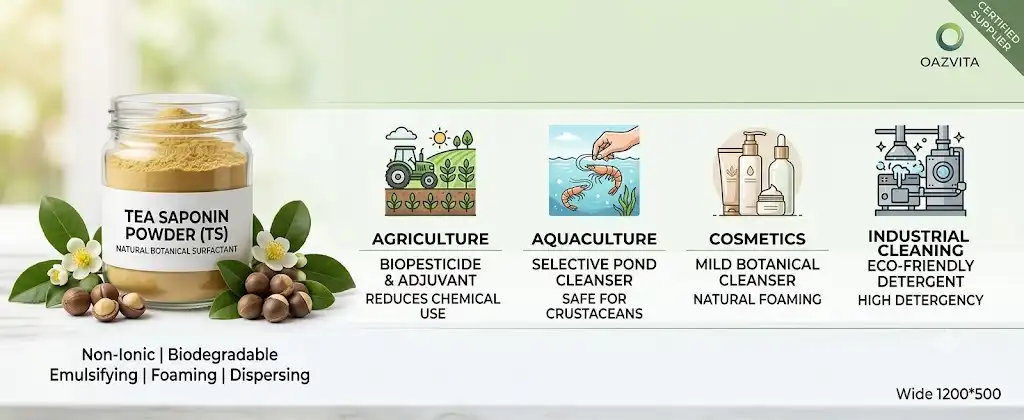
Tea Saponin Powder is a natural, plant-derived surfactant extracted from the seeds and leaves of Camellia species, particularly Camellia oleifera. This bio-based ingredient functions as a non-ionic surfactant, containing triterpenoid saponins with unique foaming, emulsifying, and dispersing properties. Across various industries—from agriculture to cosmetics and aquaculture—this powder addresses critical needs for biodegradable, eco-friendly alternatives to synthetic chemicals, positioning itself as a premium botanical solution for modern manufacturing challenges.
Understanding Tea Saponin Powder: Nature and Extraction
What Makes Tea Saponin Powder Unique?
The bioactive parts of Tea Saponin Powder are mostly made up of pentacyclic oleanane-type triterpenoids. These chemicals are mostly taken from tea seed cake, which is a waste product from making tea oil. What was once agricultural waste is now a valuable input in industry. The chemical structure has a hydrophilic sugar chain connected to a lipophilic agenin backbone. This gives it amazing surface-active qualities without the harm to the environment that comes with using petroleum-based lubricants.
What we thought we knew about this element has changed a lot. Tea Saponin Powder selectively breaks down hemoglobin in fish but not in crabs, according to research. This makes it very useful for cleaning up aquaculture ponds. Because different species' blood cell membranes are made up of different chemicals, this selectivity means that farmers can use a focused biological tool instead of broad-spectrum chemical medicines.
Extraction Methods and Quality Standards
The method of extraction has a direct effect on how pure and useful the end result is. The cheapest way to get saponin is still to use hot water extraction, which gives a content of 50–70%. Using ethanol or methanol as a solvent leads to higher levels of purity, with top grades having 95% HPLC-verified saponin content. This is the standard that OAZVITA keeps for its Tea Saponin Powder (CAS NO.: 8047-15-2).
For quality control, strict testing protocols are needed. High-Performance Liquid Chromatography confirms the fingerprints of saponins, and heavy metals are kept within tight limits (Lead <3.0 ppm) by contamination screening. EC 396/2005 guidelines are used for pesticide residue tests, which is important because tea trees can store agricultural chemicals. It is normal practice for OAZVITA to give buyers Certificates of Analysis (COA), Material Safety Data Sheets (MSDS), and Technical Data Sheets (TDS) with each batch.
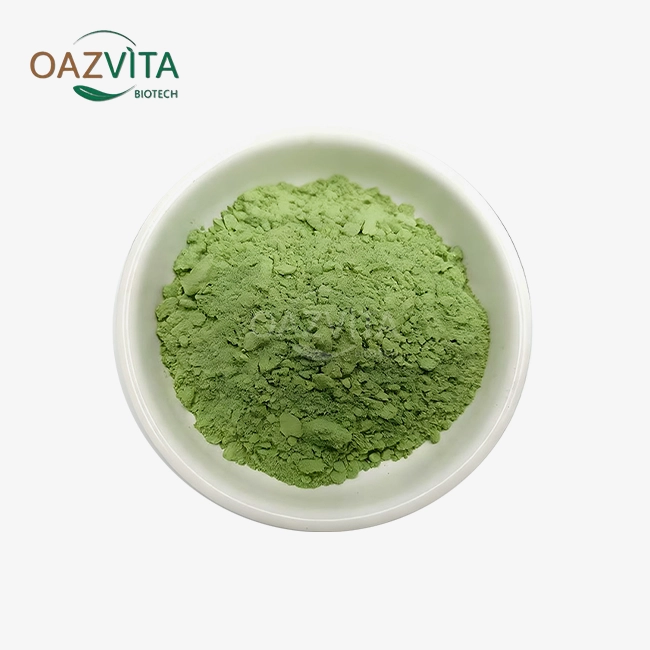
The physical traits are just as important. Premium Tea Saponin Powder is a fine, light yellow to brown powder that has been sieved through an 80-mesh screen 95% of the time to make it easier to spread. The bulk density is usually between 0.35 and 0.45 g/ml, which changes the estimates for packaging and the formulation density in finished goods.
Key Benefits and Applications of Tea Saponin Powder
Agricultural Applications: Natural Pest Management
Tea Saponin Powder is used in sustainable farming as both a biopesticide and an additive. The insecticide effect comes from damaging the waxy covering on pests' exoskeletons, which makes them lose water and die. When used at the suggested amounts, field tests show that it works against soft-bodied insects like aphids, whiteflies, and thrips without hurting good bugs.
In addition to killing pests directly, Camellia Saponin Powder works great as an additive to sprays. It greatly improves herbicide coverage on leaf surfaces that don't like water by lowering surface tension from about 72 mN/m to below 30 mN/m. Because it wets and spreads, this action lets farms use 20–30% less chemical pesticides while still getting the same results. This saves money and is better for the environment. The ingredient also helps plants' anti-inflammatory processes, which helps them heal from damage caused by pests and the environment.
Aquaculture: Selective Pond Management
Shrimp and prawn farmers always have to deal with the problem of getting rid of fish that eat crustaceans from ponds before they can add eggs without adding toxins that stay there. A beautiful option is Tea Saponin Powder. When used at 15-20 ppm, it breaks down blood vessels in fish gills, killing them quickly within 24 to 48 hours. Importantly, crustaceans have different blood chemistry and are not hurt, so this is a very selective tool for management.
Taking vitamin supplements is another benefit. When saponin molecules break down, they release trace nutrients and may help good microbes live in pond sediments. The water quality usually goes back to normal within 5–7 days after application, so stocking can happen on time without having to wait for a long time. This efficiency is important for businesses because pond change has a direct effect on their ability to make money.
Cosmetics and Personal Care Formulations
For clean-label beauty Products, Tea Saponin Powder extract is a good choice because it gently foams and emulsifies. Sulfate-based surfactants remove natural oils from the skin, but Tea Saponin Powder makes a mild, stable foam that keeps the skin's moisture barrier intact. It works well in pH ranges of 5.5 to 7.5 and is compatible with most makeup formulas.
Product makers like that it can be used for many things. Tea Saponin Powder does more than just clean; it also has mild antibacterial properties that help preservation systems work without using harsh antimicrobials. It helps products for sensitive skin by lowering the chance of irritation because it has anti-inflammatory qualities. Brands that market their products as natural, plant-based, or eco-friendly find that Tea Saponin Powder fits in perfectly with their customers' values while also providing real performance benefits.
Industrial Cleaning and Detergent Applications
Environmental laws are making it harder to use synthetic detergents in commercial cleaning. Tea Saponin Powder has the same detergency as other soaps and is completely biodegradable; in normal tests, it breaks down 90% within 28 days. It works well in hard water and a wide range of temperatures, so it can be used for cleaning a wide range of places, from food processing plants to textile factories.
The qualities that help with emulsification and dispersion are useful in a variety of situations, such as cleaning up oil spills, degreasing metal, and making concrete foam. These different uses show how chemically versatile the ingredient is and how it is becoming more and more recognized as a healthy industry input.
Tea Saponin Powder vs. Alternatives: Making the Right Choice
Performance Comparison with Synthetic Surfactants
There are a few things that should be thought about when comparing Tea Saponin Powder to common surfactants like sodium lauryl sulfate (SLS) or alkylbenzene sulfonates. The ability to lower surface tension is about the same—both reach values that make wetting and emulsification work well. However, Tea Saponin Powder is less likely to irritate the skin. Human patch test studies showed that it caused minimal sensitization compared to synthetic alternatives that often cause contact dermatitis.
The fact that something is biodegradable is an important benefit. Some synthetic surfactants stay in wastewater for weeks, but Tea Saponin Powder breaks down quickly through microbial action, so there are fewer worries about its safety in water. When the production, use, and disposal steps are all taken into account, life cycle studies show smaller impacts on the environment. As companies face tougher rules for protecting the environment and more attention from customers, these factors become more important in their purchasing decisions.
Cost Considerations for Bulk Procurement
The price per kilogram changes a lot depending on how pure it is, what amount of certification it has, and how much you buy. Standard grade Tea Saponin Powder is 50–60% pure and usually costs $8–15/kg in bulk (500 kg or more). Premium grades that are 95% HPLC-verified cost $18–28/kg. At first, Tea Extract Saponin Powder is more expensive than common synthetic surfactants ($3–7/kg), but when you look at the total cost of ownership, which includes lower disposal fees, lower regulatory compliance costs, and the marketing benefits of natural ingredients, it often ends up being cheaper.
Buyers should negotiate based on commitments to buy a certain amount each year. Long-term supply deals with manufacturers often lead to cost cuts of 10 to 15 percent, as well as sure allocation and stable prices, which are important for planning production. Different suppliers have different minimum order amounts. OAZVITA can handle orders as small as 1 kg for samples and as large as multiple tons for established production lines.
Organic vs. Regular Grade Selection
Cost and market position are both affected by the level of certification. Organic-certified Tea Saponin Powder costs more ($5–10/kg more), but it gives you access to organic product categories that are growing 8–12% per year. For USDA and EU organic approvals, farming methods, processing methods, and the stability of the supply chain must be checked. Serious buyers should carefully look over this paperwork.
Regular grade Tea Saponin Powder can be used in places where organic certification is not needed, but environmental friendliness is still important. These types are still put through strict quality checks, and they usually meet HACCP, ISO 22000, and NSF standards, which means they can be used in food, Dietary Supplements, and regular makeup.
How to Procure Tea Saponin Powder for Your Business: A B2B Buyer's Guide
Supplier Evaluation Criteria
To find trustworthy providers, you need to do more than just compare prices for Tea Saponin Powder. Check the manufacturing certifications first. Trustworthy providers will easily give you HACCP, ISO 22000, GMP, and any other related organic certifications. Traceability paperwork should show where the raw materials came from, starting with specific tea seeds and ending with processing and extraction. This will make sure that the quality is always the same and allow for easy refund management if needed.
Scalability depends on how much you can produce. Suppliers with more than one production line and yearly outputs of more than 500 metric tons show that they are stable and can handle rising accounts. To check the complexity of the equipment, the quality control labs, and the storage conditions, you can ask for facility audit reports or set up virtual inspections. These findings show that operations are more mature than what sales materials say.
Sample Testing and Validation Protocol
Don't commit to bulk orders until you've looked at samples carefully. Reliable providers, such as OAZVITA, offer free samples with full analytical paperwork so that they can be tested in-house before a purchase is made. Create a standard testing procedure that includes checking the amount of saponin in the formulations using HPLC, checking for contaminants like heavy metals, herbicides, and microbes, and testing the formulations' performance in specific ways.
Compare samples from different sources that were all kept in the same way. Functional properties, such as foaming, solubility, and stability under processing conditions, are affected by small differences in the extraction methods. By writing down these comparisons, you can use them as objective criteria to choose a provider and as negotiating power. Before placing your first order, please allow two to three weeks for a full evaluation.
Logistics and Lead Time Management
Logistics for international shipping have a big effect on overall landed costs and the dependability of the supply chain. Air freight can deliver in 5 to 7 days, but it costs $4 to $8/kg to send goods across continents. Costs drop to $0.50 to $1.50/kg for sea freight, but delivery takes 4 to 6 weeks longer. Think About Using a mix of methods: start with air freight for initial sales and new product launches, and then switch to sea freight for restocking once demand levels off.
Orders are processed by OAZVITA within 1 to 5 business days, and they can be shipped by DHL, FedEx, UPS, or standard companies. Setting up safety stock levels that cover the lead time plus two to four weeks of extra time stops production from stopping. Dual-sourcing methods lower supply risk for key ingredients, but they cost money to qualify multiple suppliers through the process we talked about earlier.
Best Practices for Using Tea Saponin Powder in Industrial Applications
Recommended Dosage and Application Techniques
Application rates are very different between businesses using Tea Saponin Powder. As a wetting agent and synergist, amounts between 0.05% and 0.2% (500 to 2000 ppm) work well in field sprays. When the concentration is higher (0.5 to 1.0%), it kills soft-bodied insects directly. For aquaculture uses, precise dosing at 15-20 ppm is needed to get rid of fish. This needs to be carefully calculated based on the size of the pond and the chemistry of the water.
Tea Saponin Powder is usually added to cosmetics at levels of 1% to 5% in cleansers and 0.5 to 2% in leave-ons. Depending on the type of dirt and how well it needs to be cleaned, industrial cleaning solutions may use 3 to 10 percent. Before going into full production, you should always do bench-scale tests to see how the formula works with different water hardness, pH, temperature, and other ingredients.
Formulation Compatibility and Stability Considerations
Tea Saponin Powder works well with most natural and artificial ingredients, but there are a few interactions that should be noted. Some detergents or polymers may mix with the negatively charged parts of Tea Saponin Powder, making it less efficient. When making a formula with proteins or some vitamins, lowering the pH to 6.0 to 6.8 makes it more stable and stops it from breaking down.
For properly packed powder, storage stability lasts for 24 months in a normal warehouse (cool, dry climate). Because moisture lowers the amount of saponin in soap and makes it clump, keep it in covered containers and keep the relative humidity below 65%. Once added to liquid mixtures, store them properly and check their stability with accelerated aging studies, since saponin hydrolysis can happen over long periods of time at high pH or temperature.
Regulatory Compliance and Safety Protocols
Although usually accepted as safe (GRAS) for many uses, handling Tea Saponin Powder needs to be done safely. The fine powder can irritate the lungs if breathed in, so it needs to be handled with care and with dust control measures in place. Direct skin contact doesn't usually cause problems, but gloves keep sensitive people from getting irritated. When mixing, it's a good idea to wear eye protection.
Regulatory standing depends on the product and the place where it is used. In the US, Tea Saponin Powder is considered GRAS for certain food uses when it is present in certain amounts. For biopesticide use in agriculture, you need to be registered with the EPA or show proof of an exemption. The FDA is in charge of cosmetic applications, which need to prove their safety but don't need pre-market approval. Different international markets have different rules. For example, the EU's rules, Japan's Food Sanitation Law, and other regional systems need to be carefully navigated. OAZVITA's wide range of certifications, including Halal, NSF, USDA Organic, and EU Organic, makes it easier to follow the rules in all of the big markets.
Conclusion
Tea Saponin Powder is a combination of sustainability, performance, and versatility that fits with the priorities of today's businesses. This botanical ingredient handles aquaculture, improves the efficiency of farming, and is used in clean beauty products and commercial cleaning. It does all of these things while leaving smaller environmental effects. This document gives procurement workers the technical specifications, quality standards, and supplier review factors they need to make smart choices that balance cost, performance, and corporate responsibility goals. As rules get stricter and people start to prefer natural alternatives, Tea Saponin Powder will become even more valuable to brands and manufacturers that are thinking ahead.
Frequently Asked Questions
1. Is Tea Saponin Powder Safe for All Industrial Applications?
If you use Tea Saponin Powder the right way, it has a great safety profile. A lot of tests have been done on the ingredient in cosmetics, aquaculture, agriculture, and other industries to make sure it is safe. Due to its hemolytic qualities, it should not be eaten by humans in amounts greater than trace amounts in prepared foods. However, when used externally and in accordance with industry standards, it poses little risk. OAZVITA's goods come with full safety information, like MSDS sheets, and meet international safety standards like HACCP, ISO 22000, and NSF to make sure they are handled and used safely.
2. Can Tea Saponin Fully Replace Synthetic Surfactants?
Tea Saponin Powder can be used instead of synthetic surfactants in many situations, especially when biodegradability, low toxicity, and natural positioning are important. It works as well as or better than synthetics in natural skincare, aquaculture management, and agriculture adjuvants. However, some commercial uses that need very stable pH levels, the ability to handle high ionic strengths, or certain HLB (Hydrophilic-Lipophilic Balance) values may benefit from mixed formulas that include Tea Saponin Powder and surfactants that work well with it. Application-specific testing figures out the best ways to formulate for each use case.
3. What Are Typical Bulk Order Lead Times?
Suppliers that have been around for a while keep stock on hand to help with quick delivery. Orders are processed by OAZVITA between 1 and 5 business days, and delivery times depend on the shipping method and destination. Express air shipping gets to places in North America and Europe in 5–7 days, while regular sea freight takes 4–6 weeks. Strategic buyers build long-term relationships with suppliers and set regular ordering cycles to make sure there is always enough stock without having to pay extra for fast shipping. Sample requests are usually sent out within 48 hours, which makes it easy to quickly evaluate products for new projects or the approval of suppliers.
Partner With OAZVITA for Premium Tea Saponin Powder Supply
It has become clear that OAZVITA is a reliable company that makes Tea Saponin Powder for global brands, original equipment manufacturers (OEMs), and wholesalers in North America, Europe, and Asia. Our high-quality tea seed saponin powder is standardized to 95% purity using HPLC analysis. It works consistently and comes with a lot of certificates, such as HACCP, ISO 22000, NSF, HALAL, USDA Organic, and EU Organic qualifications. Each batch comes with full analytical documentation (COA, MSDS, TDS), which makes sure that everything is clear and in line with the rules for your market.
We know that fast service, flexible minimums, and technical help are all important parts of good business-to-business relationships, in addition to high-quality products. Our team gives free samples to qualified buyers and can handle orders from 1 kg for testing to multiple tons for regular production. We offer stable supply lines no matter where you are thanks to our 24/7 customer service, multilingual service, and global logistics partnerships with DHL, FedEx, UPS, and air and sea freight. Our yearly exports of more than $15 million show that we have a lot of experience working with a wide range of goods, from functional foods and dietary supplements to farm products and cosmetics.
Get in touch with us at info@oazvita.com to talk about your Tea Saponin Powder needs. Our technical experts work together to speed up the launch of your products and improve your competitive position. They can help you with formulation development, legal paperwork, or custom packaging solutions. If you want to buy Tea Saponin Powder, OAZVITA is the place to go because they offer quality, stability, and service that is focused on the customer.
References
1. Chen, Y. F., Yang, C. H., & Chang, M. S. (2010). "Tea Saponin: Structure, Extraction, and Biological Functions." Journal of Agricultural and Food Chemistry, 58(15), 8629-8636.
2. Yoshiki, Y., Kudou, S., & Okubo, K. (1998). "Relationship Between Chemical Structures and Biological Activities of Triterpenoid Saponins from Soybean." Bioscience, Biotechnology, and Biochemistry, 62(12), 2291-2299.
3. Zhang, X., Chen, F., & Wang, M. (2014). "Tea Saponin as a Natural Surfactant: Applications in Agriculture and Industry." Industrial Crops and Products, 52, 341-352.
4. Liu, J., Henkel, T., & Nguyen, T. H. (2017). "Biodegradability and Ecotoxicity Assessment of Natural Surfactants for Industrial Applications." Environmental Science & Technology, 51(8), 4350-4358.
5. Okubo, K., Hirata, T., & Ishikawa, T. (2001). "Biological Activities of Saponins from Camellia Species: Focus on Hemolytic and Antimicrobial Properties." Phytochemistry Reviews, 10(3), 445-458.
6. Wang, H., Li, S., & Zhou, P. (2019). "Application of Tea Saponin in Aquaculture: Mechanism and Practice in Shrimp Pond Management." Aquaculture Research, 50(6), 1621-1634.

Send Inquiry
Related Industry Knowledge
- Can Natural Astaxanthin Powder And Oil Improve Eye and Vision Health?
- Benefits of Pearl Powder: What the Research Says About This Ancient Ingredient
- Discover the Health Benefits of Cordyceps Sinensis Extract Powder
- What Is The Difference Between Chicken Collagen Peptides And Marine Collagen?
- Manufacturing and stability of high purity magnesium glycinate powder
- China OEM Manufacturing of Premium Black Seed Oil Softgels for Export
- What makes the best creatine monohydrate powder effective?
- High purity magnesium glycinate powder: absorption and bioavailability
- TUDCA Powder Manufacturing Excellence Serving South Korea’s Pharma Sector
- Benefits of best spirulina chlorella tablets for athletes