Manufacturing and stability of high purity magnesium glycinate powder
Jun 02, 2026
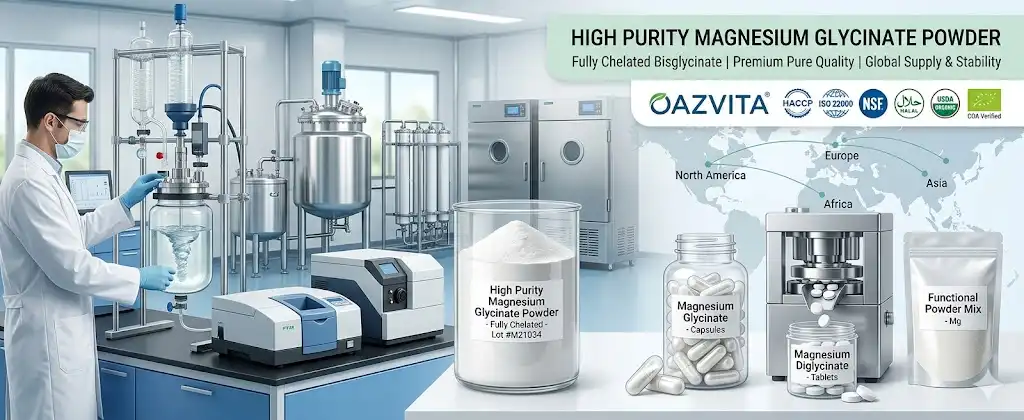
High Purity Magnesium Glycinate Powder is produced through the controlled binding of magnesium with glycine, followed by purification, drying, and rigorous quality testing to ensure purity, flowability, and shelf stability. Key evaluation criteria for buyers typically include confirmation of complete chelation, effective moisture control during production and storage, and the availability of valid batch-specific Certificates of Analysis (COA). These factors influence performance in capsules, tablets, powder blends, and functional food applications. In B2B procurement, additional considerations include chelation integrity, heavy metal control, packaging reliability, and supplier consistency, as these elements directly impact procurement risk and final product quality.
Understanding High Purity Magnesium Glycinate Powder
People who search for this topic usually want to learn more about it and also rate the suppliers they find. A featured-snippet answer would say that the substance is a highly refined magnesium bisglycinate chelate that is made to be better at absorption, have lower levels of impurities, and work better with other ingredients than many common magnesium salts.
What makes it different
This is a substance made up of magnesium and two glycine molecules. It is also known as Magnesium Diglycinate and has the CAS number 14783-68-7. The molecular formula for magnesium is Mg(C2H4NO2)2, and 11.7% of pure, unbuffered material is usually magnesium. Specifications for business supply may change depending on the formulation goals. For example, the magnesium content runs from 12% to 14% and from 18% to 22%.
This chelated form is more valuable in B2B sourcing than magnesium oxide, citrate, or chloride because it has a clean taste, works well in solid-dose formats, and is stable in high-end supplement and functional food lines.
Why B2B buyers care about purity
"Pure" isn't just a marketing word. It tells me if the product has fully responded, has a few leftovers, and can be used in tough situations. A lot of the time, buyers in the US look for low amounts of heavy metals, controlled bacteria, and paperwork like COA, MSDS, and TDS. These standards are usually set by USP, EP, or FCC.
OAZVITA meets these standards with approvals like HACCP, ISO 22000, NSF, HALAL, EU Organic, and USDA Organic. This makes it easier for buyers to qualify across multiple platforms.
Manufacturing Process of High-Purity Magnesium Glycinate Powder
From basic blending to controlled chelation
In the past, some High Purity Magnesium Glycinate Powder on the market were made with less precision or in buffering systems that mixed magnesium oxide and glycine. That method can increase the magnesium content on the label, but it doesn't give the same chelate purity. Controlled chemical synthesis is used in modern high-purity production to make a fully processed chelate that is more consistent from batch to batch.
Usually, the process includes choosing a magnesium source, reacting it with glycine at a controlled pH and temperature, filtering, cleaning, concentrating, drying, milling, and finally screening. Tight controls during the process are important because they help keep the powder's ability to move freely and lower the amount of impurities that are left over.
Quality control that protects consistency
Evaluation of manufacturing claims is based on analytical testing rather than output specifications alone. Standard quality control practices include verification of chelation using FTIR, measurement of elemental and heavy metal levels using ICP-MS, and monitoring of parameters such as pH, loss on drying, solubility, and microbial limits. Premium-grade specifications typically include lead levels below 0.5 ppm, absence of Salmonella and E. coli, and loss on drying below 7.0%.
A real manufacturing partner should also be able to explain where the raw materials come from and how the process works. Traceability and approval paths for organic and synthetic sources can be different, which is important for buyers who need to follow clean label, kosher, or region-specific rules.
What to look for in a supplier
Most of the time, you break down a supplier's ability into actual proof points instead of broad promises:
- A trustworthy company should have control over the whole process, from research and development to mass production. OAZVITA has a wide range of products, including health supplements, food additives, plant extracts, and pharmaceutical excipients. They also offer OEM/ODM services for pills, tablets, powders, and gummies. That free samples, batch-specific COAs, formulation advice, and pilot-scale support are all very useful because they make the launch process easier for brand owners, wholesalers, and private label buyers.
- Service strength and consistency are also important for long-term buying. OAZVITA boasts help that is available 24 hours a day, seven days a week, dedicated account managers, communication in multiple languages, and global shipping choices such as air, sea, DHL, FedEx, UPS, and airmail post. The company has a market footprint in North America, Europe, South America, Asia, and Africa, as well as a yearly export and sales volume of more than USD 15 million. This gives U.S. buyers the stability they look for in a key ingredient supplier.
Stability Factors and How to Maintain Product Integrity
Moisture, heat, and handling risks
Moisture is the main thing to watch for when it comes to magnesium glycinate powder's safety. If the humidity goes up while the powder is being stored or shipped, it may cake, stop flowing, and become harder to work with when making tablets or capsules. Even though the chelate is very stable at high temperatures, heat can change the quality of long-term treatment.
Moisture control is more important than oxidative degradation in this case, but exposure to the surroundings is still important. Stable mass density, color, and flowability help make production go smoothly further down the line.
Packaging and storage best practices
The right packing method is the first step to good stability. Bags that block moisture, sealed bins, desiccants, and controlled warehouse conditions all help keep the consistency of the product. The OAZVITA powder should be kept in a cool, dry place and has a 24-month shelf life. This is normal practice for managing ingredients for hygroscopic powders.
International shipping strategies typically incorporate packaging plans tailored to transit duration and environmental conditions. The availability of fast and secure transportation options helps reduce exposure to uncontrolled environments, thereby supporting product quality and stability from manufacturing through to final delivery.
Why stability matters commercially
Stability isn't just a matter of technology. It changes how quickly the cans are filled, how well they mix, how consistent the labels are, and how happy the customers are. From what I've seen, a stable ingredient gives people who make Products more confidence in the consistency of the batch, the taste, and the dose. That's especially important for high-end sleep aids and calm-boosting formulas, where good taste and smooth production are important to the overall brand experience.
Selecting and Procuring High Purity Magnesium Glycinate Powder: What B2B Buyers Need to Know
Core selection criteria
High Purity Magnesium Glycinate Powder Supplier comparison criteria typically include purity, magnesium content, batch testing methods, certification documentation, minimum order quantity (MOQ) flexibility, lead time, and related factors. OAZVITA specifies a minimum order quantity of 1 kg and a lead time of approximately 1 to 5 working days, which supports both pilot-scale projects and larger procurement needs. Additional evaluation commonly includes the supplier’s capability to provide private-label services or custom formulation support, which is relevant for supplement brands, sports nutrition companies, functional beverage manufacturers, nutricosmetic brands, and international wholesalers requiring differentiated SKUs.
Pricing, contracts, and documentation
Price alone is not a sufficient indicator of supplier suitability. Low quotations without complete documentation may introduce downstream risks and additional costs. Standard pre-purchase requirements typically include a current Certificate of Analysis (COA), a detailed specification sheet, a defined shelf-life statement, and a clear transportation plan. It is also common practice to confirm whether samples are available for independent or spot testing prior to bulk orders. OAZVITA provides free samples, which can support internal validation and approval processes. Contract terms generally include specifications for quality standards, batch consistency, packaging details, and shipping arrangements, enabling procurement teams to balance cost efficiency with supply reliability.
Application Insights: Maximising the Value of Magnesium Glycinate Powder in Your Product Line
Best-fit product formats
Because it has a bland taste and is easy to work with, this ingredient works especially well in pills, tablets, powder sticks, and drink mixes. It is usually picked for high-end solid-dose supplements, functional drinks, and health goods with clean labels.
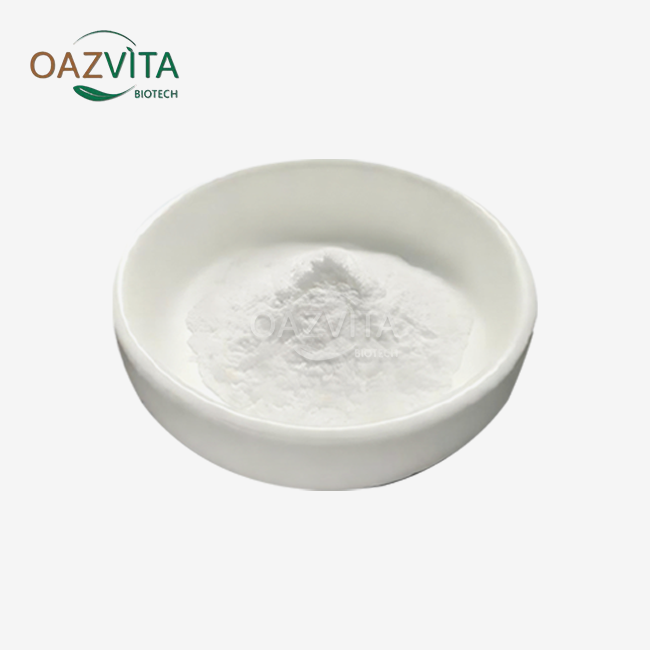
It comes in the form of a free-flowing powder that is usually white to off-white and has a bulk density of 0.6 to 0.9 g/mL. This makes it easier to capsule and pill. It can be easier for people who make drinks to formulate them when mineral salts are stable at pH levels and don't have a big effect on taste.
Market demand and positioning
More and more U.S. customers want bioavailable mineral forms, vegan-friendly formulas, and clear information about where the minerals come from. This trend makes room for high-purity chelated ingredients in lines of products that help with beauty from within, stress balance, sleep, and sports recovery. People who buy things often have an advantage in both the retail and private label channels when they combine a good recipe with trustworthy paperwork.
Conclusion
The value of High Purity Magnesium Glycinate Powder is primarily determined by its manufacturing process and stability characteristics. Key evaluation criteria include chelation integrity, impurity control, moisture protection, and supplier responsiveness. Reliable suppliers are generally expected to provide validated technical data, consistent lead times, flexible packaging options, and compliance-ready documentation. OAZVITA offers customisation capabilities, established certification support, free sample availability, and global delivery services. These features support procurement needs for brands and wholesalers seeking consistent quality and reduced supply chain risk.
FAQ
1. What is the difference between magnesium glycinate and buffered magnesium glycinate?
High Purity Magnesium Glycinate Powder is a chelate that has fully reacted. In buffered forms, magnesium oxide is often added to boost the amount of elemental magnesium claimed. This changes the material profile and may lower the value that buyers expect from a real bisglycinate ingredient.
2. Which certifications should you ask for when evaluating a supplier?
You should ask for a COA, an MSDS, a TDS, and any certificates that are important to your market, like HACCP, ISO 22000, NSF, HALAL, EU Organic, or USDA Organic. Buyers should make sure that the licensing needs of the product and the country where it will be exported match up.
3. Is high-purity magnesium glycinate powder suitable for vegan formulations?
Yes, many types can be used to make vegan products as long as the seller confirms that the ingredients and processing aids are vegan-friendly. Always check this on the most recent product papers.
Partner with Factop for Superior Pharmaceutical Capsule Filling Solutions
Need a reliable company to buy or sell a lot of High Purity Magnesium Glycinate Powder? OAZVITA can help your project by giving you free examples, quality papers that have been checked, flexible OEM/ODM service, and fast shipping around the world. Email our team at info@oazvita.com to talk about details like price, packing, and custom ways to buy things.
References
1. United States Pharmacopoeia and National Formulary, USP–NF
2. European Pharmacopoeia, European Directorate for the Quality of Medicines & HealthCare
3. Food Chemicals Codex, United States Pharmacopeial Convention
4. C. A. Erdman Jr., I. A. Macdonald, S. H. Zeisel, Present Knowledge in Nutrition, Wiley-Blackwell
5. Michael Ash and Irene Ash, Handbook of Food Additives, Synapse Information Resources
6. Robert A. Nash and Alfred H. Wachter, Pharmaceutical Process Validation, CRC Press

Send Inquiry
Related Industry Knowledge
- The Ultimate Chewable Collagen Gummies Guide
- What defines the best spirulina chlorella tablets?
- United States Market Trends for Apple Cider Vinegar Energy Gummies
- Pure Inositol Powder or Inositol Complex? Best Choice for Supplement Users
- Top OEM/ODM Glutathione Powder Manufacturers in China for 2026
- Benefits of shilajit resin supplement for cognitive performance
- Bovine Collagen Peptides for Medical Nutrition in France
- MCT Powder Processing Technologies Adopted in Singapore
- Fish Collagen Peptide Bioavailability Trends in Australia
- Typical dosage and timing for the best creatine monohydrate powder