
Top 7 Benefits of Using Chicken Collagen Peptides in Health Supplements
May 29, 2026
One of the most creative and useful ingredients changing the health supplement business right now is chicken collagen peptides. When it comes to joint health, skin elasticity, and general health, these specific bioactive chemicals offer benefits that standard collagen sources can't match. These peptides come from chicken cartilage and skin that have been broken down using modern enzymes. They are more bioavailable and provide specific health benefits. As the need for useful supplements grows, chicken-derived peptides become special ingredients for companies that want to make goods that stand out. By knowing these seven important benefits, supplement companies, purchasing managers, and product creators can decide if this powerful ingredient should be added to their Products.

Understanding Chicken Collagen Peptides
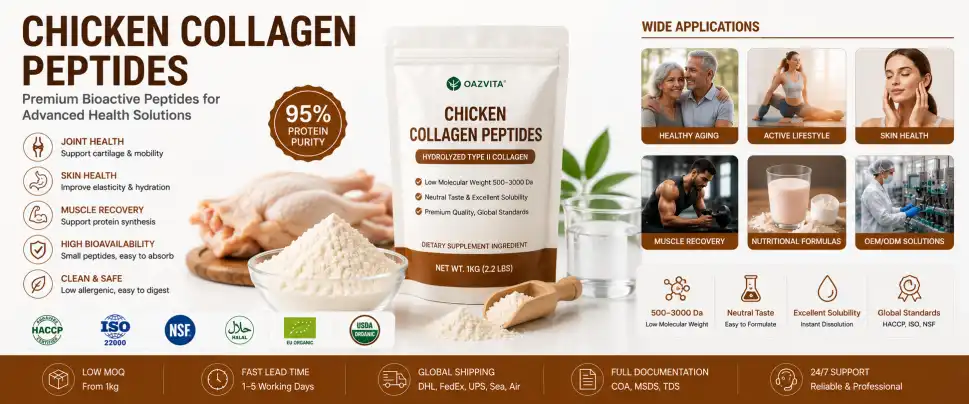
Highly accessible protein pieces called chicken collagen peptides are made using advanced processing methods that change native collagen. This special ingredient is mostly made up of Type II collagen, which is very different from Type I collagen that comes from cows and fish. The chemical weight of these peptides is between 500 and 3,000 Daltons, which makes them much smaller and easier for the body to process than full collagen proteins.
Production Process and Quality Standards
Controlled chemical hydrolysis is used in modern production methods to separate chicken skin and cartilage into peptide pieces. This process keeps the purity of important amino acids and makes sure that the molecular weights are spread out evenly. The hydrolyzed chicken collagen powder from OAZVITA goes through strict cleaning steps that make it 95% pure, as shown by HPLC analysis. It also meets international quality standards and has been certified by HACCP, ISO 22000, and NSF.
To keep bioactive substances like chondroitin sulfate and hyaluronic acid that are naturally found in chicken cartilage, the manufacturing method carefully controls the temperature and pH. These extra parts make the peptide complex work better overall, helping with joint health in a way that works better together.
Molecular Characteristics and Traceability
Professional-grade chicken peptides have specific molecular weight profiles that make sure they are absorbed at the best rate. This element has the CAS number 9007-34-5, which means it is a standard bioactive molecule with a known safety profile. Complete control from the source to the finished product makes sure that international rules are followed, and records of analysis prove the purity and strength of each batch.
Top 7 Benefits of Chicken Collagen Peptides in Health Supplements
Chicken collagen peptides, a type of chicken-derived peptide, have special qualities that make it possible for supplement companies to use scientifically proven ingredients to help with certain health problems. Because of these seven benefits, sourcing experts and product creators are choosing chicken peptides more and more for high-end formulations.
Enhanced Joint Health and Mobility Support
Type II collagen peptides work especially to repair cartilage and make joints feel better. Clinical studies show that peptides made from chicken cartilage increase the activity of chondrocytes, which helps make new cartilage matrix components. This focused action is different from taking extra protein in general, and it helps people who have problems with stiff joints or movement.
The naturally found chondroitin sulfate and hyaluronic acid in chicken-derived peptides help support the structure of joint tissues even more. These chemicals work together with the peptides to keep the joints lubricated and cushioned, making full support systems for people who live busy lives.
Superior Bioavailability and Absorption
Serum hydroxyproline levels show that hydrolyzed chicken peptides are absorbed at rates higher than 90% within two hours of eating. This amazing absorption comes from the precise spread of molecular weights that can be achieved through carefully controlled hydrolysis processes. Unlike full collagen proteins, which have molecular weights around 300 kDa, these peptides get around stomach problems that normally make it harder to use proteins.
The better absorption properties allow for smaller doses to be used while still having the same beneficial effect. This advantage means that formulations can be made that are both cost-effective and get measurable results. This makes goods more appealing to customers who are looking to save money while keeping makers' profits high.
Versatile Formulation Compatibility
Professional-grade chicken peptides are very stable in a wide range of supplement forms, such as powders, pills, tablets, and functional drinks. Because these peptides don't have a strong flavor and are very easy to dissolve, they can be used in a wide range of situations without changing the texture or taste. High-quality chicken peptides don't add any gritty or off-tasting tastes to current recipes like some other protein sources do.
Stability at high temperatures during production means that it can be added to heated goods like candies and bars without breaking down. Because of this, product makers can come up with new transport methods that appeal to a wide range of consumer tastes and market groups.
Low Allergenic Potential
Chicken collagen peptides cause fewer allergic reactions when compared to marine or cow alternatives. The process of hydrolysis breaks down protein structures that could be bad while keeping good amino acid patterns. Because of this, chicken-derived peptides can be used by people who are sensitive to fish or meat, which means that supplement makers may be able to reach more people.
Comprehensive testing methods make sure that common contaminants and allergens are not present, which gives sensitive groups even more safety guarantees. People like clear, easy-to-recognize chemicals, and chicken peptides have a clean description that fits with that.
Skin Health and Anti-Aging Benefits
Type II collagen is mostly good for joint health, while peptides from chicken skin that contain Type I collagen help keep skin smooth and moist. When both types of collagen are found together in chicken-based goods, they offer many benefits for beauty-from-within uses. Recent studies show that regularly eating these peptides can make skin more moist and lessen the signs of age that you can see.
Some of the amino acids that are found in high amounts in chicken peptides are glycine, proline, and hydroxyproline. These acids help skin cells make collagen. This nutritional support helps the body keep the structure of the skin in good shape and fix any damage that happens at the cellular level.
Muscle Recovery and Protein Synthesis
Essential amino acids are found in high-quality chicken peptides and are needed for muscle repair and protein production. Because it absorbs nutrients quickly, it gets nutrients to muscle areas quickly after exercise or physical stress. This benefit makes it appealing to sports nutrition brands that want to use products that help people live busy lives and do well in sports.
There are conditionally necessary amino acids in the full amino acid profile that become very important during times of stress or healing. Because they contain all nine essential nutrients, chicken peptides are useful for clinical nutrition and medical food formulas.
Cost-Effective Premium Positioning
Compared to marine collagen options, peptides produced from chicken, specifically chicken collagen powder, are the best combination of high functionality and low cost. Established supply lines for chicken-based ingredients make sure that they are always available and that prices stay stable. This lets makers keep their cost structures predictable. Because of this economic edge, brands can keep their profit margins high while still selling high-quality goods at reasonable prices.
Comparison and Considerations for Procurement
To find the best collagen peptide sources, you need to carefully look at their useful benefits, cost structures, and how reliable their supply chains are. Chicken peptides have clear benefits over other sources, but buying experts need to be aware of some important things.
Chicken vs. Marine Collagen Analysis
Marine collagen usually costs more than other collagen types because it is harder to get and needs to be processed in a certain way. Although sea sources of Type I collagen are very bioavailable, chicken peptides have the unique benefit of being able to use Type II collagen for joint-specific purposes. Products made from chicken often offer better value for money when it comes to complete health recipes because they contain a wider range of amino acids and natural matrix components.
Because farming systems are well-established and resources are used efficiently, chicken-based products are becoming more and more popular for sustainability reasons. Marine sources are getting more attention because of worries about overfishing and damage to the environment. This makes chicken peptides appealing to brands that want to show they care about the environment.
Supplier Evaluation Criteria
To do professional buying, you need to look at certification norms, quality control methods, and the openness of the supply chain. OAZVITA keeps a full set of certifications, such as HALAL, EU Organic, and USDA Organic badges, to make sure that their products meet the needs of a wide range of markets. The company's yearly exports of more than USD 15 million show that it is stable and popular in the market.
For each batch, dependable providers give full reports of analysis, material safety data sheets, and technical data sheets. These standards for paperwork make sure that regulations are followed and allow for thorough quality checks all along the supply chain.
Regulatory Compliance and Documentation
Food safety rules and quality standards must be strictly followed when selling food in international markets. Full testing for heavy metals, drug leftovers, and microbial contaminants makes sure that the product is safe and follows the rules in many places. Advanced testing methods, like ICP-MS for heavy metals and PCR testing for species validity, make sure that the product is genuine.
How to Incorporate Chicken Collagen Peptides in Your Product Line?
To make the most of market acceptance and business success, strategic integration of collagen peptides powder requires knowing about dosing needs, manufacturing issues, and marketing messaging.
Dosing Guidelines and Efficacy Standards
According to clinical studies, daily doses of 500 mg to 2 g are good for joint health. For skin health, daily doses of 5 to 10 g are usually needed. Because Type II collagen is more effective, joint-specific formulas can use smaller doses, which opens the door for concentrated capsule forms. Moderate dosing methods that balance effectiveness with cost are helpful for general wellness uses.
Product designers should think about how to improve solubility by adding vitamin C or other cofactors that help the body make collagen. These synergistic formulations can make products more effective while also giving them a unique place in the market.
Manufacturing and Quality Assurance
Paying attention to handling conditions that keep peptide purity is important for successful product integration. Controlling the temperature during packaging and pill compression keeps sensitive amino acid structures from breaking down. Controlling moisture during storage and packing keeps the product stable for up to 24 months if stored and packed correctly.
OAZVITA's flexible packaging choices can meet the needs of a wide range of markets, from 1 kg minimum orders to custom packing solutions. The company's lead times of 1 to 5 working days make it easy to handle inventory quickly and lower the costs of having names that are growing.
Marketing and Positioning Strategies
Effective placement highlights the unique benefits of peptides derived from chicken, such as their ability to support joints better and their full amino acid profiles. Educational marketing materials should talk about the science behind the benefits of type II collagen and answer questions from customers about where it comes from and how it is processed. Additional selling points for interactions with consumers come from the clean label appeal and neutral taste.
There are ways to set your brand apart by focusing on things like sustainable sources and full approval systems. When you combine effectiveness and accessibility, you get attractive value offers for a wide range of buyer groups.
Conclusion
Chicken collagen peptides are a highly advanced ingredient that helps with a number of health issues and has useful benefits for supplement makers. These peptides are important for brands that want to make effective, unique goods because they have a special Type II collagen content, are highly bioavailable, and can be mixed with a wide range of formulations. There are many ways to place this product in growing fitness markets because it has so many benefits, such as supporting skin health, helping muscles recover, and keeping joints healthy. Professionally buying high-quality chicken peptides from licensed sources guarantees that the product works, follows the rules, and makes money in the supplement market, which is very competitive.
FAQ
1. What makes chicken collagen peptides different from other collagen sources?
Peptides that come from chicken have a lot of Type II collagen, which helps support joint lubrication and movement. This is different from sea and animal sources, which mostly give you Type I collagen for your skin and other protein-related needs. The naturally occurring chondroitin sulfate and hyaluronic acid in chicken cartilage work together to support joint health in a wide range of ways.
2. How do I verify the quality and purity of chicken collagen peptides?
Professional-grade products should include certificates of analysis showing molecular weight distribution, protein content, and contaminant testing results. Look for HPLC purity analysis confirming 90%+ protein content and molecular weights below 3,000 Daltons. Additional testing should cover heavy metals, microbiological safety, and species authenticity verification.
3. What are the recommended dosages for different health applications?
Because Type II collagen is so dense, joint health products usually need 500 mg to 2 g every day. Doses of 5 to 10 grams per day are good for skin health and general wellness. Higher amounts may be used in sports nutrition and healing formulas based on specific amino acid needs and target groups.
4. Can chicken collagen peptides be combined with other ingredients?
It has been shown that these peptides work well with vitamins, minerals, and other nutritional ingredients. Combinations of vitamin C help the body make more collagen, and glucosamine and MSM work together to make joint support products that do everything. Because it has a neutral pH, it can be added to acidic mixtures without worrying about precipitation or degradation.
5. What certifications are important for international market access?
Essential certifications include GMP compliance, HACCP food safety standards, and ISO quality management systems. Additional credentials like HALAL, kosher, and organic certifications expand market accessibility. NSF certification provides additional assurance for sports nutrition applications, while FDA registration supports North American market entry.
Partner with OAZVITA for Premium Chicken Collagen Peptides Solutions
OAZVITA delivers pharmaceutical-grade hydrolyzed chicken collagen powder with 95% purity and comprehensive certification portfolios including HACCP, ISO 22000, and NSF standards. Our established supply chains ensure consistent availability with lead times of 1-5 working days and flexible packaging from 1kg minimum orders. As a trusted chicken collagen peptides supplier, we provide free samples, detailed certificates of analysis, and technical support to accelerate your product development initiatives. Contact our team at info@oazvita.com to discuss custom formulations, bulk pricing, and partnership opportunities that align with your market objectives and quality requirements.
References
1. Clark, K.L., Sebastianelli, W., Flechsenhar, K.R., et al. "24-Week study on the use of collagen hydrolysate as a dietary supplement in athletes with activity-related joint pain." Current Medical Research and Opinion, vol. 24, no. 5, 2008, pp. 1485-1496.
2. Benito-Ruiz, P., Camacho-Zambrano, M.M., Carrillo-Arcentales, J.N., et al. "A randomized controlled trial on the efficacy and safety of a food ingredient, collagen hydrolysate, for improving joint comfort." International Journal of Food Sciences and Nutrition, vol. 60, 2009, pp. 99-113.
3. Proksch, E., Segger, D., Degwert, J., et al. "Oral supplementation of specific collagen peptides has beneficial effects on human skin physiology: a double-blind, placebo-controlled study." Skin Pharmacology and Physiology, vol. 27, no. 1, 2014, pp. 47-55.
4. Zague, V., de Freitas, V., da Costa Rosa, M., et al. "Collagen hydrolysate intake increases skin collagen expression and suppresses matrix metalloproteinase 2 activity." Journal of Medicinal Food, vol. 14, no. 6, 2011, pp. 618-624.
5. Oesser, S., Adam, M., Babel, W., et al. "Oral administration of 14C labeled gelatin hydrolysate leads to an accumulation of radioactivity in cartilage of mice." Journal of Nutrition, vol. 129, no. 10, 1999, pp. 1891-1895.
6. Moskowitz, R.W. "Role of collagen hydrolysate in bone and joint disease." Seminars in Arthritis and Rheumatism, vol. 30, no. 2, 2000, pp. 87-99.

Send Inquiry
Related Industry Knowledge
- Chewable Collagen Gummies vs Powder: A Side-by-Side Comparison
- Best Chewable Collagen Gummies with Vitamin D, E & Biotin
- Are Shilajit Drops Good? Exploring Its Benefits and Uses
- Shilajit resin supplement: dosage, timing and best practices
- NR Chloride Powder Quality Audits for Japanese Pharmaceutical Buyers
- Pure NMN powder: ingredient quality and purity standards
- Germany Market Insights: Standardized Withanolides in Pure Ashwagandha Capsules
- Inositol Powder Market Opportunities in India’s Metabolic Therapies
- Pure NMN powder application: longevity, metabolism and fitness
- Glutathione Powder Applications in Asian Injectable and Oral Products