
What are the benefits of berberine HCl?
Jul 30, 2026
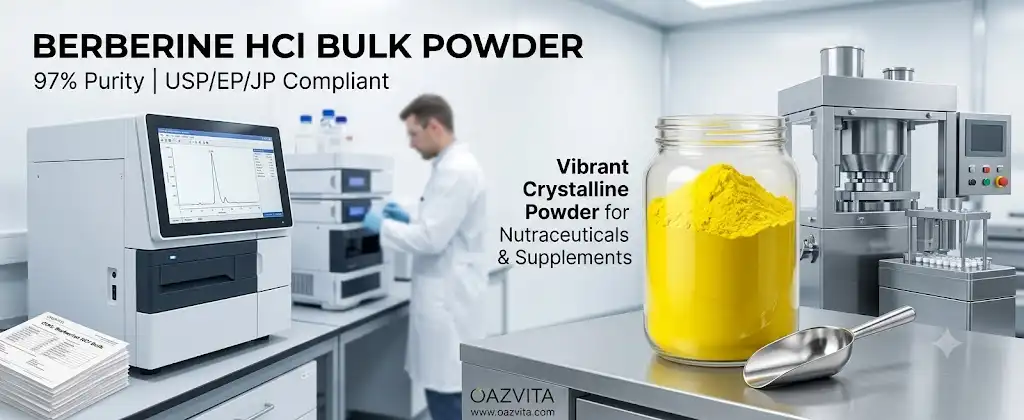
Berberine HCL Bulk represents one of the most versatile botanical alkaloids in the nutraceutical supply chain today. Extracted primarily from plants like Coptis chinensis and Phellodendron amurense, this bright yellow crystalline powder delivers consistent potency and stability that supplement brands worldwide depend on. The hydrochloride salt form offers superior water solubility and bioavailability compared to raw Botanical Extracts, making it an ideal active ingredient for Dietary Supplements, functional foods, and sports nutrition Products. For procurement managers and OEM buyers, understanding the multifaceted benefits of berberine hydrochloride is essential when evaluating formulation opportunities and supplier partnerships that can drive market differentiation and consumer trust.
Understanding Berberine HCl: Composition, Mechanism, and Quality Standards
Chemical Structure and Biological Pathways
The chemical name for berberine hydrochloride is 633-65-8, and it is a quaternary ammonium salt that comes from the protoberberine group of isoquinoline alkaloids. It works by turning on AMPK (Adenosine Monophosphate-Activated Protein Kinase), a cellular energy regulator that affects how cells take in glucose, use fats, and work the mitochondria. This chemical action is what makes the substance good for metabolism and makes it a scientifically proven ingredient for products that help control blood sugar and improve heart health.
Purity and Quality Benchmarks for B2B Sourcing
When looking at Berberine HCL Bulk to buy, purity standards have a direct effect on how well the mixture works and how well it meets legal requirements. HPLC research usually shows that premium-grade material is 97% pure, which means that there aren't many flaws and the performance is the same from batch to batch. Along with strict heavy metal testing, quality control procedures should include infrared absorption (IR) and UV spectroscopy to confirm identity. To follow Prop 65 and foreign safety rules, lead levels must stay below 3 ppm, arsenic levels must stay below 1 ppm, mercury levels must stay below 0.1 ppm, and cadmium levels must stay below 1 ppm. Gas chromatography study of residual solvents makes sure that ethanol or methanol residues stay below 5000ppm. This protects the safety of the end user and the purity of the product. Microbiological testing is also very important. Total plate counts should not be higher than 1000 cfu/g, and Salmonella, E. coli, and S. aureus should not be present at all.
Comparing Berberine Forms: Hydrochloride vs. Sulfate
Berberine hydrochloride is better than sulfate and freebase alkaloid forms in many ways. The hydrochloride salt is more stable when it is stored and transported because it doesn't break down when the temperature or moisture changes. Its crystalline structure makes it easier to mix evenly in pill and tablet materials, which makes formulation easier. In water, dissolution rates are predictable, which means that bioavailability stays the same across different dosage forms. Because of these technical features, berberine HCl is the best choice for manufacturers who need reliable performance in large-scale production settings.
Key Health Benefits of Berberine HCl Bulk Powder
Blood Sugar Regulation and Metabolic Support
Berberine HCL Bulk has been shown in clinical studies to help keep glucose metabolism healthy in a number of ways. The chemical changes how much glucose is made in the liver and makes cells more sensitive to insulin. Researchers who studied people with metabolic problems found that taking berberine supplements along with making changes to their diets can lower fasting blood glucose levels and HbA1c markers. This body of evidence gives supplement companies backed promises that health-conscious people looking for natural ways to improve their metabolic health will relate to.
Cardiovascular Health and Lipid Management
Berberine hydrochloride, available as Berberine HCL Bulk, helps the heart work better by changing lipid patterns and keeping arteries healthy. According to research, the compound may help keep cholesterol levels in a healthy range by changing the pathways that make lipids. Its antioxidant properties help lower oxidative stress in vascular tissues, which supports the health of the circulatory system as a whole. These heart health benefits are in line with the growing demand for heart health supplements, which means that brands that make focused goods can make a lot of money.
Weight Management and Body Composition
The cellular activity that berberine causes also affects how the body looks. By making mitochondria work better and changing how fat cells differentiate, this substance helps you keep a healthy weight when you combine it with a healthy diet and regular exercise. Supplement companies that want to appeal to people who are trying to lose weight can use these qualities to create complete formulas that support many areas of metabolic health. This will help their goods stand out in a crowded market.
Gut health and a balanced microbiome
Berberine has strong antibacterial properties that help keep the balance of bacteria in the gut. Its selective antimicrobial action helps keep the gut microbiome in balance by protecting healthy bacterial populations and preventing the growth of harmful bacteria. Because it does two things, berberine hydrochloride is useful for digestive health products, especially those that aim to make the gut feel better and boost the immune system. The compound's ability to protect the integrity of the mucosal barrier gives it more uses in gut health.
Anti-Inflammatory and Immune Modulation
Because the chemical affects inflammation pathways, it gives formulators more options. Berberine changes the production of immune signalling molecules and cytokines, which helps keep the body's inflammatory reactions in check. This property adds to its metabolic and cardiovascular benefits, making it possible for brands to make wellness products that address a wide range of health issues. The anti-inflammatory profile also makes sports nutrition items that help with healing and performance possible.
How to Use Berberine HCl Bulk Powder: Dosage, Side Effects, and Safety?
Optimal Dosing Strategies for Product Development
Berberine HCL Bulk supplements usually contain between 500 mg and 1500 mg of berberine per day, which is usually spread out over two or three doses to keep plasma amounts fixed. Bioavailability is affected by how the drug is absorbed, so formulation teams have to think about when to take it in relation to food. When OEM partners are making new products, dosage flexibility lets them make changes based on target groups and health concerns. Most capsule formulations contain 500 mg per unit, which makes dosing easier for people who use them.
Safety Considerations and Risk Mitigation
Although Berberine Hydrochloride Powder has been shown to be safe in study settings, formulators should be aware that some people may be sensitive to it in their stomachs. Mild stomach pain can happen at first when taking supplements containing berberine hydrochloride powder, but it usually goes away as the body adapts. Product labels should include instructions on how to use the product correctly and warnings about when it shouldn't be used for people with certain health conditions or who are taking certain medications. These steps protect both end users and the brand's image, which lowers the risk of harm.
Storage Stability and Formulation Compatibility
Following the right storage rules is important for keeping the standard of berberine hydrochloride high throughout the supply chain. For the best shelf life, keep the powder cool, dry, and out of direct sunlight. Under these conditions, it should last for 24 months. When you mix berberine with other active ingredients, you need to make sure that the formulations are compatible, because pH interactions and moisture levels can change how stable the mixture is. A loss on drying (LOD) of ≤12.0% and an ash content of ≤0.2% show that the material has been refined and the moisture level has been controlled. Standardizing particle sizes at 80 mesh makes sure that finished products are evenly distributed and stops problems with segregation during production.
Choosing the Right Berberine HCl Bulk Supplier: Market Insights and Quality Comparisons
Critical Supplier Evaluation Criteria
When choosing Berberine HCL Bulk providers, people who work in procurement have to look at a lot of factors. GMP compliance, ISO 22000 food safety management, and, ideally, HACCP procedures should all be part of certification packages. As demand for clean labels grows, it becomes more important to have traceability paperwork that proves the sources of natural plants instead of synthetic ones. The security of inventory and production capacity has a direct effect on the dependability of the supply chain, especially when demand changes with the seasons or when there are problems in the market. Suppliers who offer full testing documentation, such as COA, MSDS, and TDS, show that they care about quality assurance and being open.
Evaluating Global Manufacturing Standards
Export-focused brands can be more sure of their products when they come from manufacturers who use quality systems that are known all over the world. Compliance with the European Pharmacopoeia (EP), the United States Pharmacopoeia (USP), and the Japanese Pharmacopoeia (JP) means that strict purity and safety standards have been met. Organic approvals, like EU Organic and USDA Organic, help brands that sell natural products reach more customers. NSF and HALAL certifications target specific groups of consumers, which opens up more routes of marketing. Instead of self-declarations, these credentials should be checked by third-party audits.
MOQ Flexibility and Cost Structure Analysis
Different suppliers have very different minimum order quantities, which makes it harder for new brands and private label buyers to get what they need. Modern suppliers like OAZVITA offer MOQs as low as 1 kg, which lets you test the market and grow your product without having to spend a lot of money. Pricing rates based on volume should be clearly laid out so that procurement teams can correctly predict costs across different levels of scaling. Payment terms, lead times (usually 1–5 working days for well-known providers), and shipping choices (air, sea, DHL, FedEx, UPS) all play a part in figuring out the total cost of ownership, which is more than just the price per kilogram.
Integrating Berberine HCl Bulk into Your Product Line: Application Opportunities and OEM Benefits
Versatile Formulation Applications
Berberine HCL Bulk powder works well in a number of different delivery methods. Capsule encapsulation is still the most common method because it provides accurate dosing and ease of use for consumers. Because the compound is bright yellow and tastes bitter, it needs to be carefully mixed with other ingredients before it can be compressed into a tablet. Powder blends for drinks or useful foods need more recipe know-how to make sure they dissolve well and hide flavors. Gummy supplements are a new business opportunity, but they need to be stable, which requires a lot of technical know-how. Each format has its own production issues that OEM partners with a lot of knowledge can easily handle.
OEM Collaboration and Customization Advantages
Working with well-known OEM providers for Wholesale Berberine Hydrochloride Powder cuts down on technical risk and speeds up the product development process. Comprehensive partners help with preparation in more ways than just supplying raw materials. They can suggest excipients, test for stability, and improve flavor. Private labeling services make it easy to get into a market quickly by customizing the logos and packages to fit specific positioning strategies. Technical customization lets brands stand out by using different delivery methods, ingredient combinations that work well together, or focused release profiles. When providers work together like this, they become strategic partners who care about each other's success.
Market Trends and Growth Projections
In both North America and Europe, people are becoming more and more interested in natural metabolism support. Innovative brands can use cross-category possibilities when they deal with blood sugar control, weight wellness, and heart health. A growing customer base is made up of older people looking for ways to stay healthy, and younger people who want to improve their ability and live longer are driving demand in sports nutrition outlets. E-commerce distribution makes it easier for niche brands to reach their ideal customers, which lowers the barriers to entry. Because of these trends, brands that can show good sources, scientific proof, and clear production methods will do better.
Conclusion
Berberine HCL Bulk is a great deal for supplement brands, functional food makers, and OEM partners who want ingredients backed by science that can be used in a variety of health situations. Its proven benefits for metabolic, cardiovascular, and gut health are in line with what consumers want in terms of health, and it can be used in a wide range of product categories. To successfully source goods, you need to carefully evaluate suppliers, paying special attention to quality certifications, testing protocols, and the dependability of the supply chain. Strategic relationships with experienced makers help brands deal with complicated technical issues, shorten development times, and stay competitive in health markets that are always changing.
FAQ
1. What distinguishes berberine HCl bulk powder from standard botanical extracts?
Berberine HCL Bulk is a pure, standardized form that has been tested and found to be 97% effective by HPLC. On the other hand, botanical extracts contain different amounts of alkaloids along with other plant parts. This standardization makes sure that the dose is always correct and that bioavailability is always the same across production runs. It also cuts down on formulation variations, which makes quality control in finished goods harder.
2. How can buyers verify berberine purity before committing to large purchases?
Reliable providers offer free samples along with full testing records, such as Certificates of Analysis (COA), heavy metal screening via ICP-MS, residue liquid analysis, and microbial testing results. Verification by a third party through independent agencies adds to the confidence. C14 testing or HPLC fingerprinting proves that the product comes from a natural plant and not a manufactured one, which backs up claims of clean labels.
3. What regulatory compliance considerations apply to international procurement?
Berberine hydrochloride has to meet the standards of the market it is going to, such as the FDA's rules on dietary supplements in the US and the EFSA's rules in Europe. Certifications like ISO 22000, HACCP, and organic credentials make it easier to get through customs and get approval from regulators. Throughout the delivery chain, safe handling and storage requirements are supported by the right paperwork, such as MSDS and TDS.
Partner With a Trusted Berberine HCL Bulk Supplier
OAZVITA sells Berberine HCL Bulk that is of pharmaceutical grade and comes with a lot of certifications, such as HACCP, ISO 22000, NSF, HALAL, and organic credentials from both the EU and the USDA. Our 97% HPLC-verified material comes from carefully chosen natural sources and is backed by strict quality control methods that go above and beyond international safety standards. We can help both new names and established companies that need scalable supply options. Our minimum order quantities (MOQs) start at just 1 kg, and our lead times range from 1 to 5 working days. With every order, our expert team gives free advice on composition, free samples, and full analytical data. Global transportation relationships make sure that packages get delivered safely to places all over the world by DHL, FedEx, UPS, and other big freight companies. Contact our team at info@oazvita.com to talk about your berberine hydrochloride powder needs and find out how our OEM services can help you reach your product development goals faster.
References
1. Yin J, Xing H, Ye J. "Efficacy of berberine in patients with type 2 diabetes mellitus." Metabolism: Clinical and Experimental, 2008; 57(5): 712-717.
2. Dong H, Wang N, Zhao L, Lu F. "Berberine in the treatment of type 2 diabetes mellitus: a systemic review and meta-analysis. " Evidence-Based Complementary and Alternative Medicine, 2012; Article ID 591654.
3. Kong W, Wei J, Abidi P, Lin M. "Berberine is a novel cholesterol-lowering drug working through a unique mechanism distinct from statins. "Nature Medicine, 2004; 10(12): 1344-1351.
4. Zhang Y, Li X, Zou D, Liu W. "Treatment of type 2 diabetes and dyslipidemia with the natural plant alkaloid berberine." Journal of Clinical Endocrinology & Metabolism, 2008; 93(7): 2559-2565.
5. Xu J, Chen L, Luo Q, Zhou Y. "Effects and mechanisms of berberine for prevention and treatment of obesity: an updated review." Biomedicine & Pharmacotherapy, 2021; 145: 112463.
6. Wang Y, Zidichouski JA. "Update on the benefits and mechanisms of action of the bioactive vegetal alkaloid berberine on lipid metabolism and homeostasis." Cholesterol, 2018; Article ID 7173920.

Send Inquiry
Related Industry Knowledge
- Trans-Resveratrol: All about its effects and origins
- Acai Powder: Benefits and Uses
- How Hydrolyzed Keratin Strengthens Hair and Eliminates Frizz Effectively?
- What Is Vitamin D3 Bulk Powder?
- Everything About Açai Powder: Benefits and Uses
- Best Chewable Collagen Gummies with Vitamin D, E & Biotin
- A Complete Guide to Consuming Shilajit Drops for Maximum Benefits
- Dosage guidelines for high purity magnesium glycinate powder
- India’s Growing Demand for Pharmaceutical-Grade Inositol Powder
- What makes the best creatine monohydrate powder effective?