
What are the benefits of sodium copper chlorophyllin?
Aug 05, 2026
The world market for natural colorants and functional ingredients keeps growing quickly. This is because people want clear Products and botanical alternatives. Sodium Copper Chlorophyllin Powder is one of the most important parts of this development. This compound, which is mostly made from mulberry leaves and other plants, is a semi-synthetic derivative that gives manufacturers a unique mix of stability, bioactivity, and regulatory compliance. Natural chlorophyll breaks down quickly when exposed to heat, light, and oxidative stress. This copper-complexed version, on the other hand, stays intact through tough production processes. More and more companies in the food, cosmetics, pharmaceutical, and nutraceutical industries are realizing how useful it is for fixing important manufacturing problems. This in-depth study looks at all the different benefits of Sodium Copper Chlorophyllin Powder, giving purchasing workers useful information for making smart choices about where to buy things.
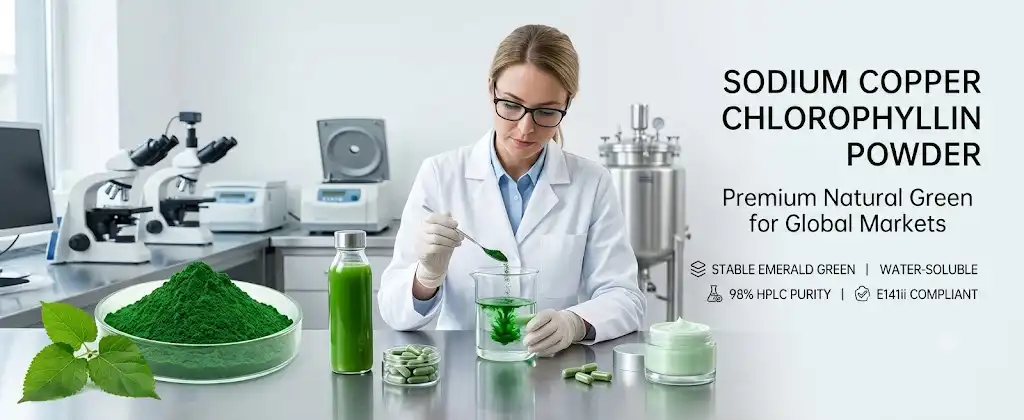
Understanding Sodium Copper Chlorophyllin Powder
What Makes This Ingredient Different
Sodium Copper Chlorophyllin Powder (CAS No. 11006-34-1) is made by changing native chlorophyll in a controlled way by saponifying it and replacing the chlorophyll with copper. Copper replaces the magnesium ion in the middle of the chlorophyll molecule, making a stable complex that doesn't break down easily. In the past, basic problems have made it hard to use natural chlorophyll in commercial settings. This structural change fixes those problems.
This chemical is different from real chlorophyll because it dissolves in water. Manufacturers can easily add it to water-based products like drinks, makeup, and mouth supplements without any problems with solubility. Technical teams often run into big planning problems, but this trait alone gets rid of them.
Chemical Stability and Performance
Processing conditions that would kill natural chlorophyll don't have much of an effect on Sodium Copper Chlorophyllin Powder. Temperatures used for pasteurization, tableting compression forces, and long-term storage on a shelf cannot change its bright emerald green color. This resilience directly leads to uniform product look from batch to batch, less waste from color degradation, and longer shelf life for produced goods.
Quality standards at 98% purity through HPLC analysis make sure that manufacturers get a strong ingredient. Getting the ingredients from natural sources like mulberry leaves gives the product the clean label image that current customers want, and the copper stability gives production managers the performance reliability they need.
The Core Benefits of Sodium Copper Chlorophyllin Powder
Powerful Antioxidant Activity
One of the most convincing functional effects is the antioxidant process. The porphyrin ring structure neutralizes free radicals by giving electrons to molecules that aren't stable without becoming unstable itself. This action helps protect cells in many different bodily systems.
According to research, this antioxidant ability helps the metabolism and keeps your health in general. These qualities make it possible for supplement makers to make products that help handle oxidative stress. Because the substance can speed up the body's metabolism and keep the intestines healthy, it is more of an active ingredient than just a colorant.
Superior Colorant Performance
Color consistency is still a problem in the manufacturing of natural products. Plant-based colors usually break down when the temperature changes during processing, the pH changes, or they are exposed to light. This problem can be solved by Sodium Copper Chlorophyllin Powder, which is very stable in a wide range of formulation environments.
It meets the rules in North America, Europe, and Asia because it is approved as E141ii for use in food applications. The bright green color it gives stays the same from production to the end of the product's life. The people who make drinks really like this steadiness because it stops natural chlorophyll extracts from turning brown and changing color when they are heated and stored.
Formulation Versatility Across Industries
Practical application covers a huge range of product groups. This ingredient adds both style and health benefits to functional drinks and fitness drinks. Sports nutrition powders work well with it because it dissolves easily and has a bland flavor that doesn't mess up taste systems that are already well-balanced. It is used in cosmetics and skin care items because it is an antioxidant and comes from natural sources.
This compound helps supplement nutrients when added to multivitamins, working together with minerals and Botanical Extracts to make them more effective. This ability to do more than one thing cuts down on ingredient lists and makes managing the supply chain easier, which are both very important for manufacturers trying to save money.
Manufacturing Efficiency
Production teams like how easy it is to work with high-purity powder forms. The 98% HPLC-grade standard makes sure that performance is consistent from batch to batch. Consistency in particle size makes it easier to mix both dry blends and liquid suspensions evenly, which speeds up the process and protects equipment.
Inventory risks are kept to a minimum when goods are stable in normal storage conditions (cool, dry places with a 24-month shelf life). Companies can keep a good amount of stock on hand without worrying about it going bad quickly. This supports lean stocking practices and makes sure that materials are available for production plans.
Sodium Copper Chlorophyllin Powder vs. Alternatives
Comparison with Liquid Chlorophyllin
For some uses, liquid formulations are more convenient, but they can be hard to concentrate and keep stable. Copper Chlorophyllin Powder types have higher amounts of active ingredients per unit weight, which means they take up less room and cost less to ship. Since powders don't contain water, they don't have the same risks of bacteria pollution that liquids do.
Powder specifications are better for transportation logistics. Less bulk and weight mean lower freight costs, which is especially important for buying things from other countries. When it comes to clearing customs, stable powder ingredients usually go more smoothly than liquid mixtures, which may need more paperwork for handling.
Natural Chlorophyll Limitations
Natural chlorophyll products are still useful for some ultra-clean label uses, but they have big problems when it comes to manufacturing. Too much oxidation takes away the color and makes brown tones that aren't good. Because they are lipophilic, formulation options are limited to systems that are based on oils.
The copper-stabilized version gets around these problems while keeping the claim of plant origin that people like. Regulatory compliance is easier because the compound already has approval status and doesn't need to be petitioned as a novel ingredient.
Quality Grade Considerations
The purity requirements have a direct effect on the performance and safety of the end product. Lower-quality materials might still have liquids, heavy metals, or particles that aren't evenly distributed. Premium 98% HPLC-tested Sodium Copper Chlorophyllin Powder meets the standards for GMP, ISO 22000, HACCP, and organic certifications (USDA Organic, EU Organic) that are needed in international markets.
Certifications like NSF and HALAL, along with full paperwork like COA, MSDS, and TDS, give B2B buyers the tracking they need. These qualifications lower the risk of not following the rules and make it easier for regulators to give approvals in target markets.
Guidelines on Safety, Dosage, and Side Effects
Regulatory Approval Status
Sodium Copper Chlorophyllin Powder is well known and approved by regulators in all major countries. The FDA's approval for food applications and the EFSA's approval in Europe give manufacturers confidence when they enter these markets. Comprehensive chemical studies done over many years back its safety rating when used according to the rules that have already been set.
This legal base gets rid of the long review processes that new ingredients usually need. Manufacturers can speed up the release of new products because they know that the base ingredients already meet basic safety and legal requirements.
Application-Specific Dosage
Dosage levels are very different between types of products. The concentrations in Dietary Supplements are usually between 100 and 300 mg per serving, so that they work well and don't cost too much. For food and drinks, smaller amounts are used to focus on color, usually 10 to 50 mg per serving, based on how strong of an effect is wanted.
For cosmetic uses, the dosage amounts are completely different, and the formulations are changed so that they can be applied to the skin instead of being taken by mouth. Technical specs from providers should include advice for specific applications to help formulators find the best amounts of ingredients.
Monitoring and Risk Management
As long as the safety profile stays strong, responsible manufacturers follow quality control rules during the whole production process. Batch testing makes sure that the quality requirements are met and that there are no contaminants. Stability testing of the finished product makes sure that the ingredient works as expected during the product's shelf life.
Building partnerships with approved suppliers who offer thorough records helps these quality management systems work. Traceability is made clear and auditable from where the raw materials come from to where the finished product is delivered.
How to Choose and Procure High-Quality Sodium Copper Chlorophyllin
Supplier Evaluation Criteria
When choosing the right partner, you need to look at more than just price. Manufacturing certificates like HACCP, ISO 22000, and NSF show that quality control is done in a planned way. Third-party testing shows that you are committed to verification. Track records of suppliers working with well-known names show that they can be trusted.
Superior suppliers can be told apart from commodity brokers by direct communication channels that offer technical support. During the development of a product, it is very helpful to have access to application scientists who understand formulation problems.
Understanding Sourcing Models
When you buy directly from a factory, you can see the prices and make sure the quality is good. With minimum order amounts of 1 kg, it's possible to try out new formulas without having to commit too much inventory. Customizing the packaging to meet specific needs, from small amounts for the lab to large containers for industry, gives businesses more working freedom.
International transportation skills are very important. Suppliers who offer a range of shipping options, such as air freight, sea transport, DHL, FedEx, and UPS, can meet the needs of customers with different budgets and time frames. Order handling times of 1 to 5 working days are a sign of how well things are running.
Documentation and Compliance
Regulatory processes run more smoothly when there are complete documentation packages. COA certificates confirm test results that are specific to a batch. MSDS sheets tell warehouse and production workers how to handle chemicals safely. The technology requirements that quality control teams need are spelled out in TDS documents.
Certain market segments are opened up by organic certifications (USDA Organic, EU Organic) and religious compliance (HALAL). These qualifications should come with shipments without having to be asked for separately. They show that the provider is knowledgeable and focused on customer service.
Sample Evaluation Process
Reputable suppliers give formulators free samples to try out, which lets them test for compatibility before making bigger purchases. This practice lowers the risk of procurement and makes sure that the performance of the ingredients meets the requirements.
Comparing samples' performance to materials from competitors is a fair way to do so. Checking the solubility, color strength, stability under processing conditions, and interaction with other formula components can help you avoid having to pay a lot of money to redo the formula after buying a lot of it.
Conclusion
The unique mix of stability, functionality, and regulatory compliance in Sodium Copper Chlorophyllin Powder makes it a great choice for a wide range of industrial uses. Because it is an antioxidant, holds colors better, and can be mixed in a lot of different ways, it solves some of the biggest problems that makers have when they work with natural products. The compound's well-known safety profile and international approvals shorten the time it takes to make new products and meet consumer demand for parts that come from plants. Quality specifications, supplier review criteria, and application-specific factors that improve performance and cost-effectiveness are useful for procurement workers to know. Manufacturers can be successful in the global market if they strategically buy from approved sellers and get all the paperwork they need to back up their claims.
FAQ
1. Is sodium copper chlorophyllin approved for food and supplement applications?
Major governing bodies, such as the FDA in the US and the EFSA in Europe, have given their approval to Sodium Copper Chlorophyllin Powder. It is labeled E141ii, which means it is an approved food colorant. This established regulatory status means that it can be used in cosmetics, functional foods, dietary supplements, and drinks. This means that it can be made commercially in all of these areas.
2. How does this ingredient differ from regular chlorophyll supplements?
Naturally occurring chlorophyll has magnesium at its chemical center and dissolves in fat, which makes it weak in light and heat. Sodium Copper Chlorophyllin Powder changes magnesium into copper and creates sodium salts that dissolve in water. With this change, the stability, solubility, and shelf life are all greatly improved while the good qualities of chlorophyll are kept.
3. What certifications should buyers look for when sourcing?
Some of the certifications that good suppliers offer are HACCP, ISO 22000, NSF, and organic credentials from the USDA and the EU. COA, MSDS, and TDS should all be included in full paperwork. HALAL certification lets people into markets that need to follow religious rules. These credentials make sure that the ingredient meets international standards for manufacturing and government rules.
4. Can this ingredient cause any adverse reactions?
When used according to the rules, Sodium Copper Chlorophyllin Powder has a great safety profile that is backed up by a lot of toxicological data. Manufacturers should follow dose guidelines that are specific to the product and use normal quality control procedures. Any problems can be kept to a minimum by getting supplies from certified suppliers that meet purity standards of 98% HPLC.
Partner with OAZVITA for Premium Sodium Copper Chlorophyllin Powder
Pharmaceutical-grade Sodium Copper Chlorophyllin Powder made from premium mulberry leaves is ready to be sent to you by OAZVITA to help with your manufacturing needs. Our 98% HPLC-certified ingredient meets the strict needs of companies around the world that make food supplements, sports nutrition products, functional drinks, and cosmetics. Along with certificates like HACCP, ISO 22000, NSF, HALAL, EU Organic, and USDA Organic, every batch comes with full paperwork like COA, MSDS, and TDS. We know what B2B buyers want: solid quality, low prices, a flexible MOQ starting at 1 kg, and fast delivery by air, sea, or quick courier within 1 to 5 working days. Our 24-month shelf life and storage instructions make sure that your inventory stays stable. Contact our technical team at info@oazvita.com to talk about your formulation needs, get free samples, or place an order with a bulk sodium copper chlorophyllin powder supplier you can trust and who is dedicated to your success.
References
1. Ferruzzi, M.G., & Blakeslee, J. (2007). Digestion, absorption, and cancer preventative activity of dietary chlorophyll derivatives. Nutrition Research, 27(1), 1-12.
2. Kephart, J.C. (1955). Chlorophyll derivatives—their chemistry, commercial preparation and uses. Economic Botany, 9(1), 3-38.
3. Tumolo, T., & Lanfer-Marquez, U.M. (2012). Copper chlorophyllin: A food colorant with bioactive properties? Food Research International, 46(2), 451-459.
4. Egner, P.A., Wang, J.B., Zhu, Y.R., et al. (2001). Chlorophyllin intervention reduces aflatoxin-DNA adducts in individuals at high risk for liver cancer. Proceedings of the National Academy of Sciences, 98(25), 14601-14606.
5. Mortensen, A., & Geppel, A. (2007). HPLC-MS analysis of the green food colorant sodium copper chlorophyllin. Innovative Food Science & Emerging Technologies, 8(3), 419-425.
6. Chernomorsky, S., Segelman, A., & Poretz, R.D. (1999). Effect of dietary chlorophyll derivatives on mutagenesis and tumor cell growth. Teratogenesis, Carcinogenesis, and Mutagenesis, 19(5), 313-322.

Send Inquiry

Related Industry Knowledge
- Acai Powder: Benefits and Uses
- The Truth About Blue Copper Peptide Powder No One Really Talks About
- Hericium Erinaceus Extract Powder: Dosage, Science & How to Choose
- Cordyceps Sinensis Extract Powder: A Guide to Its Benefits
- Biotin Powder: The Secret Behind Naturally Thick and Healthy Hair
- Best Nicotinamide Riboside Chloride Powder Uses for Anti-Aging in the Industrial Sector
- Brazil Market Expansion for Lion’s Mane Mushroom Extract Capsules
- Brazil Sports Nutrition Growth Driving Demand for Pure Maca Root Capsules
- Avoiding Batch Variability in Fish Collagen Peptides for EU Buyers
- Top 10 Pure NMN Powder Manufacturers in China For 2026