
Blue Copper Peptide Powder Skincare Routine: How to Layer Peptides
Jul 20, 2026
You need to add GHK-Cu Peptide Powder to your skin care routine in a planned way to get the most out of its healing qualities. When adding Copper Tripeptide-1 and Blue Copper Peptide Powder to formulations, it's important to keep the pH level in check, make sure the ingredients work well together, and follow the right order of use. It increases the production of collagen, speeds up skin repair, and protects strongly against free radicals when mixed with other powerful ingredients like niacinamide or hyaluronic acid. Putting something on the right way makes sure it goes on well and stays put for a long time. This assists companies in creating high-quality goods that meet customer needs for anti-aging effects that can be seen.
Understanding Blue Copper Peptide Powder and Its Skincare Benefits
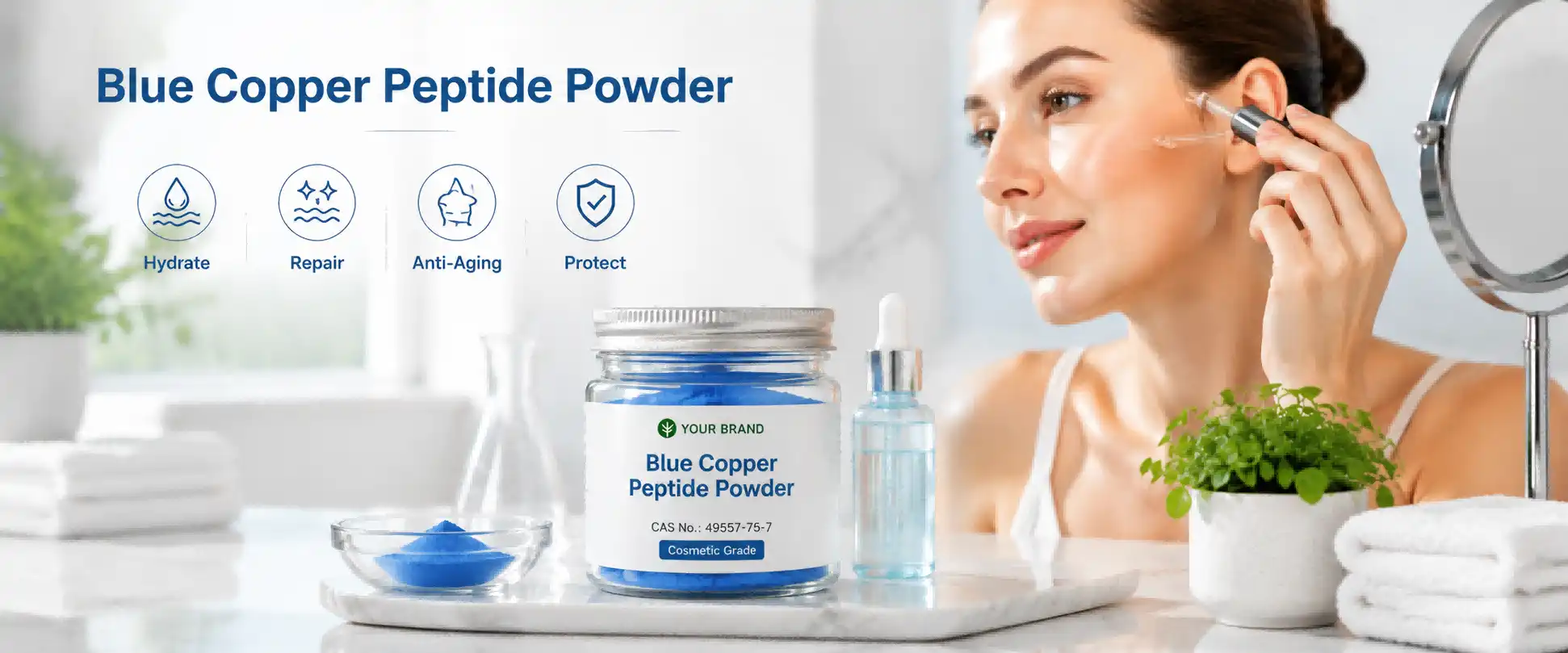
Blue copper peptide powder, also known as GHK-Cu (glycyl-L-histidyl-L-lysine copper complex, CAS No.: 49557-75-7), is a novel type of skin care product that helps heal skin. It is normal for this peptide complex to bind copper(II) ions, which have a molecular weight of 406.97 Daltons. In the end, you get a one-of-a-kind deep blue solid powder that is very biologically active.
Chemical Structure and Mechanism of Action
The chemical formula for the tripeptide, which is C₁₄H₂₄CuN₆O₄, shows how it is structured. Its three amino acids have a very strong bond with a copper ion (Log K ≈ 16.4). By chelating copper, it stops making reactive oxygen species that are bad for cells, but it still stays accessible for them to use. GHK-Cu starts signaling pathways that change genes that make tissues more or less rigid once it gets into the dermal layers. More types I and III collagen, elastin, and glycosaminoglycans are made because of this.
Multi-Dimensional Skin Benefits
Metalloproteinases (MMPs) are enzymes that break down parts of the extracellular matrix. Researchers have found that copper peptides change MMPs. This nutrient helps the body make new cells and keeps collagen from breaking down too fast. This is especially good for skin that has been damaged or photoaged. By stopping inflammatory hormones, the substance is also very good at lowering inflammation. This helps smooth out painful skin and make it feel better. Tests on real people have shown that the skin gets thicker, fine lines fade, and the protection function gets better after regular use. Even more protection against oxidative aging comes from GHK-Cu's antioxidant properties, which fight free radicals and help cells defend themselves.
Hair and Scalp Applications
Copper Tripeptide-1 is good for more than just facial skin care. You can also use it to treat hair loss. Hair cells get bigger, the growth phase lasts longer, and 5-alpha reductase stops working because of the peptide. So, it can be used in items that are good for your skin and help stop hair loss.
How to Layer Blue Copper Peptide Powder in a Skincare Routine?
You need to know about the pH needs, molecular size, and how copper peptides work with other elements in order to use them well in multi-step processes. The right sequence lets the most molecules in while keeping the peptide complex from becoming unstable.
Optimal Application Sequence
Most people follow the "thinnest to thickest" rule when stacking skin care Products, but peptides need extra care. When the pH level moves from 4.5 to 7.0, copper peptides stay steady and work. This means that they can be used in different ways. Cleaning your face should get rid of dirt and oil without changing the acid layer on top of it. Toners that change the pH (ideally between 5.5 and 6.5) of the skin get it ready for peptides to work best after cleansing.
The powder of blue copper peptide powder will be spread out evenly if you mix it with a good carrier, such as distilled water, hyaluronic acid serum, or a light essence. Most items for sale have a percentage of 0.05% to 0.2%, but treatments done by professionals may use more. Small molecules (406.97 Da) can get into the skin quickly when this peptide solution is put on clean, toned skin. This is because they can get there before bigger molecules can take up receptor sites.
Ingredient Compatibility and Synergies
Things that keep skin wet, like sodium hyaluronate, glycerin, and ceramides, work well with copper peptides. These ingredients help the peptide's barrier-building effects. Niacinamide and GHK-Cu work well together because they both help with inflammation and the function of the barrier without having any bad effects on each other. But there are some activities that you should really think about. The copper ion can be taken out of the peptide complex by strong chelators like EDTA. This makes the complex useless. The copper-peptide link might not be as strong if you use recipes with a very low pH or a lot of direct acids (glycolic and salicylic) at the same time.
Time works well to separate copper peptides from vitamin C (L-ascorbic acid). Problems with oxidation don't happen when you take vitamin C in the morning and copper peptides at night. When used together, retinol and copper peptides can work, but they need to be added slowly. If you have sensitive skin, you might want to use them at different times at night instead of all at once.
Common Formulation Mistakes to Avoid
There are several ways that peptides can lose their power. If you mix GHK-Cu with ionic thickeners like carbomers, they may compete with it for binding and break up the copper complex. The structure of peptides breaks down in direct sunlight or hot places, so they need to be kept in cool, dry places. If everything goes well, it can last for 24 months. Some formulas have too many active ingredients, which can be bad for the skin. It can also be hard to tell how well each ingredient is working on its own.
Comparing Blue Copper Peptide Powder with Other Popular Ingredients
When formulators know how GHK-Cu stacks up against other anti-aging ingredients, they can make better choices about how to focus product development.
Copper Peptides vs. Regular Peptides
Matrixyl is a molecule that stimulates collagen through different signaling pathways. Copper peptides, on the other hand, are more useful because they help make collagen, protect cells from damage, and heal wounds all in one molecule. Lysyl oxidase is an enzyme that forms links between collagen and elastin. Copper ions help it do its job. In order to do this, they provide structural integrity that some signal peptides can't do on their own.
Copper Peptides vs. Vitamin C
Antioxidants in L-ascorbic acid make skin whiter and protect it from UV rays. However, it needs a very low pH (around 3.5) to be stable and work, which can be irritating for people with sensitive skin. Copper peptides work well at pH levels that are good for the skin (5.5–6.5). They give extra antioxidant benefits without making the skin red and itchy like high-vitamin C formulas do. Since both ingredients make your body make more collagen, it's possible that they will work better together if you use them at different times.
Copper Peptides vs. Retinol
Even though retinoids are the best way to speed up cell turnover and boost collagen, they can dry out, redden, and make skin sensitive to light, especially when you first start using them. GHK-Cu powder is a kinder way to boost collagen, and because it reduces inflammation, it stops soreness from getting worse. Sun protection is important, and retinol needs to be added carefully, but copper peptides work better on all skin types, even those with weak or damaged barriers. When these two ingredients are mixed together, they can help fight aging in many ways. But the people who make the formula should make sure it stays stable and that users follow the steps in the routine.
Formulation Guidance for Procurement Teams
For actives, you need to find a good mix between price, dependability, and how well they work. Copper peptides that are 99% pure by HPLC work well and don't mess up the formula like ingredients that are very unstable do. The compound is easy to add to different bases, such as serums, creams, gels, and even hair products, because it dissolves in water. GHK-Cu's gentle but effective profile works with a lot of different product lines for brands that want to reach a lot of different types of people. These product lines include healing products after surgery and daily upkeep products. It is best to buy in bulk from suppliers who offer full quality documentation, like COA, MSDS, and TDS certificates that meet international compliance standards.
Sourcing and Procuring Blue Copper Peptide Powder for B2B Clients
To get good GHK-Cu peptide powder, you should check the supplier's background, quality standards, and packaging skills.
Critical Quality Specifications
Copper peptides used in medicine need to be very pure. The HPLC purity level needs to be at least 99.0%, the copper content needs to be between 13.0% and 17.0% (stoichiometric balance), and the acetate content needs to be less than 10%. To protect people and follow the rules, heavy metal pollution must stay low (Pb < 10 ppm, As < 2 ppm). There are safe amounts of total plate counts, yeast, and mold in the product, which means it can be used in makeup.
A good provider will give full paperwork for each batch, such as Certificates of Analysis (COA), Material Safety Data Sheets (MSDS), and Technical Data Sheets (TDS). Getting approvals for things like HACCP, ISO 22000, NSF, HALAL, and organic products (EU Organic and USDA Organic) shows that you care about quality management systems and makes it easier to sell your products in more places.
Pricing Structures and Cost Efficiencies
When you make a lot of things, pricing based on volume is often a big help. Minimum order numbers (MOQ) start at 1 kg, which lets brands try new formulas before committing to bulk orders. This lowers the risk of losing money while the product is being made. Buying teams can make good budgets when pricing methods are clear and take into account the costs of raw materials, processing, and QC. Deals that last a long time often give you better prices and first choice when demand is high or raw materials are low.
Logistics and Supply Chain Reliability
Flexible production schedules are made possible by short lead times (1–5 working days) for GHK-Cu Powder. This is very helpful when a new product is coming out or when market trends need to be addressed. Shipping options include air freight, sea freight, DHL, FedEx, UPS, and airmail. Which one you choose will rely on how quickly you need the item and how much it costs. When more than 99% of supplies are delivered on time, work delays and problems with handling supplies are less likely to happen. Get free samples of materials to see how well they work, dissolve, and feel before formulators decide to buy them all. This makes it less likely that expensive changes will need to be made to the formula.
Practical Use Cases and Success Stories
Blue copper peptide powder can be sold and used in many skin care products because it can be used in real life.
Post-Procedure Recovery Formulations
Adding GHK-Cu to serums used after laser and microneedling procedures has worked well for professional skin care lines. These serums are very important for repairing tissues quickly and lowering inflammation. Copper peptides, panthenol, and allantoin were mixed by one OEM maker to make a clean peptide concentrate with an output of 0.15%. Dermatology offices said that patients who used the new ways to heal got better faster and had less post-inflammatory discoloration. The recipe was sold in more medical spas and dermatology offices in North America and Europe because it worked so well.
Premium Anti-Aging Product Lines
Because the beauty brand cares about your health, they put copper peptides in both serums you put on your skin and collagen pills you take by mouth. This was a full reason for getting older from the inside out. The beauty mix had 0.1% GHK-Cu, low-molecular-weight hyaluronic acid, and niacinamide in the form of a light essence. Tests on people who had used the product regularly for eight weeks showed that their skin was more flexible and had more moisture. Because the brand did a lot of different things well, it got a lot of good reviews and returns from people who care about their health and want items that have been shown to work.
Scalp Health Innovations
Coffee, saw palmetto extract, and 0.2% copper peptides were used to make a leave-on hair product by a trichology company. The formula made with water stayed stable at pH 6.0, which made sure the peptide worked and let the other bioactives do their job. People who took part in consumer trials said their hair was denser and shed less after six months of use. After the product became popular with men and women whose hair was beginning to thin, the brand became known as a leader in peptide-based hair care.
These success stories underscore the importance of quality sourcing, thoughtful formulation, and clear communication of ingredient benefits to end consumers. Brands that invest in premium raw materials and support their products with educational content build trust and loyalty in competitive markets.
Conclusion
What you need to know about Copper Tripeptide-1 is its chemical makeup, how it works with other actives, and the best way to use it. It can be used for both skin care and trichology because it helps the body heal by making collagen, lowering inflammation, and protecting the skin's barrier. You can tell this substance is better than retinol, vitamin C, and other peptides because it is less harsh and can be used for more things. To source well, you need to pay attention to requirements for purity, supplier certifications, and how reliable logistics are. Brands can make a lot of money when they use high-quality ingredients, think about how to make their products, and teach their customers. Copper peptides are now thought to be important parts of many skin care and anti-aging goods.
FAQ
1. Can GHK-Cu peptide powder be used daily in skincare formulations?
When added to consumer goods, copper peptides should be mixed in at a rate of between 0.05% and 0.2%. This means they can be used every day. This ingredient is soft and helps reduce swelling, so it can be used both in the morning and at night. But people who make medicine should look at the full list of ingredients and the total amount of active ingredients to make sure they don't make sensitive skin worse.
2. What concentration of copper peptides delivers optimal results?
A study said that skin care products for regular people should have concentrations between 0.05% and 0.2%. When professionals help people in controlled situations, they may use higher percentages. When making a medicine, the pH, the carrier system, and the other ingredients that are used together can change how well it works and how bioavailable it is. To find the best balance for each type of product, brands should look for one that is stable and successful.
3. Are there safety concerns when using copper peptides?
If you buy copper peptides from a reputable company that meets quality standards (99% HPLC purity and controlled heavy metal content), they are very safe. Oxidative stress can't be caused by free copper ions because they are chelated. Some people are known to be sensitive to copper, but this doesn't happen very often. These people should still get patch tests. Formulation pH (4.5–7.0) and storage conditions that are right make the elements safe and stable.
Partner with OAZVITA for Premium GHK-Cu Peptide Powder Supply
Copper Tripeptide-1 (GHK-Cu Peptide Powder), which is 99% HPLC pure, is sold by OAZVITA and is used in medicine. Quality seals from HACCP, ISO 22000, NSF, HALAL, the EU, and the USDA have been given to this product. Our technical team gives full paperwork (COA, MSDS, and TDS) for every batch. This makes sure that everything is clear and follows the rules set by foreign regulators. We can work with both new brands, trying out new formulas, and established companies that need to buy in bulk because the minimum order size is only 1 kg, and there are different ways to pack the goods.
Due to our global shipping network, packages are sent quickly and safely by DHL, FedEx, UPS, air freight, and sea freight. It takes one to five business days to get a package, and more than 99% of them get delivered on time. Your R&D team can get free samples of our Blue Copper Peptide Powder to test its great solubility, stability, and performance before deciding to buy. The whole process of buying something from OAZVITA is easy to understand because they offer personal account management and 24/7 international customer service. We can help you use this strong bioactive ingredient in serums, creams, hair treatments, and nutricosmetics that are made just for your customers.
If you keep our copper peptide powder in a cool, dry place for 24 months, it will stay stable. This makes sure that you can keep your work plans for a long time. Connect with us at info@oazvita.com to talk about your needs with a copper peptide powder provider that is committed to quality, innovation, and relationship success in the skin care ingredients market around the world.
References
1. Pickart, L., Margolina, A. (2018). Regenerative and Protective Actions of the GHK-Cu Peptide in the Light of the New Gene Data. International Journal of Molecular Sciences, 19(7), 1987.
2. Hostynek, J.J., Dreher, F., Maibach, H.I. (2010). Human Skin Retention and Penetration of a Copper Tripeptide In Vitro as Function of Skin Layer. Inflammation Research, 59(11), 983-988.
3. Arul, V., Kartha, R., Jayakumar, R. (2007). A Combination Therapy Using Copper Peptide and Hyaluronic Acid Accelerates Wound Healing. Journal of Biomaterials Applications, 22(4), 341-362.
4. Finkley, M.B., Appa, Y., Bhandarkar, S. (2005). Copper Peptide and Skin. Cosmetics & Toiletries Magazine, 120(4), 47-54.
5. Murad, S., Grove, D., Lindberg, K.A., Reynolds, G., Sivarajah, A., Pinnell, S.R. (1981). Regulation of Collagen Synthesis by Ascorbic Acid. Proceedings of the National Academy of Sciences, 78(5), 2879-2882.
6. Canapp, S.O., Farese, J.P., Schultz, G.S., Gowrecovery, S.L., Van Gilder, J.M., Jorgensen, L.S., Schaefer, S.L. (2003). The Effect of Topical Tripeptide-Copper Complex on Healing of Ischemic Open Wounds. Veterinary Surgery, 32(6), 515-523.

Send Inquiry

Related Industry Knowledge
- How Much Vitamin D3 Should Athletes Take?
- Cordyceps Sinensis Extract Powder: A Guide to Its Benefits
- Shilajit Drops Benefits, Uses: The Ayurvedic Secret to Strength, Energy & Longevity
- What are Shilajit drops used for?
- Pure NAD+ Powder vs NAD+ Capsules: Key Differences & Applications
- What Is TUDCA Powder and How Does It Work for Liver Health?
- Top Nicotinamide Riboside Chloride Powder Uses in Healthcare You Should Know in 2026
- Dosage guidelines for high purity magnesium glycinate powder
- Best spirulina chlorella tablets for immunity and detox
- What defines high purity magnesium glycinate powder?