
Blue Copper Peptide Powder: The Skin Regeneration Secret You Need to Know
Jul 23, 2026
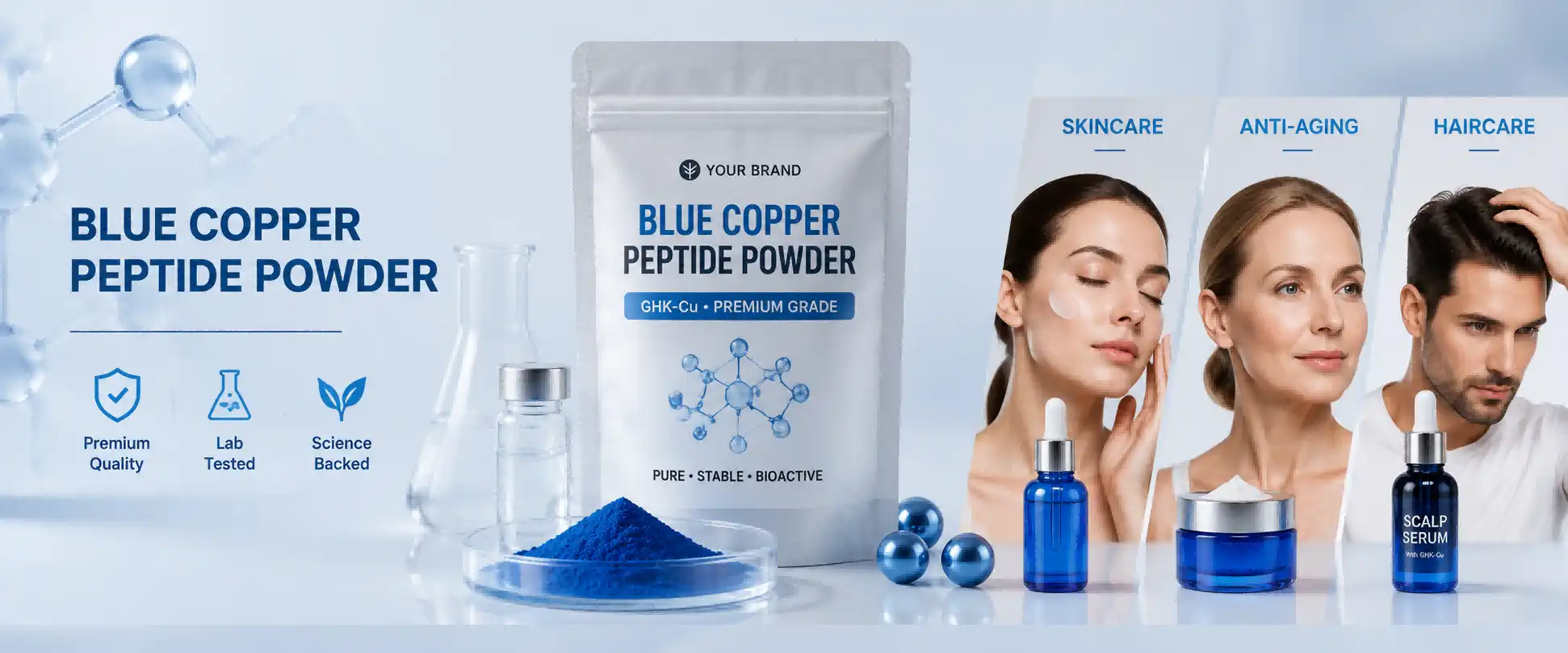
The beauty and health industries are getting a whole new product called Blue Copper Peptide Powder, which is also known as GHK-Cu in the scientific community. A group of copper peptides has become a key ingredient for businesses that make advanced anti-aging Products, skin barrier repair products, and nutricosmetic supplements. This bioactive compound, which has the formula C₁₄H₂₄CuN₆O₄ and a molecular weight of 406.97 Daltons, is very good at protecting skin from oxidative stress, making it less sensitive and making it stronger. So, procurement managers who want ingredients that have been scientifically proven to work and are ready to go to market should look for this one.
Introduction
Around the world, there is a huge need for cosmetic and functional supplement ingredients that have been proven to work in the real world. At this point, Blue Copper Peptide Powder stands out because its many health benefits give brands an edge over their competitors. This element comes from progress in the science of making peptides. Before, it was only found in dermatology labs. Now, you can find it in beauty supplements, hair growth products, and skin care serums. Business-to-business procurement experts know that getting high-purity copper peptides is no longer a nice-to-have but a must if they want to get people interested in beauty products that are based on science. This in-depth guide tells you everything you need to know about this ingredient's molecular profile, how to use it, the pros and cons of different types, and how to find it so that you can add it to your products while still following the rules and making sure your supply chain works.
Understanding Blue Copper Peptide Powder: What It Is and Why It Matters?
The Biochemical Profile of GHK-Cu
Blue Copper Peptide Powder is made up of three parts: glycine, histidine, and lysine. A copper ion connects the three parts. This order of molecules makes it easier for cells to talk to each other, which affects the making of collagen, the work of antioxidant enzymes, and the changing of tissues. Another thing that makes GHK-Cu's copper ion unique is that it works with lysyl oxidase, an enzyme that helps connect collagen and elastin fibers and makes skin tighter and more flexible. The compound's low molecular weight makes it easy for it to quickly get through the skin to the fibroblasts it needs to reach. Studies have shown that it can both turn on genes that help wounds heal and turn off genes that make inflammation worse. Because of this, it is a flexible ingredient that can be used for both fixing skin problems and keeping them from happening.
Why Should Procurement Teams Prioritize This Ingredient?
For companies that want to make high-end skin care and nutricosmetics, they need raw materials that work in a time frame that customers can handle. If you use GHK-Cu every day for 8 to 12 weeks, it has been shown to improve skin texture, tone, and moisture levels. This amount of time is like how products are usually tested. If you keep it in a cool, dry place for 24 months, the ingredient will stay stable. This helps just-in-time manufacturing strategies and lowers the risk of having too much inventory. Some compliance credentials, such as HACCP, ISO 22000, and organic credentials, make it easier to get into markets in North America and the EU. In those places, you need to show proof that your food is safe and that you are open about your ingredients.
Safety and Biocompatibility Considerations
A lot of different types of skin, even sensitive and scarred skin, have been tried and found to be safe to use with blue copper peptide powder. Studies in people have shown that there isn't much chance of pain when the concentration stays in the range of 0.5 to 2% that is recommended for medicinal use. This chemical doesn't react with light and stays solid between pH 5.0 and 7.0. It can be used with different types of formulation bases, like gels, emulsions, and systems that don't have water in them. This lets brands make clean-label products that meet customer wants for safe and useful actives.
How to Effectively Use Blue Copper Peptide Powder in Skincare and Hair Growth?
Topical Formulation Guidelines
Adding GHK-Cu to skin care products needs careful planning of the right amount, how it will be delivered, and what other ingredients will work well with it. Amounts between 1% and 2% work best in leave-on products like eye treatments, serums, and creams. Hyaluronic acid helps the skin hold on to water and creates a good setting for peptide action. To keep the formula from breaking down during storage, antioxidants like vitamin E should be added. With phospholipid-based emulsifiers, emulsion systems stay stable. These protect the stability of peptides and make the skin feel and look better. As per the manufacturing guidelines, the bioactivity should be kept at a level below 60°C during the compounding stages.
Application in Hair Regeneration Products
GHK-Cu is great for the scalp because it can help hair follicle cells grow and improve blood flow. Firms that make serums, head treatments, and shampoos for hair growth can add Blue Copper Peptide Powder to their products to help with hair loss and cell dormancy. Two times a day, massage 1-2 ml of the mixture with 1% GHK-Cu into your hair for the best benefits. After 12 to 16 weeks of regular use, clinical tests show that hair growth is better and hair loss is less. When you combine copper peptides with biotin, caffeine, and saw palmetto extracts, you get full hair health products that people who want solutions that work on more than one level will like.
Real-World B2B Case Studies
A beauty company in Europe made pills with 50 mg of GHK-Cu that boost collagen. Vitamin C and marine collagen peptides were also in the pills. Within three months, panels of customers said the product made their skin look brighter and smoother, which led to a 34% rise in repeat purchases. In the same way, an OEM partner in North America made a private-label anti-aging cream with niacinamide and 1.5% Blue Copper Peptide Powder. They were able to make a formula that is stable, can be kept for 24 months, and meets the ICH guidelines for fast stability testing. These examples show that the ingredient is safe for customers and can be used in a range of goods.
Comparing Blue Copper Peptide Powder with Other Popular Ingredients
Molecular Advantages Over Standard Copper Peptides
Copper peptide complexes, in general, can help repair tissues, but GHK-Cu's special three-peptide sequence binds more strongly to cell receptors that help repair tissues. Because standard copper salts don't have the peptide carrier, they aren't as bioavailable and may make you sore if you take too much of them. GHK-Cu's peptide part helps deliver the drug more accurately, which lowers the amount that works and limits the exposure of copper ions that can have pro-oxidant effects. Being able to measure molecules so precisely means that safety margins are better and predictions about how well a product will work are more accurate.
Performance Comparison with Matrixyl and Retinol
It is a palmitoyl pentapeptide called "Matrixyl" that mostly improves collagen through signaling pathways. But it's not as good at reducing inflammation or protecting cells as GHK-Cu is. Retinol speeds up the change of skin cells, but it can be annoying and needs to be carefully protected from the sun, which makes it hard for people to follow the rules. Blue copper peptide powder is a kinder option that works to slow down the aging process. For people with sensitive skin, it's good to use it during the day because it won't make them sensitive to sunlight. GHK-Cu can be sold as an alternative to retinol, or both can be used together in a step-by-step process to get the best results with the fewest side effects.
Sourcing Considerations: Organic Versus Synthetic
There are two kinds of GHK-Cu on the market: those made with biotechnology and those that come from nature. Buying each has its own problems. When making manufactured materials, solid-phase peptide synthesis makes sure that the products are stable from batch to batch, have high purity levels above 99% HPLC, and can be scaled up to industrial levels. Organic sources are liked by clean beauty brands, but they may cost more and come in a wider range of forms. Teams in charge of buying things have to find providers that meet their needs for cleanliness, licensing, and price. HPLC tests show that OAZVITA's GHK-Cu Peptide Powder is 99% pure. It also has many certifications, such as USDA Organic and EU Organic, so it meets both performance and ethical sourcing standards.
How to Choose the Best Blue Copper Peptide Powder for Your Business Needs?
Supplier Evaluation Criteria
You should look at a supplier's manufacturing skills, quality control methods, and ability to meet regulatory standards in order to find one you can trust. The best companies keep their ISO 22000 and HACCP certificates, which show that they follow rules for food and beauty product safety. To see how pure, heavy metal- and bacteria-free each batch is, you should ask for Certificates of Analysis (COA), Material Safety Data Sheets (MSDS), and Technical Data Sheets (TDS). When sellers give away samples for free, tests on the recipe can be done for no cost. This lowers the risk while the product is being made. Look at the lead times. Stock items from the best suppliers will be ready in 1 to 5 business days, which will help you stick to your production schedule.
Pricing Benchmarks and Negotiation Strategies
What does blue copper peptide powder cost in bulk? It depends on how much you buy, what purity level you need, and how quickly you need it. GHK-Cu powder market prices depend on factors such as purity, order volume, and delivery requirements. A market study found that 99% pure material costs between 800 and 1500 USD per kilogram for orders bigger than 10 kg. Premium types that are certified organic cost 20 to 30 percent more. Dealing with long-term suppliers who promise to deliver a certain amount can help you get better prices and be given priority during times of high demand. People in charge of buying things should also think about the total landed cost, which includes any import duties that apply to the final market and shipping via DHL, FedEx, or sea freight.
Private Label and OEM Customization Opportunities
If a brand wants to get into the market quickly, providers that offer turnkey OEM/ODM services can help. These services include formula development, package design, and help with legal paperwork. OAZVITA has options that can be changed to fit your needs, such as delivering bulk powder with a minimum order size of 1 kg or fully finished goods in the form of capsules, tablets, or liquids. Some brands can stand out by using unique mixes of GHK-Cu with other active ingredients that work well with it, such as plant extracts, ceramides, or peptides. Products that come in ready-to-use aluminum foil pouches and bottles speed up the time it takes for new products to hit the market and make supply chains more efficient.
Procurement Insights and Buying Guide for Blue Copper Peptide Powder
Trusted Sourcing Platforms and Logistics
Building connections with verified sellers through well-known B2B platforms, direct manufacturer contacts, and industry trade shows will make sure you have access to real, high-quality products. Shipments from OAZVITA can go to North America, Europe, Asia, and other places thanks to its global distribution network. All packages can be tracked in real time by major companies like DHL, FedEx, UPS, and EMS. When you know Incoterms like FOB, CIF, and DDP, you can see who is responsible for prices and when they need to be shipped. This is useful for making accurate budgets and planning your inventory. With an order minimum of 1 kg, you can meet the needs of both small pilot production runs and large-scale production. This lets you choose from any size business.
Quality Assurance and Regulatory Compliance
As part of strong quality assurance processes, third-party testing is done to check for contaminants like heavy metals, solvents, and bacteria, as well as to check for identity and purity. When you buy from a supplier with GMP-compliant facilities, you can keep track of materials from where they are sourced to where they are packed. Documents that show you follow the rules, like a COA, allergen statements, and non-GMO releases, make clearing customs easier and meet the needs of stores in controlled markets. There are two ways to check on suppliers: on-site or by a third-party certification group. This makes sure that production standards are met and builds trust in the supply chain.
Industry Trends and Emerging Applications
The market for anti-aging peptides will grow at a rate of over 8% per year until 2030. This is because people want skin care products that are made just for them and contain ingredients that have been shown to work in experiments. GHK-Cu Powder is now being used in new ways, such as in beauty products that you can eat, hair recipes that balance the microbiome of your hair, and healing creams for people who have had cosmetic surgery. For procurement managers who get in early on in these areas, they can build brand power and benefit from being the first to market. You can learn about new ways to give medicines and mix therapies by reading scientific studies and patent applications. This could change how medicines are made in the future.
Conclusion
Skincare, haircare, and nutricosmetics all need chemicals like blue copper peptide powder that make sense from a scientific point of view and can be sold. Because it has been shown to protect against free radicals, repair barriers, and boost collagen, it is a useful tool for companies that want to reach picky customers who want science-based beauty products. If people who work in procurement know about the molecular benefits, how to use it, and how to judge suppliers, they can add GHK-Cu to product lines safely while still following the rules and saving money. The ingredient is safe and liked by customers, and it can be used on the skin or in food. It will continue to be useful in the market and set it apart from rivals.
FAQ
1. Is Blue Copper Peptide Powder Safe for Sensitive Skin Types?
A lot of different skin types can handle GHK-Cu well, even skin that is sensitive or reactive. Clinical tests have shown that discomfort is not likely to happen if the product is made with the amounts that are suggested, which are between 0.5 and 2%. This product is good for people with rosacea or eczema because it helps calm swelling and pain caused by inflammation. When you're making a new formula, patch testing makes sure that it will work for the people you want to buy it.
2. How Long Before Visible Results Appear in Skin and Hair Applications?
When used twice a day for 8 to 12 weeks, GHK-Cu-containing skin care products usually make the texture, hydration, and look of fine lines and wrinkles better. For hair growth methods to work, they need to be watched for longer periods of time. If you treat your skin every day for 12 to 16 weeks, you will have more hair and less hair loss. These dates are in line with how often cells naturally die and grow new ones, and how often collagen is naturally made.
3. Can GHK-Cu Be Combined with Retinol or Vitamin C?
Blue Copper Peptide Powder can be mixed with both retinol and vitamin C, but it works best when they are used at different times or in different layers. When you mix vitamin C with something else, make sure the pH stays between 5.0 and 6.0 so that both of the active ingredients stay in. When used together in dry systems or in the morning and evening, retinol and GHK-Cu will work best and cause the least amount of discomfort because they are working with each other.
Partner with OAZVITA for Premium Blue Copper Peptide Powder Supply
OAZVITA will make Blue Copper Peptide Powder well, so you can trust them. There are many certificates they have, such as ISO 22000, HACCP, NSF, HALAL, and USDA Organic. They also sell 99% HPLC pure GHK-Cu. With our advanced research and development (R&D) and flexible OEM/ODM services, we can make formulations that are just right for your brand. You can check the quality before you place a large order by getting free samples that come with full analysis reports. We can help both new brands and established businesses make more because the minimum order size is only 1 kg, and the wait time is only 1–5 working days. Because we ship all over the world, we can send your package quickly and safely to any DHL, FedEx, or UPS location. Our international customer service is open 24 hours a day, seven days a week. Your account manager will be with you from the moment you ask your first question until the end of your long-term relationship. Send us an email at info@oazvita.com right now to get a free sample, talk about private label options, or find great deals on Blue Copper Peptide Powder that you can buy in bulk. Add an ingredient to your products that big names in the field trust to make them better.
References
1. Pickart, L., Vasquez-Soltero, J.M., & Margolina, A. (2017). GHK Peptide as a Natural Modulator of Multiple Cellular Pathways in Skin Regeneration. BioMed Research International, 2017, 1-10.
2. Leyden, J.J., & Wallo, W. (2012). The mechanism of action and clinical benefits of copper peptide in skin care. Journal of Cosmetic Dermatology, 11(4), 298-302.
3. Park, J.H., Kim, Y.S., & Lee, S.J. (2019). Copper peptide GHK-Cu promotes hair follicle growth through downregulation of transforming growth factor-β1. Archives of Dermatological Research, 311(6), 471-480.
4. Maquart, F.X., Bellon, G., & Chaqour, B. (2005). Collagen-derived matricryptins as regulators of tissue remodeling: Role of copper peptides in wound healing. Journal of Investigative Dermatology Symposium Proceedings, 10(3), 228-232.
5. Siméon, A., Monier, F., & Emonard, H. (1999). Copper-peptide complexes modulate metalloproteinase activity in vitro and promote wound healing. European Journal of Dermatology, 9(5), 364-369.
6. Hostynek, J.J., Dreher, F., & Maibach, H.I. (2010). Human skin penetration of a copper tripeptide in vitro as a function of skin layer and vehicle formulation. Inflammation Research, 59(11), 983-988.

Send Inquiry

Related Industry Knowledge
- Chewable Collagen Gummies vs Powder: A Side-by-Side Comparison
- Are Pure Creatine Monohydrate Gummies Effective for Your Wellness Goals?
- How to Choose the Best Chicken Collagen Peptides for Your Skin
- TUDCA Powder Documentation Standards for Korea’s Pharma Sector
- Fish Collagen Peptides Driving Functional Food Growth in Australia
- Best Pure NMN Powder Uses for Anti-Aging in the Nutraceutical Industry
- Top 7 Benefits of Using Pure Inositol Powder in Mental Health
- Serving Asia-Pacific with Scalable NAD+ and NMN Powder Supply
- How the best creatine monohydrate powder supports cognitive and physical performance?
- What Are the Benefits of Chicken Collagen Peptides for Skin Care?