
Do Chewable Probiotic Gummies Really Work? The Sweet Truth About Chewy Gut Health Supplements
Jun 15, 2026
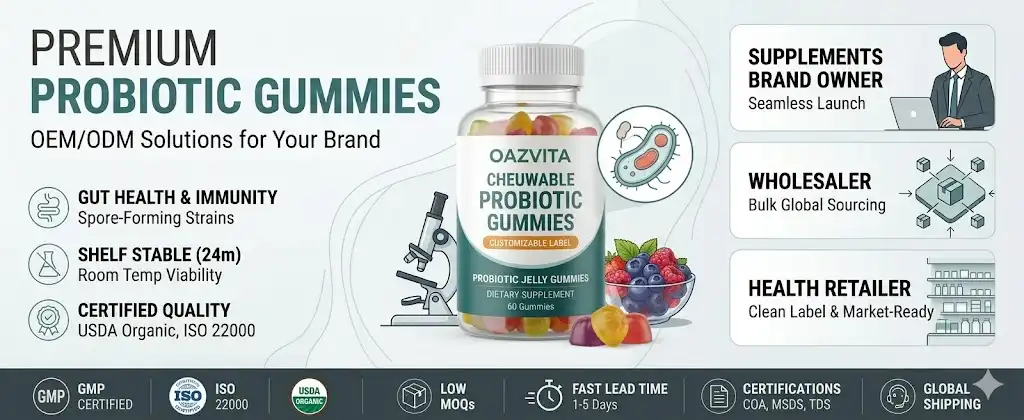
Because they contain live, good bacteria in a pectin or gelatin structure, Chewable Probiotic Gummies are a useful alternative to pills. Researchers have found that the types used, the number of CFUs, and the quality controls used during production all affect how well they work. When these candies are made with spore-forming strains like Bacillus coagulans or microencapsulated Lactobacillus species, they stay alive while they're stored and move through your digestive track. This is good for your gut health and immune system.
Understanding Chewable Probiotic Gummies: What They Are and How They Work
The Science Behind Probiotic Gummy Formulation
Chewable Probiotic Gummies are a cutting-edge way to give supplements that help people who have trouble taking pills stick to their plans. Lyophilized bacteria types are kept safe while they are stored and used in hydrocolloid media, which are usually pectin, gelatin, or agar. These are used instead of regular pills or capsules. Making sure that the water activity level stays below 0.60 is one of the things that the matrix does. The other thing it does is keep the taste good.
Mechanism of Action in the Gut Microbiome
This kind of Chewable Probiotic Gummy starts to break down in your mouth and then continues to break down in your digestive system. It's usually Lactobacillus rhamnosus, Bifidobacterium lactis, or Bacillus coagulans that makes spores. These good bacteria get to the gut and stay there for a while, working with other germs. In order to find food and places to join, these living things make short-chain fatty acids and change how the defense system works. Giving the right amount of colony-forming units (CFUs) is important for success. Depending on the goal and target, the amount given is usually between 1 billion and 10 billion per serve.
Viability and Stability Considerations
Depending on how well they are made, Chewable Probiotic Gummies might work the way they say they will. More recent recipes use buffering agents, like sodium citrate, to protect types that are sensitive to acid while they travel through the gut. But strains that make spores can handle both production heat and stomach acid without any extra food or defense. Quality manufacturers add certain amounts of extra bacteria—often 50% to 200% more than is needed—to account for breakdown that happens naturally over the 18–24 month shelf life.
Comparing Chewable Probiotic Gummies with Other Forms
Performance Metrics Across Delivery Systems
There are pros and cons to each type of probiotic supply that you should think about when you buy a lot of them. Some people don't like capsules, especially kids and older people who have trouble eating. They make it easy to get the right dose and don't change the taste much. You can pick the dose size for powders, but they need to be mixed back together, which can be messy and make you worry about the taste. You can drink probiotic drinks right away, but they don't last as long on the shelf and need to be shipped in a cold chain.
Chewable Probiotic Gummies are a good way to fill in these gaps. They make it easy to swallow and cover up the smell of fermentation with the tastes of fruit and sugar. Stability at room temperature means that goods don't need to be kept cold, which makes transport networks more efficient. Texture Profile Analysis was used to set the texture profile to a hardness range of 10 to 20N. This makes it easy to eat without any issues with tooth retention.
Sugar-Free and Organic Variants for Niche Markets
Because the market is split up, people want specialized recipes a lot. Different sugar-free sweeteners, such as maltitol or erythritol, are used instead of sucrose, along with prebiotic foods like inulin. Customers who care about their health will like this method because it keeps the low water movement that germs need to stay alive.
Organic approvals are for a different group that is getting bigger. Organic Chewable Probiotic Gummies that are okay with both the USDA and the EU use certified organic sugar, colors that come from fruits and vegetables, and non-GMO gelatin or vegan pectin. The price of these items is high, but they match the clean-label styles that are famous in France and the United States.
Shelf Life and Logistical Advantages
Forms are very different, as shown by tests of stability. As the package is moved, there is a chance that the temperature of the standard cold probiotics will change. Chewable Probiotic Gummies that are made the right way will stay alive for two years at 25°C if they are kept in bottles that are sealed with induction. Because of this stability, there is less product loss, it is easier to store, and there are more choices for where to put the store. All of these things are important for bulk buyers and wholesalers who want to ship goods abroad.
How to Choose and Use Chewable Probiotic Gummies: A Buyer's Guide
Essential Quality Indicators for Procurement Professionals
Being clear about what's in food is the key to making smart buying decisions. Instead of "private mixes," the specs should list the exact probiotic strains along with their family, species, and strain names. Potency guarantees must include CFU numbers at the time of expiration as well as the time of production. This shows that the service company believes in the stability processes. With each batch, there is a Certificate of Analysis that shows the number of germs that were found using approved methods like flow cytometry or plate counts.
Badges that say "Compliance" show how strict a company is. With GMP approval, the company makes sure they follow the rules in 21 CFR Part 111 for making food additives. Food safety is handled in a controlled way, as shown by the ISO 22000 and HACCP signs. A bigger group of people can buy your goods if they have certifications like HALAL, NSF, and organic.
Optimal Consumption Guidelines
Every day, you should eat one to two Chewable Probiotic Gummies, preferably with food to raise gut acid and help germs stay alive. Being constant is important because the benefits of probiotics don't happen right away. Instead, they build up over time. It's not always necessary, but putting food in the fridge after opening it can keep it fresh longer than the date on the package. This is especially true in hot places where food can go bad quickly if it absorbs water.
Red Flags in Supplier Evaluation
People who are in charge of buying things should be wary of buyers who can't give them steady data, test results from a third party, or clear information about where their goods come from. Claims of more than 50 billion CFUs per Chewable Probiotic Gummy should raise red flags—amounts that high make it hard to make the sweets and make people wonder if they are worth the money. It means that the quality controls aren't good enough if there aren't any moisture barriers or desiccant packs. This means that the product might not work as well as it should. Probiotic Gummies Factory Direct sourcing helps reduce these risks by providing verifiable quality and consistency.
Procurement Insights for B2B Clients: Where and How to Source Chewable Probiotic Gummies
Evaluating Manufacturing Partners
Getting in touch with a maker directly can help you make changes, get better prices, and keep an eye on quality. When looking for business partners, you should find out how much they can produce, how long the wait times are, and what the minimum order quantity is. A factory with more than one Chewable Probiotic Gummies line shows that it can expand to meet rising demand. Brands can stand out by giving their goods unique looks by being able to make different shapes from big mold libraries (50 or more types).
Tech know-how is also very important. You can put your goods in the right place because makers let you choose the CFU concentrations, strain mixes, and compound formulas (probiotics plus vitamins, minerals, or plant extracts). DDP delivery terms make it easier to ship things to other countries because the provider takes care of customs clearance and the last mile of delivery.
Cost Optimization Strategies
When you place bigger orders, negotiating prices based on numbers works best. If you want to try something from some sellers, you have to buy at least 100 bottles. But when you buy 5,000 to 10,000 bottles, you start to save a lot of money. But because they only last 24 months, procurement professionals have to weigh the cost savings on each unit against the costs of having stock and making sure that demand predictions are correct so that goods don't go out of date.
Ask for a rate that breaks down the costs of the raw materials, the work to make the product, the shipping costs, and the cost of packaging. It's easier to compare items from different sellers when everything is clear. Instead of just looking at the FOB price, think about how much it costs to land. Shipping speed (1–5 days fast vs. 30-day sea freight), customs taxes, and payment terms all have a big impact on how much it costs to buy something.
Lead Times and Production Scheduling
Lead times for manufacturing vary a lot based on how difficult the order is and how busy the factory is. One to five business days after the order is approved and paid for, standard recipes that use current molds are sent out. For custom formulas that need new strain mixes, unique shapes, or packages, it takes an extra three to six weeks. When demand goes up during certain times of the year, like right before cold and flu season, when immune health Products are in high demand, lead times can double. To keep your stock levels steady, you need to make plans ahead of time.
Brand Spotlight and Market Trends in Chewable Probiotic Gummies
Innovation Driving Market Expansion
The market is growing because of new ideas. As more people want easy-to-take vitamins that taste good, the market for Chewable Probiotic Gummies grows quickly around the world. New strains are used for more than just stomach health. They can also help with mood (with psychobiotics that work on the gut-brain axis), skin health (with nutricosmetics), and immune system power. Probiotics and prebiotic grains are mixed by manufacturers to come up with new ideas. Prebiotic grains feed good bacteria and make them more active and colonized. Probiotic Jelly Gummies are becoming increasingly popular as a convenient format that combines these benefits with enhanced consumer appeal.
Targeted-release technologies are new ideas that use enteric covers or microencapsulation to keep sensitive strains safe until they get to the right parts of the gut. These kinds of improvements should be at the top, but they take a lot of complicated manufacturing skills and make things more expensive to make.
OEM and Private Label Opportunities
Now that there are more direct-to-consumer names and e-commerce sites, white-label firms have more choices. More and more, businesses that don't have their own plants are looking for "turnkey" solutions that include stuff like formula study, package design, and assembly. It's easier for new names to get into niche markets when the minimum order quantity is low, as low as 100 boxes, to test the market.
Giving a lot of different services shows that a well-known company like OAZVITA is ahead of the competition. They sell a lot of different kinds of vitamins, which lets them group items and make production go more smoothly. Brand owners can use free sample tools to check out taste profiles, textures, and how well they work with other products before committing to large-scale production. When you file with the government and check on store chains, having full scientific information like COA, MSDS, and TDS is helpful.
Conclusion
As long as they are made with the right types, enough CFU numbers, and strong quality controls, Chewable Probiotic Gummies are a good way to get good bacteria. They can be used instead of normal forms because they are more stable, follow the rules better, and look better to customers. Buyers in the business world (B2B) should look for companies that are honest, have the right credentials, and have good professional skills. They should also think about how much it will all cost and how to get it there. Probiotic candies are still a growing market. This is because there are new goods on the market and more people are interested in them. You can choose them if you want your brand, seller, or private name to stand out in the supplement market.
Frequently Asked Questions
1. Are probiotic gummies safe for children?
If Chewable Probiotic Gummies are made with the right kinds of probiotics, like Lactobacillus rhamnosus GG, and have low CFU numbers, usually between 1 and 5 billion, they are safe for kids older than three years old. Shape design makes it less likely that someone will choke, and taste qualities help people stick to the product. Still, it's best to talk to a doctor or nurse if your child is smaller than three or not very healthy.
2. How long before seeing benefits from probiotic gummies?
That depends on how healthy their gut was to begin with and what kinds of foods they eat. Changes in the immune system and in bigger germs usually need to last for four to eight weeks. Setting reasonable goals and sticking to a regular schedule will help you get the best results.
3. Can probiotic gummies survive without refrigeration?
These days, medicines that use spore-forming strains or microencapsulation technologies can stay living at room temperature as long as they are kept in the right way. Germs can't start working too soon when the amount of water in the bottle is controlled, and desiccant is used to line it. But putting it in the fridge after opening it makes it last longer, especially in warm, damp places where the breakdown process is sped up by the touch with water.
Partner with OAZVITA for Premium Probiotic Gummy Solutions
The company OAZVITA is a good one that sells Chewable Probiotic Gummies. Their goods are built on science and have been approved by many groups, including USDA Organic, HACCP, ISO 22000, NSF, and HALAL. We have more than 50 molds that can be used to make different types of products, sugar-free products, custom CFU ratios, and recipes that mix probiotics with other nutrients that work well together. As long as you buy at least 100 bottles, and you only have to wait 1 to 5 days, we can meet the needs of both market tests and large-scale production. Shipping around the world with DHL, FedEx, and UPS ensures a safe arrival, and free samples and all the papers make the evaluation process easier. Email us at info@oazvita.com to talk about your probiotic gummy needs and find out how our OEM/ODM skills can help you get your product to market faster.
References
1. Hill, C., Guarner, F., Reid, G., Gibson, G.R., Merenstein, D.J., Pot, B., et al. (2014). Expert consensus document: The International Scientific Association for Probiotics and Prebiotics consensus statement on the scope and appropriate use of the term probiotic. Nature Reviews Gastroenterology & Hepatology, 11(8), 506-514.
2. Morovic, W., Roos, P., Zabel, B., Jonsson, J., Hoppner, A., & Patnaik, B. (2022). Stability and formulation considerations for probiotic supplements. Journal of Functional Foods, 92, 105058.
3. Sanders, M.E., Merenstein, D.J., Reid, G., Gibson, G.R., & Rastall, R.A. (2019). Probiotics and prebiotics in intestinal health and disease: from biology to the clinic. Nature Reviews Gastroenterology & Hepatology, 16(10), 605-616.
4. Fredua-Agyeman, M., Kareem, S., & Gaisford, S. (2021). Physical and chemical stability of probiotic bacteria in delivery systems: A review. Food Chemistry, 357, 129728.
5. Marco, M.L., Hill, C., Hutkins, R., Slavin, J., Tancredi, D.J., Merenstein, D., & Sanders, M.E. (2020). Should there be a recommended daily intake of microbes? Journal of Nutrition, 150(12), 3061-3067.
6. Yao, M., Xie, J., Du, H., McClements, D.J., Xiao, H., & Li, L. (2020). Progress in microencapsulation of probiotics: A review. Comprehensive Reviews in Food Science and Food Safety, 19(2), 857-874.

Send Inquiry


Related Industry Knowledge
- Is it okay to take Super Greens Powder Packets every day?
- Shilajit resin supplement: dosage, timing and best practices
- China Chelation Technology in Pure Magnesium Glycinate Capsules Manufacturing
- China OEM Manufacturing of Pure Sea Moss Capsules for International Brands
- Australia Import Considerations for Premium Black Seed Oil Softgels
- Dosage guidelines for best spirulina chlorella tablets
- Top Nicotinamide Riboside Chloride Powder Uses in Healthcare You Should Know in 2026
- Fish Collagen Peptide Solutions for Functional Food Leaders in Australia
- What Is Glutathione Powder and How Does It Work in Skincare?
- What defines high purity magnesium glycinate powder?