
How Do Chewable Probiotic Gummies Compare to Capsules?
Jun 16, 2026
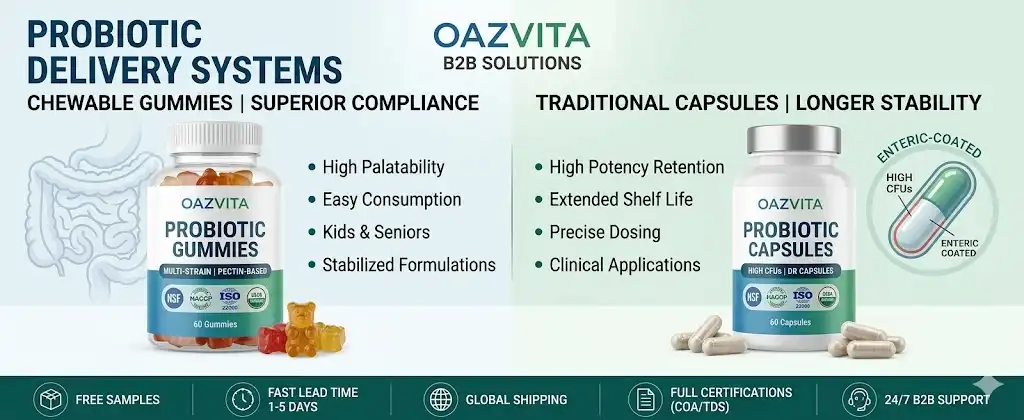
When comparing probiotic delivery systems, chewable probiotic gummies and traditional capsules each offer distinct advantages for B2B procurement teams. Gummies provide superior compliance rates through enhanced palatability and ease of consumption, particularly among pediatric and senior populations, while capsules deliver longer shelf stability and higher potency retention. The optimal choice depends on your target demographic, distribution channels, and formulation requirements. Understanding these format-specific differences enables procurement professionals to align product portfolios with market demand and operational efficiency.
Understanding Chewable Probiotic Gummies and Capsules
Formulation Characteristics of Gummy Probiotics
Chewable Probiotic Gummies are a new way to take supplements. They contain good bacteria inside a hydrocolloid matrix, which is usually made up of pectin, gelatin, or agar. These recipes deal with certain obedience issues by providing a sweet product that doesn't cause problems with swallowing. To keep microbes alive, the production process uses carefully controlled parameters, such as tight water activity levels that are usually kept below 0.60 to stop bacteria from activating too soon.
There is more to the technical difficulty of gummy formulas than just how they taste. Modern buffering devices keep acid-sensitive types like Lactobacillus and Bifidobacterium safe while they move through the digestive tract. Many makers now use spore-forming types like Bacillus coagulans, which are better at handling heat during production and more stable during the distribution cycle. A lot of the time, these mixtures have prebiotic fibers, natural flavors, and sweetening systems that hide the taste of fermentation while keeping the nutrition intact.
Traditional Capsule Delivery Systems
Probiotic capsules are still the best choice for clinical uses and OEM integrations because they are easy to make and have stable patterns that can be predicted. These transport methods keep lyophilized bacterial cultures safe inside cellulose or vegetarian capsule shells, so they don't have to be exposed to many external factors that weaken their effectiveness. Capsules are more accurate when it comes to dose and usually have more CFUs per serve than chewy options.
The encapsulation process makes targeted-release technologies possible, such as enteric coats that stop substances from breaking down too quickly in the stomach. This trait is especially helpful for sensitive types that need to be delivered through the intestines. Capsules can also hold complicated multi-strain mixtures without the taste and texture problems that come with sticky structures. Because they have been around for a while and are approved by regulators, they are the best choice for healthcare professionals and big buyers who want evidence-based supplementation procedures.
Bioavailability and Mechanism Comparison
When made properly, both delivery methods have about the same bioavailability, but their release processes are very different. When you chew, Chewable Probiotic Gummies start to break down right away, introducing probiotics to salivary enzymes and the conditions in your mouth. This early contact might make some types active faster, but it could hurt others that are easily broken down by enzymes.
The materials of capsule-based systems are released mostly in the stomach or intestines, depending on the coating technology used. The capsules stay sealed through the mouth and throat. This controlled-release design helps plants that need a certain pH level to grow properly. According to research, the quality of the formulation, the strain choice, and the individual microbiome makeup have a bigger effect on effectiveness than the delivery method alone. This means that provider knowledge and quality control are the most important things for procurement teams to think about.
Comparative Analysis: Chewable Probiotic Gummies vs Capsules
Consumer Compliance and Demographic Suitability
The information we get from our business partners shows that Chewable Probiotic Gummies are 30–40% more likely to be taken by kids and people who have trouble swallowing than pill forms. The ability to cover tastes and textures gets rid of the mental barrier that comes with swallowing pills, which makes them perfect for wellness-focused customer groups instead of professional populations. This ease of consumption has contributed to the rising popularity of Probiotic Jelly Gummies among younger consumers and those seeking enjoyable daily wellness routines.
For institutional and healthcare channels, where standard dosing routines and clinical paperwork needs are more important than how the capsules taste, capsules are the most common option. Their neutral taste and lack of sweeteners make them appealing to health-conscious people who don't want to eat extra sugars. However, this same quality may make them less effective for groups that need sensory incentives to keep taking supplements.
Stability and Shelf-Life Considerations
When properly packaged with desiccants, capsule formulations show better long-term stability under ambient store conditions, keeping their stated strength for 24 to 36 months. Because capsule matrices have less water activity, metabolic activation is lowered during storage. This keeps microbes alive longer without needing a lot of extra math.
Due to their higher moisture content and tendency to lose their shape over time, Chewable Probiotic Gummies need more complex stability control. Controlled water activity, specialized packing systems, and strategic strain selection that favors heat-resistant types are some of the ways that modern formulations deal with these problems. OAZVITA's manufacturing procedures make sure that the product stays stable for 24 months when stored in a cool, dry place. They do this by carefully controlling moisture levels and using quality-tested packing options.
Formulation Flexibility and Customization
Gummy platforms can be customized in a lot of different ways to help brands stand out. More than 50 different types of molds allow for the creation of unique shapes, and taste systems and natural coloring choices give each product its own identity. Certain groups of people are interested in sugar-free Products that use polyol sweeteners or prebiotic fibers. However, the balance of the product is still very important to avoid stomach problems caused by too much sugar alcohol.
Capsule methods make it easy to mix multiple strains and measure doses accurately, without having to deal with the technical challenges of keeping the sticky texture. This makes it easy to make quick changes to the recipe and cost-effectively scale up. But capsules don't have many ways to stand out besides shell color and writing, which makes them less noticeable in stores where package looks are a big part of why people buy things.
Manufacturing and Processing Requirements
To make good Chewable Probiotic Gummies, you need special tools and technical know-how to keep the bacteria alive while they are exposed to high temperatures during the gelation process. Manufacturers who are good at what they do either add probiotics during the cooling stages after cooking or use microencapsulation technologies to lower heat stress. Compared to pill packing operations, these extra steps in the production process make it more difficult and cost more per unit.
Making capsules uses well-known pharmacy machinery and easy-to-follow instructions for mixing and filling. Processing at room temperature protects delicate bacterial types without the need for heat protection methods. This makes operations easier, which leads to higher throughput rates and lower capital equipment needs. This makes it easier for makers who make a variety of products to acquire.
Procurement Considerations for B2B Clients
Pricing Structures and Cost Management
Because of the unique chemicals, complicated production processes, and intellectual property linked to stabilization technologies, Chewable Probiotic Gummies usually cost 20–35% more per unit than tablet versions of the same product. When wholesalers and private label buyers want to stay affordable while keeping quality standards high, they need to negotiate prices based on volume. This makes sourcing Bulk Probiotic Gummies a key strategy for reducing per-unit costs while maintaining product quality.
Cost drivers, such as probiotic strain licensing fees, microencapsulation technologies, and unique gelling agents, can be found in open conversations with sellers about where to get raw materials. By understanding these parts, buying teams can find ways to save money without lowering the quality of the work. Long-term supply deals usually lead to better prices and make sure that production capacity is used during times of high demand.
Supply Chain and Logistics Management
The stable patterns of Chewable Probiotic Gummies affect the need for storage and the rules for distribution. Modern recipes don't need to be kept cold, but keeping storage temperatures between 15°C and 25°C helps products last longer and keeps textures from breaking down in damp places. These weather factors affect the choice of freight, which could mean faster shipping ways or changes to how goods are distributed during certain times of the year.
Capsule goods are easier to ship because they can handle a wider range of temperatures without losing much of their effectiveness. This makes foreign distribution easier and lowers the cost of cold-chain infrastructure. This is especially helpful for getting into new markets or setting up complicated networks of distribution across multiple countries. DDP shipping choices, which are backed by experienced suppliers like OAZVITA, make it easier for foreign buyers to clear customs and handle the last few miles of logistics.
Regulatory Compliance and Certification Requirements
European and North American legal systems have strict rules for all probiotic products, no matter how they are delivered. HACCP, ISO 22000, NSF, and organic approvals (EU Organic, USDA Organic) show that the product is made well and that the ingredients are safe, which is necessary to get into the market. B2B buyers need to make sure that sellers have up-to-date certifications and give full paperwork for every production batch, such as Certificates of Analysis, Material Safety Data Sheets, and Technical Data Sheets.
Labeling rules vary from place to place, but they usually include information about the probiotic strain, the number of CFUs left before the product goes bad, how to store it, and any allergens that might be present. Chewable Probiotic Gummies are more closely looked at when it comes to the kinds of sweeteners that can be used, the use of artificial colors, and choking hazards for kids' goods. Working with providers who offer legal support and paperwork services lowers the risk of not following the rules and speeds up the time it takes to launch a product in more than one market.
Supplier Evaluation and Partnership Development
When looking for trusted probiotic providers, you need to look at more than just price. Strategic partners are different from transactional vendors in terms of their manufacturing capacity, quality control procedures, research and development (R&D) skills, and technical support services. Suppliers with free trial programs let you try formulations and see if they'll work in the market before placing big orders. This lowers your financial risk during the product development stages.
Flexibility in the minimum order number is especially helpful for private label buyers who are trying new market segments or seasonal product variations. OAZVITA's 100-bottle MOQ lets them enter new markets while keeping production efficient. Customization services, such as formula development, package design, and choice of delivery format, also show that the provider is committed to the success of the relationship, not just fulfilling orders.
How to Decide Between Chewable Probiotic Gummies and Capsules for Your Business
Customer Segmentation and Target Demographics
A careful study of the target market is the first step in selecting a strategic format. Chewable Probiotic Gummies are very helpful for brands that are aimed at kids because they are easy to take and taste good, which helps kids form good vitamin habits. Senior health goods that deal with digestive changes that come with getting older also tend to come in easy-to-swallow forms that take away the worries that many older people have about eating.
The parts on athletic performance and sports diet show that users prefer certain formats depending on the situation. Chewable Probiotic Gummies are easy to carry and use, which fits with busy lives and on-the-go eating habits. On the other hand, serious athletes and fitness fans who want to achieve certain therapeutic goals may prefer pill forms that are linked to clinical effectiveness and higher potency ratios.
Distribution Channel Alignment
The retail setting has a big effect on how well a model does. More and more, mass-market stores and shopping shops put Chewable Probiotic Gummies on shelves next to candy and useful snacks. This makes it easier for people to buy them on the spot, which doesn't happen in traditional supplement aisles. This strategy for selling goods supports gummy forms that come in visually appealing packages and have brand stories that focus on improving people's lives.
Capsules are still preferred by healthcare professionals and pharmacies because they are evidence-based nutrition methods. In these settings, where clinical paperwork and established dosing methods are more important than sensory traits, professional advice has a big impact. Figuring out what the distribution channel wants helps choose a style that fits with the sales strategy and market positioning goals.
Production Scale and Operational Capacity
Possible output sizes and start dates are found by looking at internal capabilities or partnerships with suppliers. Capsule making uses tools and technical know-how that are easy to find, which allows for quick production flexibility and scaling up. This makes it easy for brands that are expecting a lot of sales growth or need a lot of different SKUs for the same product line.
To make Chewable Probiotic Gummies, you need special tools, technical know-how, and quality control procedures that aren't always available in manufacturing sites. Brands that don't have their own manufacturing facilities need to find experienced providers that can keep quality consistent across multiple production runs while also being able to meet customer needs for customization. OAZVITA has a complete manufacturing system that serves both formats. Lead times range from 1 to 5 days, and order numbers are flexible to fit a wide range of business sizes.
Financial Modeling and Profitability Analysis
A full cost-benefit study looks at more than just the price per unit. It also looks at the total landed costs, which include freight, storage, and any waste that might happen because of stability problems. For gummy premium pricing to make sense, it needs to be backed up by better market success measures like conversion rates, repeat buy frequency, and brand loyalty signs.
Capsule formats have predictable costs and are easy to run, which may help them make the most money in price-sensitive markets or high-volume marketing methods. On the other hand, expensive positioning strategies that use Chewable Probiotic Gummies differentiation can get higher retail prices, which can cover higher production costs and build brand value through unique customer experiences. Financial estimates should include a number of different possible outcomes, each with its own set of assumptions about market growth and competitive dynamics.
Conclusion
When deciding between Chewable Probiotic Gummies and Capsules, you need to think about your business's technical needs, its place in the market, and its operational requirements. Gummy forms are better for customer compliance and brand differentiation, which is especially useful in health retail outlets. Capsules, on the other hand, offer stability, potency, and cost benefits that make them better for clinical uses and institutional distribution. Format choice is an important strategic decision that affects market growth, operating efficiency, and long-term brand value in successful B2B procurement strategies. Procurement professionals can make sure that product lines meet changing market needs while also meeting performance and profit goals by carefully looking at target groups, marketing routes, and suppliers' abilities.
Frequently Asked Questions
1. Which format delivers better probiotic effectiveness?
The effectiveness depends on the strain chosen, the quality of the mixture, and the unique features of each person's microbiome, not on the delivery method. When made correctly with the right strains and stabilization methods, both candies and pills have about the same bioavailability. There is clinical proof that all forms work, so the knowledge of the supplier and quality control are the most important factors in making procurement choices.
2. Do probiotic gummies require refrigeration during distribution?
When made with the right water activity controls, modern formulas that use spore-forming strains or advanced microencapsulation technologies don't need to be kept cold. Without cold-chain transportation, products stay stable for 24 months when stored in a cool, dry place. Check with providers about their individual storage needs, as differences in formulations can affect stability profiles and handling guidelines.
3. What regulatory documentation should B2B buyers request?
As part of careful buying, you should ask for up-to-date certificates (such as HACCP, ISO 22000, and organic credentials), Certificates of Analysis for test batches, Material Safety Data Sheets, Technical Data Sheets, and stability study data to back up promises about shelf life. Suppliers should provide regulatory support documents that make it easier for different markets to follow the rules. These documents should include ingredient releases, allergen statements, and label claim proof that is proper for those places.
4. How do minimum order quantities differ between formats?
Lower MOQs are usually possible for capsule production because the manufacturing process is easier and there is a lot of production capacity. Because of the special tools needed to set up and the limited batch size, Chewable Probiotic Gummies recipes often need bigger initial orders. The 100-bottle MOQ for both forms is flexible, which helps with strategies for entering new markets and trying seasonal products without having to commit to too much inventory.
Partner with OAZVITA for Premium Probiotic Solutions
OAZVITA offers complete production and supply solutions for probiotic supplement Chewable Probiotic Gummies to B2B clients in North America and Europe who want to gain a competitive edge in those markets. We can do a lot of things, like customize more than 50 mold designs, make sugar-free recipes, and create compound products that help brands stand out. As a well-known company that makes probiotic gummies, we keep our standards up to date, such as HACCP, ISO 22000, NSF, HALAL, EU Organic, and USDA Organic. This makes sure that we follow all the rules in all foreign markets. Our flexible 100-bottle minimum orders let you test the market, and our DDP delivery choices make foreign shipping easier. Email our team at info@oazvita.com to get free samples, technical specs, and unique quotes that will help you speed up the development of your product and save you money on purchases.
References
1. Hill, C., Guarner, F., Reid, G., et al. (2014). Expert consensus document: The International Scientific Association for Probiotics and Prebiotics consensus statement on the scope and appropriate use of the term probiotic. Nature Reviews Gastroenterology & Hepatology, 11(8), 506-514.
2. Sanders, M.E., Merenstein, D.J., Reid, G., Gibson, G.R., & Rastall, R.A. (2019). Probiotics and prebiotics in intestinal health and disease: from biology to the clinic. Nature Reviews Gastroenterology & Hepatology, 16(10), 605-616.
3. Cunningham, M., Azcarate-Peril, M.A., Barnard, A., et al. (2021). Shaping the future of probiotics and prebiotics. Trends in Microbiology, 29(8), 667-685.
4. Fenster, K., Freeburg, B., Hollard, C., Wong, C., Rønhave Laursen, R., & Ouwehand, A.C. (2019). The production and delivery of probiotics: A review of a practical approach. Microorganisms, 7(3), 83.
5. Kerry, R.G., Patra, J.K., Gouda, S., Park, Y., Shin, H.S., & Das, G. (2018). Benefaction of probiotics for human health: A review. Journal of Food and Drug Analysis, 26(3), 927-939.
6. Brodkorb, A., Egger, L., Alminger, M., et al. (2019). INFOGEST static in vitro simulation of gastrointestinal food digestion. Nature Protocols, 14(4), 991-1014.

Send Inquiry

Related Industry Knowledge
- Chewable Collagen Gummies vs Powder: A Side-by-Side Comparison
- Shilajit Drops Benefits, Uses: The Ayurvedic Secret to Strength, Energy & Longevity
- How to Make Super Greens Powder Packets Part of Your Daily Routine
- How pure NMN powder may support athletic performance and recovery?
- Manufacturing process and cell-wall cracking in spirulina chlorella tablets
- Best TUDCA Powder Uses for Liver Support in the Medical Industry
- Best spirulina chlorella tablets for immunity and detox
- Serving Asia-Pacific with Scalable NAD+ and NMN Powder Supply
- Glutathione Powder Applications in Asian Injectable and Oral Products
- What Is Glutathione Powder and How Does It Work in Skincare?