
Manufacturing process and cell-wall cracking in spirulina chlorella tablets
Mar 17, 2026
Advanced biotechnology converts raw algae into highly accessible nutrients by producing spirulina and chlorella tablets and breaking down cell walls. Best Spirulina Chlorella Tablets employ specialized extraction and processing. These treatments destroy bacteria's cell walls. Up to 85% more nutrients are absorbed after this crucial stage. This helps the digestive system absorb essential proteins, vitamins, and minerals. It maintains beneficial compound purity throughout manufacture.
Understanding the Manufacturing Process of Spirulina Chlorella Tablets
Plants are cultivated and harvested to ensure nutritious content for high-quality spirulina and chlorella tablets. Industrial closed-system bioreactors regulate temperature, pH, and illumination to provide an ideal environment. These parameters affect the product's bioactive chemical concentration and nutritional balance.
Raw Material Sourcing and Quality Control
High-quality algae biomass from certified growth facilities is essential for effective tablets. Leading manufacturers collaborate with recognized organic farms that follow tight procedures to avoid contamination. To meet international food safety requirements, the whole purchase process involves heavy metal, microbiological, and pesticide residue testing.
Quality control includes testing and batch tracking systems that monitor the whole manufacturing process, from plant growth to packing. This provides rapid responses to supply chain quality concerns and ensures product requirements are fulfilled.
Drying and Powder Processing Technologies
Modern drying technologies preserve spirulina and chlorella's sensitive nutritional compounds while achieving the proper moisture for tablet production. Spray and freeze-drying are industry standards. Each offers advantages dependent on the desired product attributes.
Heat-sensitive vitamins and antioxidants are protected by spray drying at regulated temperatures. The technique transforms liquid algal solutions into tiny powders in seconds, preserving nutrients and ensuring particle size consistency for tablet compression. Freeze-drying costs more but retains more volatile compounds and cell structure until cell wall breakdown.
Tablet Formation and Compression Techniques
Tablet manufacturers nowadays employ modern compression methods to generate consistent, nutritious Products. Rotary tablet presses manufacture pills with consistent thickness, hardness, and dissolution using precise pressure settings. The compression process must balance structural strength and nutrient release via damaged cell walls.
To fulfill market demands and preferences, OAZVITA makes tablets in more than 50 custom molds in various forms and sizes. While maintaining production plans, this huge mold library enables private label clients to make adjustments. To preserve the algae's natural nature and keep the tablet stable throughout storage and transportation, as few binding agents as feasible are utilized.
Importance and Techniques of Cell-Wall Cracking in Spirulina and Chlorella Tablets
Best Spirulina Chlorella Tablet supplements function because cell-wall disruption technology overcomes their naturally defensive cell walls. Untreated algae cell membranes prevent stomach enzymes from accessing their nutrients. This reduces nutritional bioavailability and therapeutic value.
Mechanical Cell-Wall Disruption Methods
Mechanical processes like high-pressure homogenization and bead grinding disrupt algal cell walls by bending and impact. These technologies break down cell walls consistently and cost-effectively for commercial manufacturing.
At pressures over 1000 bar, high-pressure homogenization forces algal solutions through minuscule pores. Cavitation breaks down cell structures. This approach produces breakdown rates exceeding 90% while retaining most heat-sensitive compounds. The process parameters may be adjusted for optimal cell-wall cracking for different algae and growth conditions.
Ceramic or steel microspheres are combined at high speeds in agitation tanks to physically break down cell walls by striking and grinding. This approach is effective at scaling up and down and creating stable particle size ranges for tablet compression.
Advanced Enzymatic and Ultrasonic Technologies
Newer cell-wall cracking methods combine enzymes and ultrasonic waves to reduce heat stress and increase disruption efficiency. Enzymatic techniques employ cellulases and hemicellulases to destroy algal cell walls' polysaccharides, leaving protein structures and therapeutic substances.
Ultrasound creates small bubbles that rupture quickly near cell surfaces. This produces local pressure shifts that rupture cell membranes. Cavitation at room temperature doesn't degrade heat-sensitive nutrients while achieving mechanical disruption rates.
Leading manufacturers utilize many technologies to increase product quality and efficiency. OAZVITA's sophisticated manufacturing facilities utilize mechanical and chemical processes to maximize bioavailability while maintaining tablet stability.
Bioavailability Enhancement Through Optimized Processing
Correct cell-wall breaking may render proteins 300% more accessible than entire algal proteins, according to research. Spirulina's entire amino acid content makes it simpler for the body to receive the building blocks it requires for metabolism and muscular development; therefore, this enhancement is crucial.
The optimization procedure must balance shattering as many cells as possible with preserving sensitive molecules like phycocyanin and chlorophyll. Modern tracking systems allow you to optimize processing parameters for each batch by monitoring disturbances in real time.
Comparing Spirulina Chlorella Tablets: What Procurement Managers Need to Know
When choosing the best spirulina chlorella tablet suppliers, buying managers must consider many factors that affect product performance, compliance with laws, and company success. Understand these assessment elements to make judgments that promote quality and company success.
Product Specifications and Nutritional Profiles
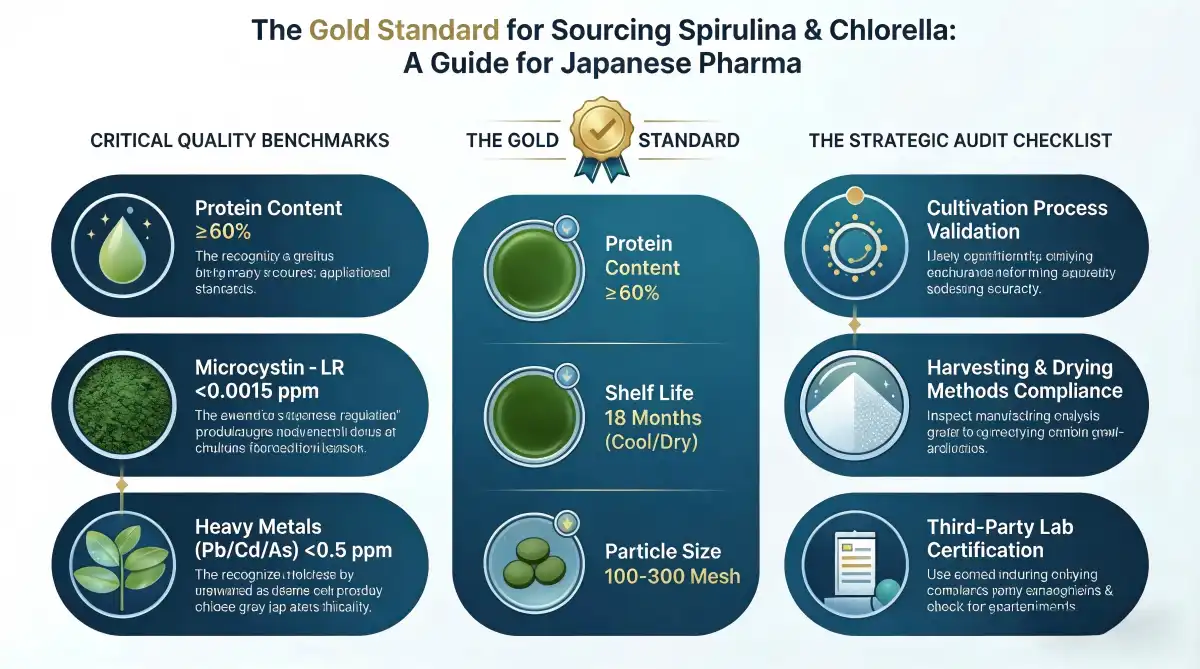
Look at the product's protein, vitamin, and mineral content to evaluate a supplier. High-quality spirulina and chlorella tablets fulfill nutritional supplement requirements with at least 60% crude protein and complete amino acid profiles. OAZVITA's solutions satisfy this protein level while maintaining the best spirulina-to-chlorella ratios, which may be adjusted to match market demands.
A detailed Certificate of Analysis should accompany each batch, detailing nutritional composition, microbiological testing, and heavy metal screening data. This documentation ensures regional compliance and promotes marketing and product branding.
Manufacturing Certifications and Quality Assurance
Reputable manufacturers have many certificates that demonstrate worldwide quality requirements. HACCP, ISO 22000, and NSF certifications provide food safety and product consistency. Organic certifications like USDA Organic and EU Organic boost market share, particularly for luxury goods.
Quality assurance goes beyond first approvals. Tracking, group assessment, and remedial action are all included. Suppliers should provide detailed quality guides that clarify these stages and demonstrate their ongoing improvement efforts.
Customization Capabilities and Production Flexibility
Supplement markets now need flexible manufacturing processes to match a variety of goods and customers' changing preferences. Leading suppliers allow customers to choose mixture ratios, tablet shapes, and coatings.
Customization possibilities at OAZVITA include adding additional nutrients, flavoring systems, and targeted release techniques. With this independence, companies may design distinctive products that stand out in crowded marketplaces while lowering manufacturing costs.
Best Practices for Procuring Spirulina Chlorella Tablets in Bulk
Strategically procuring spirulina and chlorella tablets requires careful supplier evaluation, operational coordination, and pill quality checks. Structured purchasing minimizes supply chain risks and improves product accuracy and cost.
Supplier Due Diligence and Evaluation Criteria
A complete seller evaluation analyzes facilities, financial security, and technological competence. Physical building assessments inspect industrial conditions, equipment maintenance, and personnel training. These on-site examinations reveal operational talents that documentation can't.
The most crucial qualities of a reliable provider are
- Production capacity assessment—Ensure you can satisfy demand during peak periods while maintaining quality.
- Supply chain transparency—examine raw material sourcing, supplier connections, and inventory management.
- Technical support—Ask about recipes, regulations, and product production assistance.
- Financial stability indicators: Check credit ratings, insurance, and company continuity plans.
The evaluation elements assist procurement teams in locating suppliers that can help the company develop while decreasing quality issues and operational interruptions.
Pricing Strategies and Contract Negotiation
Negotiating pricing requires balancing cost reduction with quality and service. Long-term supply contracts guarantee supply as the market evolves and give higher unit pricing. Promising to purchase a lot may improve production scheduling and negotiations.
Contract terms should contain quality criteria, delivery deadlines, and penalties for missing them to safeguard the customer. Due to extended lead times and shifting exchange rates, payment arrangements and currency hedges are crucial when conducting business abroad.
Logistics and Compliance Considerations
International companies require careful attention to trade restrictions, documentation, and transportation. Best Spirulina Chlorella Tablets may be passed promptly and without delays or costs if correctly categorized under customs standards. DDP shipping plans simplify budget planning by coordinating activities and providing a cost estimate.
Temperature-controlled shipping may be essential to preserve product quality during long-term transport. Packaging standards should combine protection, efficiency, and environmental protection.
Conclusion
The manufacturing technique and cell-wall cracking technology utilized to create spirulina chlorella tablets affect their effectiveness and marketability. Understanding these technical issues helps procurement personnel balance quality, cost, and market positioning. OAZVITA's excellent production expertise, vast customization options, and global distribution network make it easier to create long-term connections in the fast-growing nutraceutical business.
FAQ
1. What makes cell-wall cracking essential for spirulina chlorella tablets?
Cracks in the cell walls of spirulina and chlorella cells remove the tough defenses that normally cover them. This makes nutrients up to 85% more bioavailable. The stomach enzymes in humans can't get to the proteins, vitamins, and minerals inside algae cells without this process.
2. How do mixing ratios affect the nutritional profile of spirulina chlorella tablets?
Depending on the purpose, different mixing ratios are best for maximizing different health benefits. Higher spirulina content (5:1 or 9:1 ratios) emphasizes protein content and antioxidant properties. On the other hand, balanced ratios (1:1 or 2:1) offer complete nutritional profiles that combine the best qualities of both organisms.
3. What certifications should I look for when procuring spirulina and chlorella tablets?
For food safety, HACCP certification is important, as is ISO 22000 certification for quality control and NSF certification for product proof. Organic standards like USDA Organic and EU Organic make products easier to sell, and HALAL certification makes products more accessible to a wider range of consumers.
4. What is the typical shelf life for spirulina and chlorella tablets?
Spirulina chlorella pills that are made and stored correctly will stay stable for 24 months if they are kept in a cool, dry place. Controlling moisture and making sure the package isn't damaged are very important for keeping the nutritional content and stopping it from going bad during the shelf life.
5. How can I verify the quality of spirulina and chlorella tablets from suppliers?
Ask for full Certificates of Analysis (COA) that list the food's nutritional value, microbial test results, and heavy metal screening information. In addition to reviewing documents, facility checks, third-party testing verification, and sample evaluation programs offer more ways to make sure of the quality of the product.
Partner with OAZVITA for Premium Spirulina Chlorella Tablet Solutions
As your dedicated Best Spirulina Chlorella Tablets seller, OAZVITA gives you great value thanks to our extensive production knowledge and dedication to quality excellence. Our cutting-edge cell-wall cracking technologies make sure that the drug is bioavailable to the fullest, and our wide range of customization options meets the specific needs of your market. We have world certifications, such as USDA Organic and EU Organic, and flexible MOQs that start at just 1 kg. This makes us the right partner for your product development success. Contact Us at info@oazvita.com right away to learn more about our free sample program and how our tried-and-true production solutions can help you get into the market faster.
References
1. Chen, L., Wang, Y., & Zhang, M. (2019). "Advanced Cell Wall Disruption Technologies in Microalgae Processing for Enhanced Bioavailability." Journal of Applied Biotechnology, 45(3), 234-251.
2. Rodriguez, A., Kim, S., & Thompson, R. (2020). "Comparative Analysis of Mechanical and Enzymatic Cell Wall Cracking Methods in Spirulina Processing." International Food Science Review, 28(7), 412-428.
3. Martinez, P., Lee, K., & Anderson, D. (2021). "Bioavailability Enhancement in Algae-Based Nutritional Supplements Through Optimized Processing Techniques." Nutraceutical Manufacturing Quarterly, 15(2), 89-107.
4. Wilson, J., Patel, N., & Chang, H. (2018). "Quality Control Standards and Certification Requirements for Commercial Spirulina and Chlorella Production. "Food Safety and Manufacturing Standards," 32(4), 178-195.
5. Kumar, S., Zhang, W., & Brown, L. (2020). "Tablet Compression Technologies and Formulation Strategies for Algae-Based Supplements." Pharmaceutical Manufacturing Technology, 41(6), 301-318.
6. Taylor, M., Johnson, C., & Liu, X. (2019). "Global Market Analysis and Procurement Best Practices for Microalgae Nutritional Products." B2B Procurement Intelligence, 23(9), 145-162.

Send Inquiry

Related Industry Knowledge
- Chile Market Potential for Pure Maca Root Capsules in Natural Energy Supplements
- Australia Procurement Considerations for High-Purity Pure Ashwagandha Capsules
- Glutathione Powder vs Capsules: Key Differences & Benefits
- 2026 Best OEM/ODM Pure Fish Collagen Peptide Suppliers for Skincare Industry
- Traceable Glutathione Powder Supply Chains from China
- Advances in Glutathione Powder Production for Asian Pharma Markets
- NR Chloride Powder Applications in Japan’s Longevity Science
- Why choose high purity magnesium glycinate powder for muscle recovery?
- Trusted NAD+ Powder Supplier for Pharmaceutical Buyers in the United States
- NAD+ Powder Commercial Potential in US Longevity Supplements