How to take açai powder?
Jun 24, 2026
If you take pure acai powder the right way, it can work as well as it could as an ingredient in supplements, useful foods, and makeup. From freeze-dried açai berries, this deep purple plant powder is made. It is high in anthocyanins and important fatty acids. For business-to-business users, learning how to use a product in the best way ensures that it will work properly, give all customers the same experience, and follow all rules. What's the best way to handle and mix açai berry powder when making beauty-from-within goods, antioxidant capsules, or energy drinks? The right way affects the powder's taste, shelf life, and sales. This is important information for people who buy things and are looking at açai berry powder for their lines.
Understanding Pure Açai Powder: Composition and Benefits
What Makes Pure Açai Powder Unique?
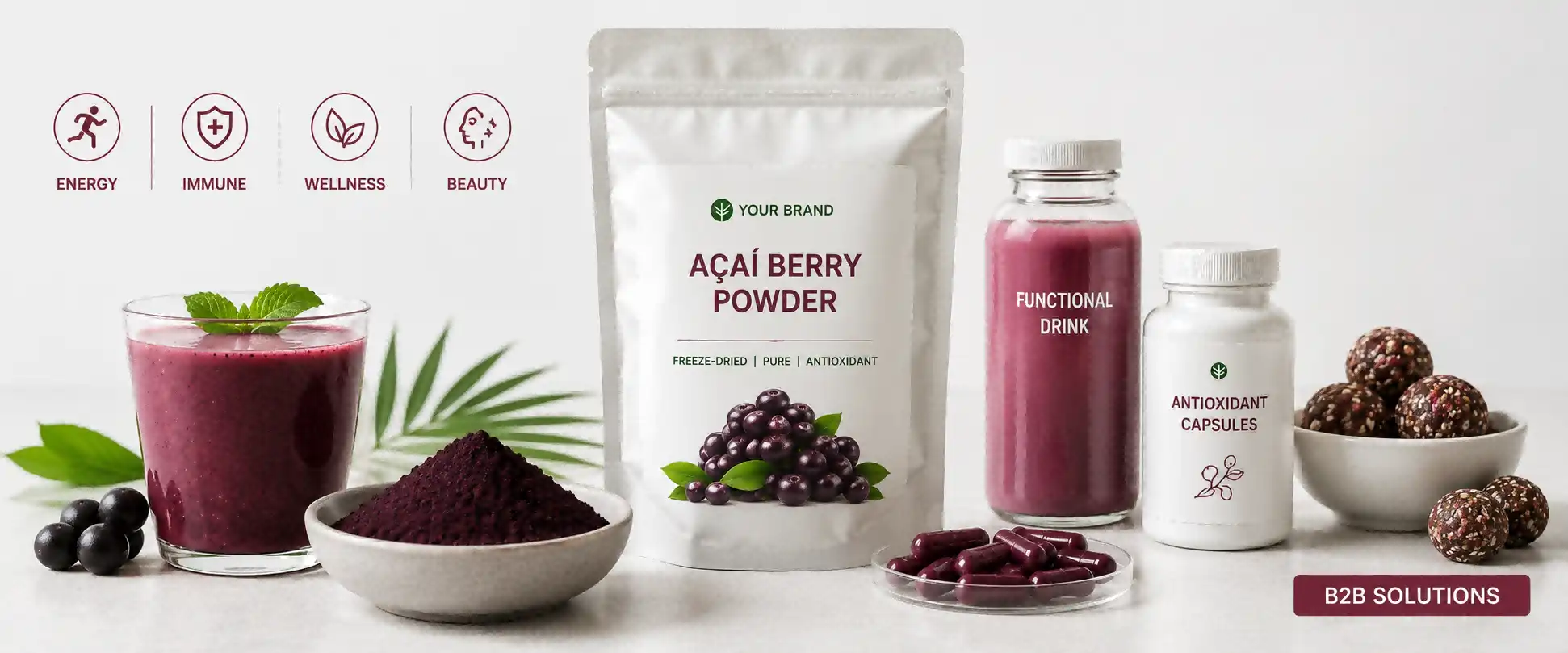
There are several steps that go into making pure acai powder that make it different from other fruit powders. With freeze-drying technology, fresh açai berries are turned into a powder by freezing them very cold and in a vacuum. This process saves between 95% and 98% of the beneficial chemicals, like anthocyanins that change color when heated and the natural fat content (about 40% to 50% in good forms). Instead of fillers, real freeze-dried powder keeps the whole fruit matrix. Spray-dried choices, on the other hand, need maltodextrin carriers (15–40% by weight).
Euterpe oleracea is a palm plant that grows naturally in the floodplains of the Amazon. When the berries are picked has a big impact on how much anthocyanin they have; berries picked during the dry season tend to be darker. When OAZVITA gets high-quality açai berries, they process them within hours of being picked so that they don't go bad from oxygen. This makes sure that the ORAC numbers are the highest they can be, which is usually more than 102,000 µmol TE/100g.
Nutritional Profile and Functional Properties
The main way to tell how strong something is is by how many anthocyanins it has, especially cyanidin-3-glucoside and cyanidin-3-rutinoside. The antioxidant properties of the powder are helped by these polyphenolic chemicals. These properties keep the recipe stable in useful goods that are exposed to light and air. The product has extra benefits because it has a lot of omega fatty acids (omega 3, 6, and 9). This is especially true for lipid-based delivery methods and nutricosmetic uses that need to be bioavailable through the skin.
People who work in buying can better judge what sellers say when they know these compositional factors. A truly clean powder should have very little wetness (below 5%) so that germs don't grow and powder doesn't stick. The anthocyanins are still whole if they are a deep purple to violet color. If they are brown, it means that heat during processing damaged them. The technical standards have a direct impact on how well the final product works. This is why it is so important to check out the seller when you are shopping.
Benefits for B2B Product Development
There are many kinds of things that can be made from the material. Health food companies use the ORAC number to make sure that the antioxidant claims they make are always true. Functional drink makers like that can be used to naturally color drinks instead of dyes that are made in a lab, and that makes drinks healthier. Beauty supplement companies use vitamins from plants in their clean-label nutricosmetic Products. Since the powder doesn't change when the pH level changes and can be mixed by hand, it can be used in pills, tablets, sweets, and drinks that are already made.
How to Take Açai Powder: Practical Usage Methods for B2B Applications?
Dosage Recommendations for Different Product Forms
What kind of food and the rules in the target market determine the best serving size. The amount of antioxidants in Dietary Supplements is generally between 3 and 6 grams per serving so that they are both cost-effective and beneficial. 2 to 4 grams can be used in sports nutrition products when mixed with other ingredients that improve performance, such as amino acids and mineral substances. Functional foods like protein bars, energy bites, and fortified snacks often use 1 to 3 grams to get the nutrition boost and the right amount of taste.
More care needs to be taken with applications that involve drinks. Because some plant fibers don't break down, the powder doesn't really make a solution; it just makes a mixture. When you blend smoothie mixes and protein shakes, the pieces get spread out evenly, so 5 to 10 grams per dose works best. For ready-to-drink drinks not to settle while they're being kept, they need emulsifiers or another process called homogenization. If you understand these simple rules, formulations won't fail and users won't complain.
Formulation Best Practices
Picking the right chemicals is the first step in making sure a product is safe. Green tea extract and beets are two plants that work well together. Adding pure acai powder to them can make the antioxidant benefits even stronger. If you mix anthocyanins with foods that are high in acid, the acids may break down the anthocyanins. The amount of fat in the powder can change how it moves through packaging equipment. To keep fill weights the same, either the amount of magnesium stearate used or the way it is mixed must be changed.
Harmony in taste is very important. While the powder mostly tastes like berries, it also has some sour and earthy notes. The chocolate, vanilla, berry, and tropical fruit flavors cover up any bad tastes very well. How well people like sugar is also affected by the type of sugar used. Artificial sugars might not work well with the natural profile, but stevia and monk fruit do. If you do sense tests while the product is being made, you won't have to make costly changes after launch.
Shelf-life optimization requires attention to packaging and storage conditions. There are a lot of unsaturated fatty acids in the powder, so it's likely to go bad. Things are much more solid when they are packed in oxygen-barrier materials, such as foil-lined bags that are flushed with nitrogen. Putting in silica gel packets changes how wet the product is, so it doesn't stick in damp places. While the food is stored below 25°C for 18 to 24 months, the color stays bright and the nutrients stay strong.
Real-World Integration Strategies
Some of the best OEM partners say that adding açai powder to their goods makes them stand out. It was made by a private-label business in North America. The main ingredient in their "superfruit antioxidant" pills was açai. ORAC tests done by a third party backed up what the company said in its ads. Another company that makes useful drinks made a powder called "energy elixir" that is ready to mix and is made for people who like to work out. It has açai, EAAs, and natural forms of caffeine. These real-life examples show how putting items in the right place can make a brand more valuable and help it do well in the market.
Comparing Açai Powder with Other Berry Powders and Related Products
Açai Powder vs. Alternative Forms
People who work in food service still like frozen açai pulp, but it's hard for companies to get it to customers. This thing always needs to be kept cold, takes up a lot of space in the building, and adds water to things that don't need it. This doesn't happen with freeze-dried pure acai powder because it focuses the nutrients. It takes about 10 kg of fresh berries to make 1 kg of powder. This cuts down on shipping costs and makes the preparation process more efficient.
People like açai pills and tablets because they are easy to use, but it is harder to change the amount while they are being made. When you use bulk powder, you can make exact changes down to the gram to meet certain cost or calorie goals. They have a lot of anthocyanins, but not the fiber and fats that come from the whole plant and make functional foods healthy and full.
Organic vs. Conventional Considerations
It usually costs 20 to 35 percent more for organic açai powder than regular açai powder, but more and more customers want labels that are clear and easy to read. Many forms need to be filled out at every step of the supply chain in order to get USDA and EU organic certificates. This includes picking wild berries and packing them. Brands that want to reach health-conscious or high-end customers often find that the investment is worth it because of the benefits of positioning and shop placement.
Even if you buy regular açai powder from a company with HACCP and ISO 22000 certifications, you can still be sure that it is of good quality. Whether the berries are organic or not doesn't change the amounts of anthocyanin and ORAC. What changes is how ripe the berries are and how they are handled. Approved normal powder works really well for brands or product lines that want to save money while still following the rules and making sure the food is safe.
Cost-Efficiency Analysis
More than just the price of the ingredients needs to be taken into account when figuring out how much each dish costs. Just how much is used depends on what amount of pure acai powder is used. A 4:1 extract, for instance, might cost more per kilogram, but only a small amount is needed for each serve. Since powder is lighter and easier to keep at the right temperature, it costs less to ship than frozen pulp. Powder has a long shelf life and stays stable at room temperature, so it loses less to spoilage than other choices that go bad fast. This means that less waste is made during production, which lowers the total cost.
Procuring Pure Açai Powder: What B2B Buyers Need to Know?
Supplier Selection Criteria
You can trust suppliers who have a lot of different certifications that show they care about quality. Those that are approved by HACCP, ISO 22000, and NSF are good at managing food safety. Products that have been certified as HALAL can be sold in the Middle East. Products that have been certified as USDA Organic or EU Organic can also be sold there. Don't just believe what a website says; directly ask providers for up-to-date certificates. Certifications need to be updated every so often.
Supply chain papers that can be tracked show that everything is being honest. Providers you can trust give Certificates of Analysis (COA) for each batch that show the heavy metal testing, microbe testing, pesticide screening, and flavonoid level. Tech Data Sheets (TDS) and Material Safety Data Sheets (MSDS) should both be in every box. This much information meets the standards for due care and protects brands from checks by the government or contamination events.
Bulk Purchasing Considerations
Each supplier has a different minimum order quantity (MOQ). OAZVITA has MOQs that can be changed and start at just 1 kilogram, so they can help with trying the market and making new products without asking for a lot of money upfront. Tiered pricing means that when you order 500 kilos or more of pure acai powder, you get a 10–25% discount. This is usually agreed upon by established companies that need to order by the container load. You can get better deals and avoid overstocking if you know how much you plan to use each year. If you do this, goods will not go bad before they are used.
Logistics problems have a big impact on the cost of landing. Air freight is good for small or urgent things because DHL, FedEx, or UPS can usually send them in 5 to 7 days. It's cheaper to ship large amounts of goods by sea, but it takes 4 to 6 weeks to get from one place to another and goes through ports. Sellers with a lot of experience handle customs paperwork and set up shipping from door to door, which makes the process of buying easier. If you are clear about Incoterms (FOB, CIF, DDU, and DDP) when you get the price, you won't be surprised when the goods arrive.
Leveraging Free Samples
You can try out free samples of pure acai powder from professional sellers that come with full instructions before you decide to buy. Ask for samples from real production batches instead of ones that were made in a lab and might not be a good representation of the quality on the market. To make sure the product will work for the purpose you want it to, you should do sense evaluations, stable tests, and small-scale formulation trials. If you're careful, you can escape making mistakes that cost a lot of money once production levels hit market levels.
Conclusion
Understanding how to properly take and integrate Pure Acai Powder into B2B applications separates successful product launches from costly reformulations. As it has a lot of anthocyanins and omega fatty acids and can be mixed with other things, the freeze-dried powder can be used in nutraceuticals, functional foods, sports nutrition, and beauty products. When choosing a seller, people who work in procurement should look at their qualifications, tracking paperwork, and low minimum order amounts. Following the right rules for storage, quality checks, and recipe best practices will keep your product stable and your customers happy. Smart açai powder buying helps brands stay competitive while giving customers real nutritional value, which is something they're putting more and more importance on in their health journeys. The market for clean-label, antioxidant-rich products is growing all the time.
FAQ
1. Does açai powder support wellness goals effectively?
Pure acai powder has a lot of anthocyanins, which are helpful vitamins for the body. It's possible to measure the benefits of eating 3–6 grams of polyphenols every day as part of a healthy diet. It doesn't work as well by itself; it works better when mixed with other plants in full-solution recipes.
2. How does açai compare to other antioxidant-rich powders?
More than 102,000 µmol TE/100 g of açai is its ORAC value. This is a lot more than blueberry powder (about 24,000) or açai juice concentrate. With this level of strength, you can use less of it and still get the antioxidant benefits you want. This saves you money compared to recipes with less concentrated choices.
3. What certifications should suppliers provide?
Sellers with a good name must have HACCP, ISO 22000, and NSF approvals. For brands to sell to people who want to buy organic, they need to be approved as organic by either the USDA or the EU. It is important to get HALAL permission for delivery in the Middle East. For tracking and making sure you're following the rules, ask for up-to-date certificates and COA, MSDS, and TDS information that is unique to each batch with every order.
Partner with OAZVITA for Premium Pure Acai Powder Supply
People who make functional foods, sports nutrition products, or health and dietary supplements and are looking for a trusted source for açai powder can get a lot from OAZVITA. The good chemicals in our freeze-dried Pure Acai Powder are still there (95% to 98%). The EU, HACCP, ISO 22000, NSF, HALAL, the USDA, and HACCP have all said it is organic. For your convenience, we offer a minimum order size of 1 kilogram, free trials with all the paperwork, and quick shipping times of 1–5 days via DHL, FedEx, or UPS. We know how hard it can be to buy things. Our 24-month shelf life and oxygen-barrier packaging keep your goods safe all the way through the supply chain. You can email our team at info@oazvita.com to get fair bulk prices, personalized OEM/ODM formulation support, and technical advice that will help you make your product faster while also making sure it meets all global legal standards.
References
1. Schauss, A.G., Wu, X., Prior, R.L., Ou, B., Patel, D., Huang, D., and Kababick, J.P. (2006). "Phytochemical and Nutrient Composition of the Freeze-Dried Amazonian Palm Berry, Euterpe oleraceae Mart. (Acai)." Journal of Agricultural and Food Chemistry, 54(22), 8598-8603.
2. Heinrich, M., Dhanji, T., and Casselman, I. (2011). "Açai (Euterpe oleracea Mart.) - A Phytochemical and Pharmacological Assessment of the Species' Health Claims." Phytochemistry Letters, 4(1), 10-21.
3. Poulose, S.M., Fisher, D.R., Larson, J., Bielinski, D.F., Rimando, A.M., Carey, A.N., Schauss, A.G., and Shukitt-Hale, B. (2012). "Anthocyanin-Rich Açai (Euterpe oleracea Mart.) Fruit Pulp Fractions Attenuate Inflammatory Stress Signaling in Mouse Brain BV-2 Microglial Cells." Journal of Agricultural and Food Chemistry, 60(4), 1084-1093.
4. Kang, J., Li, Z., Wu, T., Jensen, G.S., Schauss, A.G., and Wu, X. (2010). "Anti-oxidant Capacities of Flavonoid Compounds Isolated from Acai Pulp (Euterpe oleracea Mart.)." Food Chemistry, 122(3), 610-617.
5. Del Pozo-Insfran, D., Percival, S.S., and Talcott, S.T. (2006). "Açai (Euterpe oleracea Mart.) Polyphenolics in Their Glycoside and Aglycone Forms Induce Apoptosis of HL-60 Leukemia Cells." Journal of Agricultural and Food Chemistry, 54(4), 1222-1229.
6. Rodrigues, R.B., Lichtenthäler, R., Zimmermann, B.F., Papagiannopoulos, M., Fabricius, H., Marx, F., Maia, J.G.S., and Almeida, C. (2006). "Total Oxidant Scavenging Capacity of Euterpe oleracea Mart. (Açai) Seeds and Identification of Their Polyphenolic Compounds." Journal of Agricultural and Food Chemistry, 54(12), 4162-4167.

Send Inquiry
Related Industry Knowledge
- Does Pure Raw Cacao Powder help with cortisol?
- 2026 Buyer’s Guide to Nicotinamide Riboside Chloride Powder for Health Supplements
- Pure Creatine Monohydrate Gummies vs. Powder: Finding Your Perfect Fit
- Pure NMN powder for cognitive health: mechanism and evidence
- China OEM Manufacturing of Pure Sea Moss Capsules for International Brands
- Shilajit resin supplement in fitness: muscle, stamina and recovery
- Pure NMN powder vs other NAD+ supplements: key differences
- India’s Growing Demand for Pharmaceutical-Grade Inositol Powder
- Shilajit resin supplement for hormone support and testosterone
- What defines high purity magnesium glycinate powder?