How to Use Biotin Powder for Maximum Benefits?
Jun 23, 2026
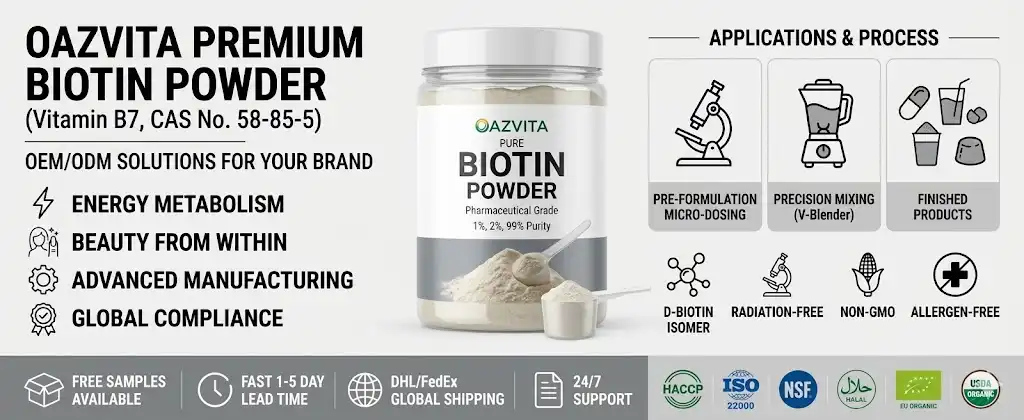
To use biotin powder properly, you must first understand how to accurately measure and incorporate it into your diet. Pure biotin powder, which is also called vitamin H or vitamin B7 (CAS No. 58-85-5), works best when added in therapeutic amounts between 1% and 99% purity, based on the needs of your product formulation. The powder form lets manufacturers use exact micro-dosing to make sure that supplements, functional foods, and beauty items all have the same amount of the ingredient. To use it correctly, you need to use pharmaceutical-grade measuring tools, mix it well with suitable carriers like maltodextrin to lower amounts, and store it somewhere cool and dry so it stays stable for up to 24 months. This method makes sure that absorption and product effectiveness are the same from one production batch to the next.
Understanding Pure Biotin Powder and Its Benefits
What Makes Biotin Powder Different from Other Forms?
Pure biotin powder is different from pills, tablets, and candies because it can be used in so many different ways. The solid powder form has the biologically active isomer of D-Biotin without any extra fillers, binders, or covering materials that make the production cost go up. With this concentrated format, producers can make sure that formulas have the right amount of nutrients without having to worry about bulk. High-quality solid powder is more stable at high temperatures during the extrusion and packaging processes than liquid biotin preparations, which break down quickly due to oxidation. The powder also solves the problem of micro-dosing that comes with making supplements. Since daily needs are usually measured in micrograms, trustworthy suppliers offer different concentrations (1%, 2%, and 99% on maltodextrin carriers) that keep the powder from separating in bulk formulations and make sure it is evenly distributed.
Key Health and Manufacturing Benefits
At the cellular level, biotin powder is an important part of energy production and maintaining the nervous system. The chemical is a cofactor for carboxylase enzymes, which control the production of fatty acids, glucose, and amino acids. These biochemical processes have a direct effect on keratin structures. This is why taking biotin supplements helps hair stay strong, skin barriers stay intact, and nails stay strong.
When it comes to manufacturing, biotin powder has a number of key benefits that help with common production problems:
- Cost Efficiency and Scalability: When making a lot of something, powder form is cheaper per unit than pre-encapsulated options. A kilogram of 99% pure powder can be used to make thousands of finished supplement units, which cuts down on material costs by a huge amount. When kept correctly, the stable shelf life of 24 months cuts down on inventory waste and helps just-in-time manufacturing tactics work.
- Formulation Flexibility: The powder works well in a wide range of products, such as health capsules, functional beverage powders, protein mixes, beauty supplements, and enriched snack bars. Biotin concentration can be changed by manufacturers based on the people they want to reach. For example, healing products can have higher biotin concentrations, while daily health products can have lower ones.
- Quality Assurance Advantages: Getting radiation-free, non-GMO, allergen-free biotin powder from licensed providers makes following the rules easier. Products with HACCP, ISO 22000, NSF, HALAL, EU Organic, and USDA Organic standards are easier to get approved in markets in North America and Europe. The complete paperwork that comes with each batch includes a COA (Certificate of Analysis), an MSDS (Material Safety Data Sheet), and a TDS (Technical Data Sheet). This gives sourcing teams the ability to track the goods that they are buying.
Because of these qualities, biotin powder is the perfect raw material for companies that want to set their Products apart by using high-quality ingredients while keeping their prices low.
Safety Profile and Dosage Considerations
The safety profile of biotin is very good, and there is no top limit set by regulatory bodies. Because this B-vitamin dissolves in water, extra amounts are flushed out of the body through pee instead of building up in cells. Clinical studies show that healthy people can take up to 10,000 micrograms of it every day without getting sick. Standard supplements usually have between 300 and 10,000 micrograms per dose, but this depends on what they are meant to do.
One important thing that people who work in procurement should keep in mind is that taking a lot of pure biotin powder or biotin supplements can mess up some diagnostic tests, especially ones that measure troponin and thyroid hormones. Even though this doesn't pose a safety risk to end users, the product label should include the right warnings. Manufacturers that want to reach healthcare professionals should be clear about when to test for influence.
How to Use Pure Biotin Powder Effectively in Your Products?
Dosage Guidelines for Different Product Categories
To effectively incorporate pure biotin powder, concentration levels must be matched to the placement of the product and the needs of the target customer. Supplement makers usually stick to set dosage amounts that strike a mix between effectiveness and cost. Daily health supplements usually have between 300 and 1,000 micrograms in each amount, making sure that people get enough nutrients on a regular basis. Therapeutic formulations for hair, skin, and nail problems usually have between 5,000 and 10,000 micrograms. This is because clinical study methods show that changes can be seen after 90 to 180 days.
Functional food and beverage uses also require specific considerations. Protein shakes that have been fortified may have 500 to 2000 micrograms of extra amino acids per dose to help make keratin. Energy drinks contain 150 to 500 micrograms of this vitamin along with other B-complex vitamins to help the metabolism. In the nutricosmetics group, beauty-from-within products usually have between 2,500 and 5,000 micrograms of collagen peptides, hyaluronic acid, and plant antioxidants.
Integration Techniques for Manufacturing Processes
Paying attention to particle size, mixing steps, and container choice will help you get biotin powder evenly distributed in your product matrix. The usual method is to dry mix biotin powder with ingredients that have similar structures before adding components that are sensitive to water or temperature. Making sure there is uniformity means using a V-blender or ribbon mixer and mixing for the right amount of time (15 to 30 minutes, based on the size of the batch).
The micro-dosing problem is directly felt by companies that make pure 99% biotin powder. At this level of strength, the weight needed per thousand units could be as low as a few grams, which would make it hard to distribute evenly. The answer is to use a suitable carrier to make a premix. Maltodextrin is the standard carrier in the business because it has no taste, great flow qualities, and is stable. Making a 1% or 2% biotin-maltodextrin mix makes a more workable amount possible while keeping accuracy. After being mixed, this premix mixes easily with other powdered ingredients during normal production processes.
Biotin powder is stable at high temperatures, which helps encapsulation processes. The substance can resist temperatures up to 100°C without breaking down much, which means it can be used for both gelatin and veggie capsule filling. To compress a tablet, you need to look at how the powder flows. Adding the right excipients, like microcrystalline cellulose or dicalcium phosphate, can make the compression patterns better. Biotin powder is usually dissolved in the glucose syrup phase before the gelatin is added. This makes sure that the biotin powder is evenly spread throughout the end product.
Powder Form Advantages in Bulk Production
By comparing the costs of production, we can see why well-known brands are choosing biotin powder over pre-encapsulated options more and more. If a company wants to test 99% pure powder, they only need to buy 1 kilogram at first. Buying 25 kilograms in bulk has a lot of strategic benefits. Lead times of 1 to 5 working days make it possible to make prototypes quickly and test them on the market. There are many different types of flexible packaging that can be used for both small private label runs and large-scale production for big store chains.
The powder form also makes it easier to make unique formulations, which is something that pills and tablets can't do. Brands can make their own special mixes by mixing biotin with nutrients that work well together, like bioavailable zinc, methylsulfonylmethane (MSM), or plant-based products like horsetail and bamboo silica. This freedom in formulation makes it possible for products to stand out in busy supplement categories, which supports tactics that charge higher prices.
When it comes to shipping, powder concentrates also work better. One kilogram of 99% pure biotin powder has a lot more active ingredient than the same number of capsules, so it saves money on shipping and the environment. Reliable companies like DHL, FedEx, UPS, and airmail post make sure that packages get to factories around the world safely, and they can be tracked to help keep the supply chain open.
Choosing the Right Biotin Powder: Quality and Supplier Considerations
Source Verification and Certification Standards
Purchasers must choose between manufactured and fermentation-derived pure biotin powder providers. Due to its purity, synthetic biotin dominates the market. Though "natural," fermentation-derived biotin costs extra and doesn't increase product absorption. D-Biotin is the only chemically active stereoisomer from both sources.
Certifications trump source marketing. North American and European vendors must follow cGMP. Check the premises for HACCP, ISO 22000, or NSF International certifications. Companies reach more customers with HALAL certifications. Certain clients choose biotin because of its USDA and EU organic certifications, despite its similar molecular nature. This offers precedence.
Every package from a trusted seller includes a Certificate of Analysis, Material Safety Data Sheets, and Technical Data Sheets. The Certificate of Analysis confirms product purity. Radiation-free and non-GMO goods meet strict trade regulations. Businesses selling to sensitive populations or making products in allergy-controlled environments need allergen-free clearance.
Evaluating Supplier Capabilities and Reliability
Supplier selection relies on product needs and operational skills that ensure long-term relationships. How well a vendor develops with your firm depends on profits. Buildings with many production lines and high-tech analytical instruments can maintain quality as order numbers rise. Exports over USD 15 million by known suppliers indicate market confidence and stability, according to benchmark data.
Excellent suppliers and partners have different customer service infrastructures. Working across time zones, 24/7 assistance prevents costly production delays. Technical professionals that speak many languages eliminate international purchase communication issues. Devoted account managers solve formulation challenges proactively. Delivery rates above 99% on time reflect a reliable supply network preserving production deadlines.
Ask suppliers about their R&D skills during supplier assessment. Expert research teams can enhance goods, integrate, and detect market trends. Customers may try vendor samples using tickets before making big purchases. Partners may advise on product usage and formulae. Technical support cuts product development and formula modification expenses.
Optimizing Private Label and OEM Partnerships
Brands without factories may join the biotin powder industry quickly via private label and OEM collaborations. The best partnerships give formula, production, and innovative packaging. MOQs are key to negotiations. Flexible MOQs from 1 kilogram allow market testing without inventory risk, while established goods benefit from bulk pricing on bigger contracts.
Your packaging should reflect your brand and target market. Custom packaging makes products stand out on the market, giving companies an edge. Standard metal foil bags with resealable closures keep the product stable throughout use and storage. Get your products to shops with custom labels featuring your brand name, dosage instructions, and regulatory compliance comments.
Share your wait time expectations in relationship talks. Established suppliers generally complete regular formula requests in 1–5 business days, while pure biotin powder requests and novel combinations may take longer. Understanding production schedules lets you plan marketing launches around product availability. Air freight, maritime freight, and fast courier services balance cost and speed.
Conclusion
To get the most out of pure biotin powder, you need to pay close attention to formulation details, supply relationships, and market positioning. The powder structure gives makers more freedom than any other to make supplements, functional foods, and beauty items that meet changing customer needs. To be successful, you need to choose certified providers who offer stable quality, thorough documentation, and quick expert help. Procurement teams put their brands at a competitive edge in growing wellness areas by learning about how to optimize dosage, how to integrate production methods, and what the rules are. Powder is cheaper than pre-made options, and brands that care about quality and innovation in the global nutritional market choose it because they can make it in any way they want and it can be made on a large scale.
FAQ
1. What concentration of biotin powder should I specify for supplement manufacturing?
The appropriate proportion depends on how much you want to make and how many servings you want to serve. Pharmaceutical-grade mixing equipment is often used by manufacturers who work with 99% pure biotin powder to make precise premixes that are then distributed consistently. Most brands that use standard mixing tools list 1% or 2% biotin on maltodextrin carriers. This makes them easier to handle and lowers the chance that they will separate in bulk mixes. To figure out what concentration you need, you need to know how much biotin you want in each meal, how much powder each unit weighs, and which concentration keeps biotin within 0.1 to 5% of the entire blend weight for the best consistency.
2. How quickly can I expect delivery after placing a bulk biotin powder order?
From the time an order is confirmed until it is shipped, the lead time for stock recipes is usually between 1 and 5 working days. Depending on how complicated the specifications are, custom concentration mixes or private label packages may add two to three weeks to the lead time. Shipping times depend on the method used. Express courier services like DHL and FedEx can get packages to most places in North America and Europe in 3–7 days. Sea freight, on the other hand, takes 4-6 weeks but can save you a lot of money on big orders. Talking about your deadline needs with the seller during the first meeting makes sure that the production plan is in sync.
3. What certifications matter most when evaluating biotin powder suppliers?
Give more weight to qualifications that fit your product positioning and target markets. HACCP and ISO 22000 are basic standards that show you know how to handle food safety. In North American areas, NSF certification adds to your trustworthiness. HALAL approval makes it easier for Muslim customers to buy things. Organic approvals from the USDA or EU allow products to be positioned higher on the market, even if they are chemically the same as manufactured sources. In addition to facility certifications, make sure that each batch comes with a Certificate of Analysis, a Material Safety Data Sheet, and a Technical Data Sheet that prove the specs and safety factors that are important to your quality control procedures.
Partner with OAZVITA for Premium Biotin Powder Supply
As a reliable biotin powder provider, OAZVITA sends vitamin H powder (CAS No. 58-85-5) to beauty brands, useful food companies, and companies that make supplements around the world. Our Pure Biotin Powder is available in three different concentrations: 1%, 2%, and 99%. All of them are confirmed to be radiation-free, non-GMO, and allergen-free to meet the highest international standards. We keep a lot of certificates, like HACCP, ISO 22000, NSF, HALAL, EU Organic, and USDA Organic, so your goods will be able to pass all the rules in North America, Europe, and other places.
What makes our service unique is that we respond quickly and adapt to the needs of buying works. We give you free samples with full COA, MSDS, and TDS reports so you can check the quality before agreeing to large orders. Our low MOQ (starting at just 1 kilogram) makes it easy to do test runs, and our reasonable price on bulk sales helps you make the most of your profits as you sell more. We get rid of the communication problems and wait times that make foreign sourcing hard by offering 24/7 multilingual help, dedicated account managers, and lead times of 1 to 5 days. We use DHL, FedEx, UPS, and airmail post as part of our logistics network to ensure safe arrival and full tracking access.
The research and development team at OAZVITA works with brands to improve formulations by giving them expert advice on how to integrate ingredients, test for stability, and pair ingredients that work well together. This is true whether you need turnkey OEM solutions with custom packaging or bulk powder for your current production lines. Our stable supply chain and 99% on-time delivery rate will keep your manufacturing plans safe. Get in touch with us at info@oazvita.com to talk about how our approved Pure Biotin Powder can help you sell more products and make more money.
References
1. Mock, D.M. (2017). Biotin: From Nutrition to Therapeutics. Journal of Nutrition, 147(8), 1487-1492.
2. Patel, D.P., Swink, S.M., & Castelo-Soccio, L. (2017). A Review of the Use of Biotin for Hair Loss. Skin Appendage Disorders, 3(3), 166-169.
3. Zempleni, J., Wijeratne, S.S., & Hassan, Y.I. (2009). Biotin. BioFactors, 35(1), 36-46.
4. Said, H.M. (2012). Biotin: Biochemical, Physiological and Clinical Aspects. Subcellular Biochemistry, 56, 1-19.
5. Institute of Medicine (US). (1998). Dietary Reference Intakes for Thiamin, Riboflavin, Niacin, Vitamin B6, Folate, Vitamin B12, Pantothenic Acid, Biotin, and Choline. National Academies Press, Washington DC.
6. Sedel, F., Papeix, C., Bellanger, A., et al. (2015). High Doses of Biotin in Chronic Progressive Multiple Sclerosis: A Pilot Study. Multiple Sclerosis and Related Disorders, 4(2), 159-169.

Send Inquiry
Related Industry Knowledge
- When should I take shilajit drops?
- Reishi Mushrooms: A Comprehensive Guide
- Future developments in shilajit resin supplements: delivery & tech
- Pure NMN powder for cognitive health: mechanism and evidence
- Top 7 Benefits of Using Chicken Collagen Peptides in Health Supplements
- Pure NMN powder formulation trends: bioavailability and delivery tech
- Buyer’s Guide: How to Choose the Best Pure NAD+ Powder
- Top OEM/ODM Glutathione Powder Manufacturers in China for 2026
- Supplying GMP MCT Powder to Clinical Nutrition Brands in Singapore
- What makes pure NMN powder a standout NAD+ precursor?