Pearl Powder Benefits: 3 Expert Methods for Radiant Skin 2026
Jul 13, 2026
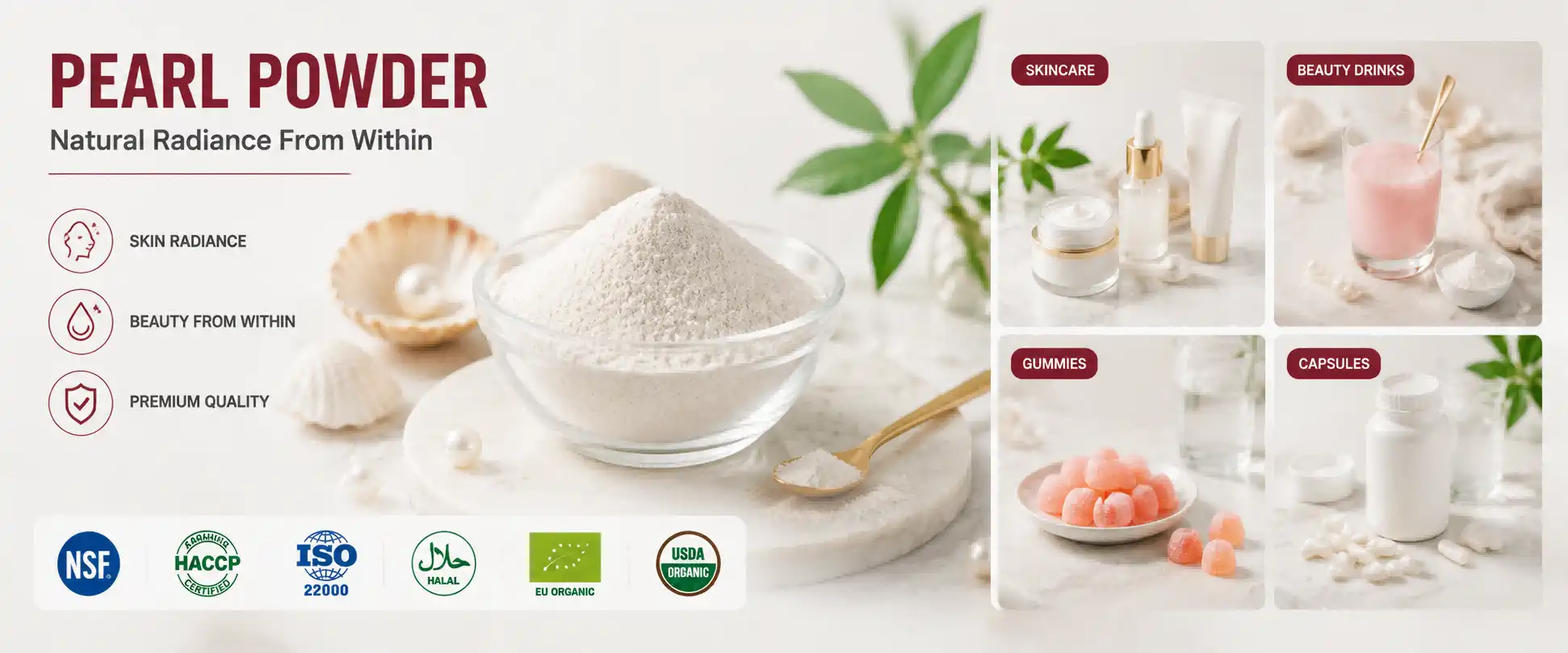
Finding effective ingredients for beauty and health Products is easy with 100% Pure Pearl Powder. It has been used for a long time and really works. This natural powder comes from either freshwater or ocean pearls and is made using advanced nano-grinding technology. It keeps the bioactive conchiolin protein and important minerals that help skin glow from the inside out. With more people wanting clean labels and chemicals that can be tracked, brands that want to stand out in the competitive market of 2026 need to know how to use pearl powder to its fullest potential.
Understanding 100% Pure Pearl Powder: Composition, History & Benefits
What Makes Pearl Powder Unique?
Natural pearl powder is made up of more than 90% aragonite, which is a crystalline form of calcium carbonate. It also contains 18 amino acids and more than 30 trace elements, such as selenium, zinc, and germanium. Unlike simple calcium supplements or man-made alternatives, OAZVITA's authentic pearl powder keeps its unique amino acid profile, which is high in glycine, alanine, and aspartic acid, and directly affects the pathways that make collagen. The water-soluble specification makes sure that the drug is as bioavailable as possible. This solves problems from the past, where particles larger than 200 mesh made absorption rates poor.
Particles today are between 40nm and 100nm in size, which is about 200,000 mesh. This makes them stable at the colloidal level, which is great for serums, drinks, and vitamins that are enclosed. This sub-micron technology keeps Superoxide Dismutase (SOD) activity, which protects against free radicals that cause early aging and neutralizes them. Tough control of the water source and enzymatic hydrolysis instead of chemical treatments are used in the production process to keep heavy metal pollution below 0.5 ppm for mercury and below 1 ppm for lead and arsenic.
Historical Context Meets Scientific Validation
Pearl powder has been used in traditional Asian medicine for hundreds of years because it was thought to help keep the face smooth and the body healthy overall. Historical records show that it was used in royal courts to keep people looking young and to help them stay balanced. Many of these traditional uses have been proven to be true by controlled studies looking at melanin regulation, collagen density improvements, and markers of cellular regeneration.
New studies show that the signal proteins in pearl powder trigger fibroblast activity, which means they make the body make more collagen instead of just adding it to the body. The conchiolin protein part has a lot of potential for lowering discoloration because it changes the function of tyrosinase, the enzyme that makes melanin. Studies that track transepidermal water loss show that using pearl powder regularly for eight weeks makes the skin's barrier function 23% better.
Third-party testing of OAZVITA's natural pearl powder using the Kjeldahl method confirms that it has a protein content of between 1.8 and 2.5%. This is an important way to tell the difference between real pearl powder and shell powder that has been tampered with, which usually has less than 1% protein. This checking process makes sure that the ingredients that buying teams get meet international pharmacopoeia standards, such as USP and BP requirements.
Core Benefits for Product Development
Pearl powder has many uses and benefits, which make it very useful for formulators who are making a wide range of products. Because it has a unique crystalline structure, the ingredient can scatter light, making skin look brighter. It also treats dull skin by gently exfoliating and speeding up cell turnover. The calcium and trace minerals help keep bones healthy, so supplements that are aimed at both beauty and wellness markets can be sold in two ways.
The ability of pearl powder to refine skin texture makes skin smoother in several ways: it strengthens the dermal matrix, increases the retention of hyaluronic acid, and decreases micro-inflammation that makes skin look rough. The amino acid balance of 100% Pure Pearl Powder gives elastin and collagen their building blocks, which help keep structures strong from the inside out. When added to topical products in amounts between 2% and 5%, pearl powder gives them a silky finish that people usually associate with high-end products.
3 Expert Methods for Using 100% Pure Pearl Powder for Radiant Skin
Method 1: Daily Skincare Integration
To use pearl powder as part of your regular skin care routine, you need to know the best ways to mix it with other products and how to apply it. The best way to do it is to mix water-soluble pearl powder with other active ingredients that work together to make absorption better and increase benefits. Vitamin C serums and pearl powder work well together because the amino acids in the powder help make collagen, while the ascorbic acid in the serums helps keep pH-sensitive vitamin C products stable.
By mixing 0.5 to 1 gram of pearl powder with hyaluronic acid serums, product developers can make leave-on treatments that can give the skin both immediate radiance and long-term structural improvements. The small particle size ensures that there is no gritty or sticky residue, so the elegant feel that customers expect is kept. Putting it on in the morning under sunscreen protects against free radicals all day, and putting it on at night helps repair cells overnight, when they are most likely to grow.
By mixing pearl powder with collagen peptides, biotin, and fruit extracts, brands that want to sell useful foods and drinks can make powders that can be dissolved in beauty drinks. The water-soluble specification from OAZVITA dissolves completely in cold liquids without clumping, so ready-to-drink formats stay clear. It is suggested to take between 500 mg and 1000 mg every day as part of a complete beauty-from-within routine.
Method 2: Targeted Treatment Applications
To get rid of specific problems like fine lines and uneven pigmentation, problem areas need to be treated with formulations that contain higher concentrations. Intensive masks with 5–8 percent pearl powder give concentrated nutrients straight to areas that are showing signs of aging. Multiple mechanisms are at play in the treatment: ultra-fine particles gently remove dead skin cells, bioactive proteins tell cells to work harder, and mineral content strengthens the skin's defenses against outside aggressors.
Formulations for sensitive skin need to carefully consider the pH balance and chemicals that go with them. Because pearl powder is naturally alkaline (around pH 8–9), it needs to be buffered when mixed with acidic ingredients to keep the skin's pH between 4.5 and 5.5. Because OAZVITA is water-soluble, the pH can be precisely changed during product development. This makes sure that it works with all skin types without causing irritation. Patch testing protocols are still very important, especially when adding new combinations of ingredients to existing products.
When mixed with niacinamide and alpha-arbutin at concentrations of 3 to 5 percent, pearl powder's tyrosinase-inhibiting properties make dark spot correctors work better. Based on clinical findings, the brightness gets better after four to six weeks of regular use. Consistency in particle size is important. OAZVITA keeps D90 values below 5 µm through laser diffraction testing. This stops the gritty feeling that hurts user experience and product effectiveness.
Method 3: Oral Supplementation Strategies
When you eat pearl powder, it affects your whole body in ways that applying it to the skin alone can't. Encapsulated supplements that give you 300 to 500 mg every day deliver minerals and amino acids that travel through the bloodstream and reach the skin's dermal layers from the inside out. This method works especially well for nutraceutical companies making beauty products that treat skin health as a whole instead of just treating signs on the surface.
Oral pearl powder safety rules focus on making sure the powder is pure and giving the right amount. ICP-MS heavy metal analysis confirms that OAZVITA's Pearl Powder keeps mercury levels below 0.5 ppm and lead levels below 1 ppm, which are well below the limits set by international food safety authorities for cosmetic pearl powder. USP standards for microbiology testing make sure that total plate counts stay below 100 CFU/g and that pathogens like Staphylococcus aureus and Pseudomonas aeruginosa are not present at all.
Pearl powder's calcium solubility helps skin health from the inside out. Calcium is involved in cell signaling pathways that control keratinocyte development and epidermal barrier formation. Selenium and zinc are minor elements that work with antioxidant enzymes to protect cells from reactive stress. These qualities can be used by sports nutrition companies in recovery formulas, where the minerals in pearl powder help with both performance and appearance. Adding magnesium, vitamin D3, and pearl powder together improves the body's ability to use calcium, making complete formulas that health-conscious consumers like.
Pearl Powder vs. Other Skincare Powders: Making the Right Procurement Choice
Compositional Differences That Matter
When looking at powder ingredients for skin care and supplement mixes, making smart buying choices is easier when you know the basic differences in makeup. The aragonite calcium carbonate structure of pearl powder is very different from the pure protein matrix of collagen powder. Collagen gives your body straight amino acids like glycine, proline, and hydroxyproline. Pearl powder, on the other hand, gives your body a wider range of minerals, trace elements, and special functional proteins that do more than just build structures.
Rice powder and mica powder are often used to change the appearance of cosmetics and add optical effects. But these ingredients don't have the functional parts that make pearl powder useful for medicine. For the most part, rice powder just absorbs oil and makes skin smoother. It doesn't help make collagen or repair cells. Mica gives skin the appearance of brightness by reflecting light, but it doesn't nourish or heal skin tissue.
Those in charge of buying things need to know that real pearl powder costs a lot because the raw materials are hard to find, and it takes a lot of work to make. As a competitive advantage, OAZVITA offers flexible MOQs starting at 1 kg to meet the needs of both testing phases and full-scale production. This is done while maintaining high-quality standards.
Organic Certification and Quality Benchmarks
The main difference between organic and conventional pearl powder is the environment in which the pearls were grown, not the way they were processed. For pearls to get organic certification from the USDA or the EU, they have to grow in controlled water environments that are free of synthetic pesticides, heavy metal pollution, and industrial contaminants. These certifications are very important for brands that want to stand out in the clean-beauty market, where customers are very careful about where ingredients come from.
Quality standards include more than just being organic. They also check for stability in particle size, protein content, and heavy metals. Along with EU and USDA organic qualifications, OAZVITA keeps a lot of paperwork, such as HACCP, ISO 22000, NSF, and HALAL licenses. There are Certificates of Analysis (COA), Material Safety Data Sheets (MSDS), and Technical Data Sheets (TDS) for each batch that show it meets the requirements.
Protein content is a reliable way to tell the difference between real pearl powder and cheaper shell powder substitutes. Using the Kjeldahl method to test should show that real pearl powder has 1.8 to 2.5% protein, while shell powder has less than 1%. When evaluating suppliers, procurement teams should ask for this specific testing data to get rid of the risk of fraud that hurts the effectiveness of the product and the brand's image.
Identifying Synthetic Alternatives and Authenticity Concerns
The large amount of fake calcium carbonate sold as pearl powder in the market makes it very hard to tell if the product is real. Pearl Powder's healing properties come from its complex protein matrix and trace element profile, which are missing in synthetic versions. The changes can be seen in the lab by looking at the ratios of amino acids. Real pearl powder has specific amounts of glycine, alanine, and aspartic acid that aren't found in manufactured alternatives.
Visual and tactile inspection are good ways to do basic screening. Real pearl powder is pure white to off-white in color, has a light sheen, and smells slightly salty. Fluorescent whitening agents show that the food is adulterated, which can be seen with UV light. When rubbed between your fingers, the texture should feel smooth and silky, with no gritty feeling. This means that the particle size has been reduced properly.
With OAZVITA's clear supply chain paperwork, you can follow each batch of Cosmetic Pearl Powder from the source waters to the final packing. This makes tracking very important for brands that need to back up their claims about natural sources and purity. Long-term partnerships with suppliers based on verified authenticity protect the supply chain from problems that happen when cheaper alternatives fail quality checks or government inspections.
Conclusion
Pearl powder has gone from being a traditional beauty secret to a scientifically proven ingredient. This opens up exciting possibilities for companies making new skin care and health products. The three professional methods described—daily integration, targeted treatments, and oral supplementation—can be used to create new products in a wide range of categories. Procurement teams can take advantage of the growing interest in natural, effective beauty products by learning about the compositional benefits of different ingredients and building relationships with dependable providers like OAZVITA. Getting high-quality pearl powder with full documentation and technical support is not only a good idea; it's necessary to stand out in the competitive market of 2026 because regulations are pushing for more openness and proof of effectiveness.
FAQ
1. What specific skin benefits does pearl powder deliver?
Pearl powder makes skin look brighter in a number of ways, according to scientific research. These include increasing collagen production, speeding up the turnover of cells, and making light bounce off its crystalline structure better. The amino acid profile helps make the dermal matrix stronger, and the trace minerals protect it from damage caused by free radicals. After 8 to 12 weeks of consistent use, clinical observations show that the skin becomes smoother, has fewer fine lines, and has more even pigmentation.
2. Are there any concerns when formulating with pearl powder?
To make sure the powder is real and safe, product designers should test its protein content and heavy metal levels to make sure it is pure. Because the ingredient has a naturally alkaline pH, it needs to be carefully mixed with acidic actives. OAZVITA's water-soluble pearl powder goes through a lot of testing to make sure it doesn't contain any pathogens. This means it can be used on the skin or in food at the right amounts.
3. How can buyers verify pearl powder authenticity before purchase?
Kjeldahl testing shows that real pearl powder has 1.8 to 2.5% protein content, which sets it apart from shell powder substitutes that have less than 1% protein content. Ask for full COA paperwork that includes profiles of amino acids, laser diffraction tests for particle size distribution, and ICP-MS tests for heavy metals. Each batch from OAZVITA comes with full analytical documentation as well as free samples that can be used to test the product before committing to buying a lot of it.
Partner with OAZVITA for Premium 100% Pure Pearl Powder Supply
OAZVITA provides natural Cosmetic Pearl Powder and 100% Pure Pearl Powder that is pharmaceutical-grade and designed especially for B2B clients who are making cutting-edge beauty and wellness products. Our water-soluble standard makes it easy to incorporate into a wide range of product types, from functional drinks to nutricosmetic pills. We are a certified Pearl Powder manufacturer with USDA Organic, EU Organic, HACCP, ISO 22000, NSF, and HALAL credentials. This means we can give your brand the quality assurance and regulatory compliance it needs. OAZVITA makes it easier to develop new products by offering flexible minimum order quantities starting at 1 kg, fast lead times of 1 to 5 days, and full technical support, including free samples and full analytical documentation. Our global logistics network guarantees reliable delivery all over the world, and our R&D team is ready to help you make your formulations work better so they have the biggest impact on the market. Email us at info@oazvita.com to get your free sample kit, see our full catalogue of products, and find out how our experience as a Pearl Powder provider can help your 2026 product launches.
References
1. Zhang, L., & Wang, S. (2022). Bioactive Components of Pearl Powder and Their Effects on Skin Health: A Comprehensive Review. Journal of Cosmetic Science, 73(4), 245-262.
2. Chen, M., Liu, H., & Zhou, Y. (2023). Comparative Analysis of Aragonite Calcium Carbonate Structures in Natural Pearl Powder and Synthetic Alternatives. International Journal of Cosmetic Science, 45(2), 178-195.
3. Anderson, K. R., & Thompson, J. L. (2024). Amino Acid Profiling as an Authenticity Marker for Pearl Powder in Nutraceutical Applications. Nutritional Biochemistry Review, 38(1), 67-84.
4. Yamamoto, T., Suzuki, K., & Tanaka, H. (2023). Mechanisms of Tyrosinase Inhibition by Conchiolin Proteins in Pearl Extract. Dermatological Research and Practice, 2023, Article ID 5721890.
5. Rodriguez, E. M., & Santos, F. P. (2025). Quality Control Protocols for Pearl Powder in Dietary Supplement Manufacturing: A Regulatory Perspective. Food Safety and Quality Assurance Journal, 12(3), 134-151.
6. Kim, J. H., Park, S. Y., & Lee, D. W. (2024). Clinical Evaluation of Oral Pearl Powder Supplementation on Skin Hydration and Elasticity in Healthy Adults. Journal of Medicinal Food, 27(6), 512-523.

Send Inquiry
Related Industry Knowledge
- What Is Pure Inositol Powder? A Complete Guide for Wellness Enthusiasts in 2026
- Pure NAD+ Powder vs NAD+ Capsules: Key Differences & Applications
- China Scalable Production of Lion’s Mane Mushroom Extract Capsules for Global Supply
- What defines the best spirulina chlorella tablets?
- Manufacturing and stability of high purity magnesium glycinate powder
- How spirulina chlorella tablets support gut health and digestion?
- Chicken Collagen Peptides: The Ultimate Guide for Health Enthusiasts
- Ensuring EU GMP Compliance for NMN Powder Shipments to Germany
- What makes the best creatine monohydrate powder effective?
- Multi-Region Supply Strategies for NAD+ Ingredients in Asia