Unlock the Power of Natural Astaxanthin 3% Powder
Jul 29, 2026
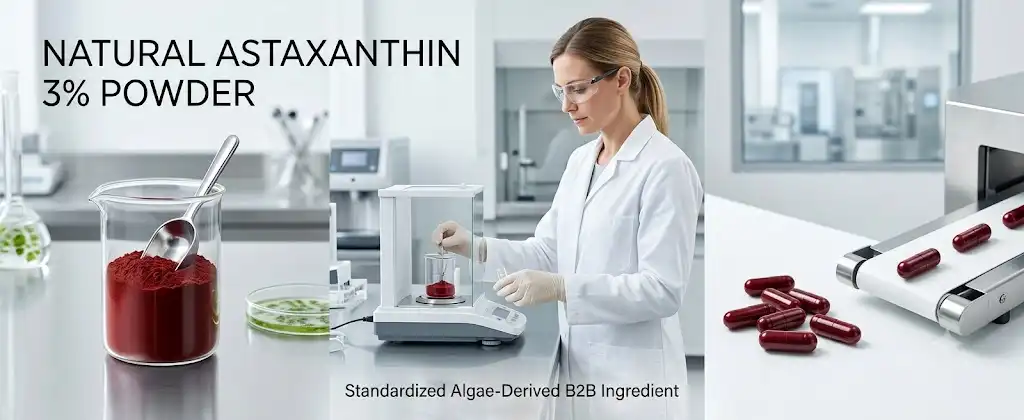
Natural Astaxanthin 3% Powder represents a standardized, high-potency Natural Astaxanthin Powder ingredient derived from Haematococcus pluvialis microalgae, offering exceptional formulation flexibility for B2B manufacturers. The 3% concentration strikes an optimal balance between efficacy and cost-effectiveness, enabling supplement brands, functional food producers, and nutricosmetic companies to create Products that deliver measurable benefits while maintaining competitive pricing. This keto-carotenoid Natural Astaxanthin Powder is specifically engineered for industrial-scale production, addressing the critical challenges of oxidation stability, bioavailability, and consistent quality that procurement managers face daily in developing premium wellness products.
What Is Natural Astaxanthin 3% Powder, and How Does It Work?
Biological Origin and Standardized Potency
This natural astaxanthin powder extract comes from Haematococcus pluvialis, a watery microalgae that makes this strong carotene to protect itself from external stress. The 3% standardization makes sure that every batch has exactly 30 mg of active astaxanthin per gram of powder. This gives makers the stability they need for accurate dosing and following the rules. This level of concentration has become standard in the industry because it allows for useful formulation amounts while keeping strength in a range of product forms, such as pills, tablets, drinks, and topical treatments.
Antioxidant Mechanisms and Cellular Protection
Astaxanthin has a special molecular structure made up of a polyene chain with hydroxyl and keto groups on both ends. This lets it cross all cell membranes. Because it is arranged across membranes, the compound can neutralise reactive oxygen species inside and outside of cells at the same time, which makes it unique among antioxidants. According to research, astaxanthin is 550 times more powerful as an antioxidant than vitamin E and 10 times more powerful than beta-carotene in some tests. For B2B buyers, this means goods that can protect against environmental damage, support the health of cells, and fight oxidative stress that comes with getting older.
Health Benefits Driving Market Demand
Because astaxanthin powder is bioactive, it has many uses and benefits for different types of customers. Its ability to cross the blood-retinal barrier makes it useful for eye health by improving vision and lowering digital eye strain, which is becoming more important as people around the world spend more time in front of screens. Its power to reduce inflammation and improve lipid ratios makes it good for the heart. Astaxanthin helps keep skin flexible, lowers damage from UV rays, and supports collagen integrity. These skin protection benefits drive demand in the beauty-from-within market. Sports nutrition companies like exercise recovery apps because studies show that they help people have more endurance and less muscle damage after intense exercise.
Natural Astaxanthin Powder vs. Synthetic: What Procurement Managers Need to Know?
Source and Extraction Methods
Natural Astaxanthin Powder comes from algae that are grown in a way that doesn't harm the environment and is extracted using supercritical CO2 technology. This keeps the 3S,3'S stereoisomer configuration that is similar to what is found in nature. Chemical solvents are not used in this process, which makes it a clean-label ingredient that meets the buyer's desire for honesty. Synthetic versions, which come from synthetic starting materials, have a racemic mix of stereoisomers that don't have the same biological action. The process of turning algae into powder includes controlled photobioreactors, cell wall disruption that works better than 98% of the time, and microencapsulation technology that keeps the lipophilic compound from going bad while it is being stored and processed.
Bioavailability and Efficacy Comparison
Clinical data shows that natural astaxanthin is better at being absorbed and building up in tissues than manufactured types. The esterified form that is naturally found in algae needs to be changed during digestion, but it is more bioavailable than free astaxanthin because it is more stable and works better with lipid carriers. This difference in effectiveness is worth the extra cost for B2B buyers who are making high-end product lines; the prices are usually 30–50% higher than fake options. Algae-derived powder can help products make stronger claims on their labels, command higher prices, get better reviews from customers, and encourage people to buy them again.
Format Flexibility for Manufacturers
When it comes to bulk formulation, powder format is much better than oil suspensions or beadlets. The 3% concentration makes it possible to mix it precisely with other vitamins, minerals, and Botanical Extracts without the need for special tools. Microencapsulation makes water-dispersible versions that can be added to functional drinks, protein powders, and enriched foods where oil-based ingredients would change the taste or look. The powder's ability to flow well and work with both gelatin and veggie capsule shells is helpful for companies that make capsules. This flexibility cuts down on the time it takes to change over the production line and makes inventory management easier for companies that make more than one SKU.
How to Choose a Trusted Natural Astaxanthin Powder Supplier?
Essential Certifications and Compliance
Reliable providers keep a full set of certifications that show they are committed to quality and following the rules. OAZVITA has certifications for HACCP, ISO 22000, NSF, HALAL, EU Organic, and USDA Organic, which means that their goods meet the strictest international standards. These certifications aren't just marketing tools; they protect your brand's reputation by showing that your manufacturing practices have been checked for quality, that you follow protocols to prevent contamination, and that you can track your products. There are Certificates of Analysis (COA), Material Safety Data Sheets (MSDS), and Technical Data Sheets (TDS) in every batch that show that the product is pure (1%, 2%, or 3%), does not contain toxins, and does not contain any microbes or heavy metals.
Traceability and Sustainable Sourcing
These days, buyers want more than just high-quality astaxanthin extract powder products. They also want companies to be socially and environmentally responsible. Leading providers use seed-to-powder tracking systems that keep track of the conditions of cultivation, the times of harvest, the parameters of extraction, and quality control checks. Sustainable algae farming uses closed-loop water systems, green energy, and smart resource management to have the least possible effect on the environment. This openness is becoming more valuable as regulators and customers demand proof of ethical sourcing. If your suppliers offer cultivation site checks, environmental reports, and third-party verification for Astaxanthin Extract Powder, your brand will have a better chance of long-term success in places where people are concerned about the environment.
Supplier Evaluation and Sample Testing
Requesting free samples is the first step in doing your research. This lets the lab check the specs before you commit to large orders. Testing should prove the reported potency using HPLC analysis, check the dominance of natural 3S,3'S isomers using chiral chromatography, and see how stable the compound is against oxidation under conditions that speed up the ageing process. During the sampling phase, how responsive the supplier is often shows how reliable they will be in the future. For example, if they communicate quickly, offer technical support, and are willing to give formulation advice, they are likely to be a partner. The technical team at OAZVITA provides application guides and suggestions for custom formulations that shorten the time it takes to develop a product and get it on the market.
Procurement Guide: Buying Natural Astaxanthin 3% Powder in Bulk
Understanding MOQs and Pricing Structures
For first tries, the minimum order quantity is usually 1 kilogram. However, buying in bulk from 25 to 100 kg unlocks volume savings that improve margin economics. Prices depend on the cost of raw materials, how hard they are to extract, and how often they need to be certified. Suppliers who are clear about their pricing give detailed breakdowns instead of vague quotes. Natural astaxanthin powder prices on the market today range from very expensive to about average, depending on the level of purity and certification. Strategic buyers usually make supply agreements that lock in prices, guarantee priority production slots, and make forecasting easier for everyone involved every three months or once a year.
Streamlined Ordering and Logistics
Lead times are cut down, and supply chain friction is reduced when buying processes are efficient. OAZVIT A ships orders between one and five business days after receiving payment proof. Depending on the size and importance of the order, they use DHL, FedEx, UPS, and specialized air or sea freight. The powder stays safe during transport in light-resistant, nitrogen-flushed cases that keep its effectiveness for 24 months as long as they are kept in cool, dry places. Expertise in international shipping makes sure that customs clearance goes smoothly by providing the right paperwork, such as commercial invoices, certificates of origin, and regulatory compliance statements that are specific to North America, Europe, Asia, and emerging regions.
Quality Assurance and Risk Mitigation
Before you buy something, you should make sure that the quality agreement spells out the standards for strength, purity, microbial limits, and physical properties like particle size distribution and moisture content. Escrow sample retention lets testing be done on samples that were delivered months ago if quality issues come up later. Reliable providers, like OAZVITA, make sure that their deliveries are on time more than 99% of the time and use strong quality control systems to keep track of each production batch from the time they receive the raw materials to the time they are packaged. This organizational success means fewer interruptions in production, less waste from rejected batches, and the confidence to increase the number of products you offer without worrying about your supply chain.
Maximizing the Benefits of Natural Astaxanthin Powder in Your Product Line
Cross-Industry Applications
Because Natural Astaxanthin Powder extract is so flexible, it can be used to make products in a lot of different health categories. Nutraceutical companies make antioxidant supplements that work on their own or complicated mixes that combine astaxanthin with omega-3s, CoQ10, or nutrients that help with vision like lutein and zeaxanthin. Companies that make sports nutrition use the ingredient in pre-workout formulas to improve endurance, recovery powders for after a workout to reduce inflammation, and daily wellness stacks for active people. Functional food and drink companies make smoothies, energy drinks, and protein bars that are enriched with antioxidants that give you nutrition and measured antioxidant benefits. Nutricosmetic brands use claims about skin health to sell beauty supplements. For example, astaxanthin is often mixed with collagen peptides, hyaluronic acid, and vitamin C to help fight aging all around.
Regulatory Compliance Across Markets
To get into a market successfully, you have to know how to deal with the rules that are specific to that region about health claims, labeling, and dosage ranges. Wholesale Astaxanthin Extract Powder is a dietary ingredient in the United States according to DSHEA. It is also GRAS-approved for some uses, which means it can be added to food to make it healthier. The EFSA sets the rules for the European markets. These rules allow marketing but limit certain health claims until approved applications are made. Our approvals, such as EU Organic and USDA Organic, make it easier to register your products legally, and our full paperwork packages help you send them to the right authorities.
Market Trends and Innovation Opportunities
More people want high-potency antioxidant ingredients because they are learning about oxidative stress and cellular aging. According to market research, astaxanthin-containing goods will grow at rates higher than 6% per year until 2030. The beauty-from-within and sports performance groups will grow at the fastest rates. Astaxanthin can be combined with new ingredients like NAD+ precursors, adaptogens, or gut health probiotics to make wellness solutions that work in more than one way. Personalized nutrition trends allow for special formulations for different groups of people, such as eye health for older people, skin protection for outdoor fans who spend a lot of time in the sun, or recovery support for fitness communities.
Conclusion
Natural Astaxanthin Powder is a great deal for business buyers who want to find reliable, high-potency antioxidants that will help their products stand out and make customers happy. This substance from algae is a key ingredient for modern health brands because it is highly bioavailable, works well with a wide range of formulations, and has strong evidence of its effectiveness. To be successful, you need to work with suppliers who have the technical know-how, operating dependability, and dedication to quality standards that protect your brand's image while allowing for quick product development and market growth.
FAQ
1. Is astaxanthin powder safe for long-term supplementation?
A lot of safety studies show that doses up to 12 mg per day for long periods of time are well tolerated, and clinical trials haven't found any major side effects. Naturally occurring forms derived from algae are safer than man-made versions. This is backed up by decades of use in food and extensive toxicology studies that meet international safety standards.
2. Why choose 3% concentration over other potency grades?
The 3% grade is the best balance for the industry between active ingredients and how well the formulation works. Lower concentrations, like 1% to 2%, need bigger serving sizes, which raises the cost or number of capsules, while higher concentrations, like 5% or more, can make the product less stable and cost too much for most commercial uses. The 3% standard lets you precisely control the dose while keeping costs low.
3. How does astaxanthin powder integrate into existing formulations?
It's easy for the powder to mix with other dry ingredients in capsule and tablet forms; all you need is regular mixing equipment and no special processing. For drinks or emulsions, water-dispersible microencapsulated versions keep the color stable and stop the ingredients from separating. Getting technical help from suppliers speeds up formulation optimisation and helps you solve problems related to your product matrix and manufacturing capabilities.
Partner with OAZVITA for Premium Natural Astaxanthin Powder
As a trusted natural astaxanthin powder manufacturer, OAZVITA is ready to help you reach your product development goals. They have years of experience working with health supplement brands, sports nutrition companies, and functional food producers all over the world. Our wide range of certifications, which includes HACCP, ISO 22000, NSF, HALAL, and both EU and USDA Organic standards, ensures that every kilogram meets strict quality standards and comes with full COA paperwork. With more than USD 15 million in annual exports and a delivery rate of more than 99%, we offer the operational reliability that keeps your production schedules and market commitments safe. Email our team at info@oazvita.com to get free samples, talk about custom formulation help, or look into bulk price options that fit your buying strategy. We send solutions around the world within 1 to 5 business days.
References
1. Ambati, R.R., Phang, S.M., Ravi, S., & Aswathanarayana, R.G. (2014). Astaxanthin: Sources, Extraction, Stability, Biological Activities and Commercial Applications. Marine Drugs, 12(1), 128-152.
2. Capelli, B., Bagchi, D., & Cysewski, G.R. (2013). Synthetic astaxanthin is significantly inferior to algal-based astaxanthin as an antioxidant and may not be suitable as a human nutraceutical supplement. Nutrafoods Research, 12(4), 145-152.
3. Fassett, R.G. & Coombes, J.S. (2011). Astaxanthin: A Potential Therapeutic Agent in Cardiovascular Disease. Marine Drugs, 9(3), 447-465.
4. Guerin, M., Huntley, M.E., & Olaizola, M. (2003). Haematococcus Astaxanthin: Applications for Human Health and Nutrition. Trends in Biotechnology, 21(5), 210-216.
5. Dose, J., Matsugo, S., Yokokawa, H., Koshida, Y., & Okazaki, S. (2016). Free Radical Scavenging and Cellular Antioxidant Properties of Astaxanthin. International Journal of Molecular Sciences, 17(1), 103.
6. Yuan, J.P., Peng, J., Yin, K., & Wang, J.H. (2011). Potential Health-Promoting Effects of Astaxanthin: A High-Value Carotenoid Mostly from Microalgae. Molecular Nutrition & Food Research, 55(1), 150-165.

Send Inquiry
Related Industry Knowledge
- L-Threonate Powder: New Possibilities in Sports Nutrition Formulations
- Does Pure Raw Cacao Powder help with cortisol?
- Biotin Powder: The Secret Behind Naturally Thick and Healthy Hair
- What defines the best spirulina chlorella tablets?
- What Is TUDCA Powder and How Does It Work for Liver Health?
- Australia Procurement Considerations for High-Purity Pure Ashwagandha Capsules
- Best Pure MCT Powder Uses for Energy Boost in the Fitness Industry
- What Is Pure Fish Collagen Peptide and How Does It Benefit Skin Health
- Nicotinamide Riboside Chloride Powder vs Nicotinamide: Key Differences Explained
- How does pure NMN powder support cellular energy and repair?