
What Is The Difference Between Glutathione Powder And Liquid Supplements
Oct 16, 2026
When comparing glutathione powder and liquid supplements, the key differences come down to stability, bioavailability, shelf life, and formulation flexibility. Glutathione powder — specifically L-Glutathione Reduced (GSH, CAS No. 70-18-8) — exists as a solid crystalline form that resists oxidation far better than its liquid counterpart. Liquids may absorb faster in certain delivery systems, but they carry a higher degradation risk during storage. For B2B buyers sourcing bulk antioxidant ingredients, understanding these distinctions shapes smarter procurement decisions.
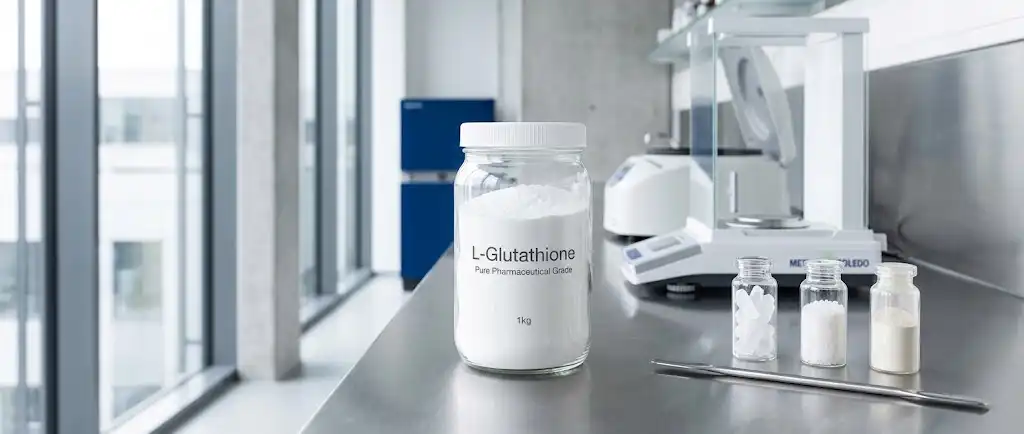
Understanding Glutathione Supplements: Powder vs. Liquid
There are three components that make up this substance: glutamic acid, cysteine, and glycine. Due to the presence of an active sulfhydryl (-SH) group on the cysteinyl residue, it is possible to reduce reactive oxygen species (ROS) and provide cells with the ability to clean themselves. As a result of this, it is often referred to as the human body's primary natural antioxidant. The sort of product that a business-to-business (B2B) company chooses to use—whether it be powder or liquid—has an impact on how effectively the product functions.
The Chemistry Behind Each Format
Powder glutathione is stable, which is the reason why the thiol group does not convert into GSSG (oxidised glutathione) as soon as it would otherwise. Water is the result of the disintegration of an atom while it is in the liquid state. Oxidation is accelerated as a result of this, particularly when the substance is subjected to light, heat, or changes in pH. When it comes to cosmetics brands that produce tablets, this is one of the most significant problems.
Industrial Use Cases for Powder
In the production of nutraceutical capsules, mouth whitening pills, functional food supplements, and Products that contain active chemicals, glutathione powder is the raw material that is utilised the most often. Due to the fact that it is dry and solid, it can be properly weighed, blended, and encapsulated. The manufacturing process that adheres to GMP incorporates all of these essential elements.
Industrial Use Cases for Liquid
Prepared-to-drink (RTD) health beverages, skin serums, and pharmaceutical-grade versions that are administered intravenously (IV) are all examples of products that include it. On the other hand, businesses that deal with liquid forms are required to purchase packaging made of amber glass or nitrogen-flushed packaging in order to prevent the products from going bad. Both the expense of manufacturing items and the difficulty of moving them are increased as a result of this.
Key Factors to Consider When Choosing Glutathione Powder or Liquid Supplements
Choosing the right style has an effect on the whole supply chain, not just the making process. These things should be carefully thought through by B2B procurement teams before they decide on sourcing strategies.
The two forms don't stay stable or last as long when stored. In terms of production, these are the most important parts of performance:
- Stability: OAZVITA's L-Glutathione powder (98% HPLC, 60-80 mesh) maintains a verified shelf life of 24 months when stored in a cool, dry place. Liquid glutathione typically has a shelf life of 12–18 months under ideal refrigerated conditions, and degrades faster once opened or exposed to air.
- Control of dosage: The powder format enables milligram-level dosing precision, which is crucial for the fabrication of pharmaceutical-grade capsules or tablets. When using liquid dosing, there is an introduction of unpredictability due to settling, changes in viscosity, and evaporation.
- In terms of logistics and transportation, powder may be transported at room temperature without the need for a cold chain, which results in a considerable reduction in freight costs. In many cases, liquid formulations need to be sent in a refrigerated or temperature-controlled environment, which drives up the cost of handling each individual unit.
If you store the L-Glutathione powder from OAZVITA (98% HPLC, 60-80 mesh) in a cool, dry location, it will remain effective for a period of twenty-four months. It is recommended to store glutathione juice in the refrigerator for a period of twelve to eighteen months. If you open it or allow air in, it will start to go bad more quickly.
Market Considerations: Procurement and Supply Chain Insights
The market for glutathione ingredients is slowly rising. Demand is being driven by product groups that help the skin, the liver, and the immune system. In 2022, Grand View Research said in a market study that the glutathione market was worth more than USD 220 million. The study also found that the market would grow by about 9% every year until 2030.
Regulatory Compliance Requirements
Before they can be sold in the US and Europe, glutathione ingredients have to pass strict quality checks. There should be GMP, ISO 22000, NSF, and HACCP certificates from providers. If needed, there should also be USDA or EU organic certifications. Liquid versions are often looked at more closely when it comes to the amount of preservatives and how easily they leak out of containers.
Pricing and MOQ Structures
Bulk prices for powder glutathione are better than bulk prices for liquid forms because powder is easier to package. You can order OAZVITA's L-Glutathione powder in as little as 1 kg, and the package is made to fit the size of the order. Because of this, it can be used to try new goods quickly and make a lot of them. OAZVITA ships by air, sea, DHL, FedEx, UPS, and airmail post. The lead time is 1–5 business days. Things that are liquid and need to be shipped over long distances often break, leak, or lose their cold chain. These risks are gone with the powder version.
Logistics and Handling Protocols
OAZVITA ships via Air, Sea, DHL, FedEx, UPS, and Airmail Post with a lead time of 1–5 working days. The powder format eliminates the risk of container breakage, leakage, and cold chain failures that commonly affect liquid ingredient shipments across long international routes.
Comparative Performance and Application Suitability
If B2B clients look at performance results, they always see that the delivery system and audience should help them choose the right format.
Skin Brightening and Tyrosinase Inhibition
Glutathione's most well-known business use is to change skin tone. Tyrosinase can't do its job, which is to make melanin, because of this. In pills, tablets, and softgels that are taken by mouth, glutathione powder suppliers in China provide the active pharmaceutical ingredient (API). According to a study published in the Journal of Dermatological Science, taking GSH supplements by mouth can help your face look better generally.
Detoxification and Liver Support
Glutathione is beneficial to the detoxification process in the liver during both Phase I and Phase II. The addition of high-load foods is made simple by powders, and you may measure them out individually. When it comes to formulators of functional food and nutrition businesses who wish to make liver health claims, bulk GSH powder gives them the ability to pick how much of the active ingredients to use in their products.
Liposomal and Advanced Delivery Variants
Certain manufacturers are now using liposomal glutathione as an alternative. In this particular form, the molecule of GSH is encased inside phospholipid pockets, which makes it simpler for the body to absorb it via the individual's mouth. Glutathione powder of the highest possible purity is still used as the foundation for the majority of liposomal products. The accumulation of these data demonstrates that it is an essential component in a wide variety of distribution methods.
Procurement Recommendations and Decision-Making Framework
Through the use of a straightforward cost-benefit analysis, brand owners and purchasing managers are able to ensure that the components they purchase contribute to the achievement of their business objectives. When it comes to stability, scalability, simplicity of compliance paperwork, and steady costs, powder glutathione is always the ideal option for business-to-business purchasing.
Standard glutathione powder that is 98% HPLC pure is the ideal option for manufacturing pills, tablets, or dry-blend powders since it is the most cost-effective and requires the least amount of effort to utilise. There is a possibility that a liquid or liposomal form may perform better for ready-to-drink beverages or skin serums; however, this will result in a higher cost per unit and will need more care while being kept.
The production of L-Glutathione (CAS No. 70-18-8) by OAZVITA is accomplished by the fermentation of yeast, which is a natural technique that does not include the use of any animals. The European Union, the United States Department of Agriculture, the National Science Foundation, and ISO 22000 have all confirmed that it is organic. Complete documentation, including a Certificate of Authenticity (COA), Material Safety Data Sheet (MSDS), and Technical Data Sheet (TDS), is included with each batch, and authorised purchasers are eligible to get free samples.
Conclusion
Glutathione powder and liquid vitamins are not just different in how they look or how they are packed. You also need to come up with a plan and decide what to buy. For most B2B supplement and functional food uses, powder GSH is the best raw material because it is more stable, lasts longer, can be dosed correctly, and costs less to ship. Liquid types are good for some RTD or topical uses, but they make the supply chain more complex and increase the risk of oxidation. Still, brands that care about the quality of their products and need to make a lot of them at once should choose high-purity glutathione powder.
FAQ
1. Is glutathione powder safer than liquid glutathione?
Both forms are considered safe when produced under GMP-certified conditions. Powder GSH carries a lower risk of microbial contamination compared to liquid forms, which require preservatives or aseptic processing. For B2B ingredient use, powder presents fewer stability-related safety concerns across the supply chain.
2. How long does glutathione powder take to show efficacy in end products?
Efficacy timelines depend on the delivery system, dosage, and end-user application. In oral supplement formulations, most published studies evaluate outcomes over an 8–12 week period of consistent use. As a raw ingredient, powder GSH retains full potency for 24 months when stored correctly.
3. What are the optimal storage conditions for glutathione powder?
Store in a cool, dry place away from direct light and moisture. Avoid temperatures above 25°C (77°F). OAZVITA's L-Glutathione powder carries a verified 24-month shelf life under these conditions. Once opened, reseal the packaging tightly and consume within the manufacturer's recommended timeframe.
4. Can glutathione powder be used in beverage manufacturing?
Yes. Glutathione powder dissolves in water and can be incorporated into functional beverages. However, manufacturers should account for oxidation risk in aqueous formulations and consider dual-chamber packaging or nitrogen flushing to protect the active thiol group during shelf life.
Partner With OAZVITA — Your Trusted Glutathione Powder Manufacturer
Pharmaceutical-grade L-Glutathione powder (98% HPLC, CAS No. 70-18-8) is sold by OAZVITA to supplement brands, original equipment manufacturers, and foreign wholesalers in North America, Europe, and other places. All of these groups have given their approval to our products: HACCP, EU Organic, USDA Organic, NSF, and HALAL. You can get free samples, and the minimum order quantity (MOQ) starts at 1 kg. The wait time is between 1 and 5 working days. This gives teams in charge of getting everything they need to do their jobs well and quickly. Send us an email at info@oazvita.com to get your free sample.
References
1. Pizzorno, J. (2014). Glutathione! Integrative Medicine: A Clinician's Journal, 13(1), 8–12.
2. Weschawalit, S., Thongthip, S., Phutrakool, P., & Asawanonda, P. (2017). Glutathione and its anti-aging and antimelanogenic effects. Clinical, Cosmetic and Investigational Dermatology, 10, 147–153.
3. Grand View Research. (2022). Glutathione Market Size, Share & Trends Analysis Report. Grand View Research.
4. Ballatori, N., Krance, S. M., Notenboom, S., Shi, S., Tieu, K., & Hammond, C. L. (2009). Glutathione dysregulation and the etiology of human disease. Biological Chemistry, 390(3), 191–214.
5. Richie, J. P., Nichenametla, S., Neidig, W., Calcagnotto, A., Haley, J. S., Schell, T. D., & Muscat, J. E. (2015). Randomized controlled trial of oral glutathione supplementation on body stores of glutathione. European Journal of Nutrition, 54(2), 251–263.
6. Journal of Dermatological Science. (2012). Oral supplementation of L-glutathione and its impact on skin melanin index. Journal of Dermatological Science, 67(3), 164–172.

Send Inquiry

Related Industry Knowledge
- Yucca extract: an inevitable for animal health
- DHM for Hangovers: What the Science Says
- What is Yucca Extract Powder?
- Benefits of Pearl Powder: What the Research Says About This Ancient Ingredient
- What is the benefit of vitamin D3 powder?
- Chile Market Potential for Pure Maca Root Capsules in Natural Energy Supplements
- How to Choose the Best Pure NAD+ Powder Supplier in 2026?
- Why Germany Chooses Our GMP-Grade NMN Powder for R&D Programs?
- The Complete Guide to Pure NAD+ Powder
- Exploring the Uses of Pure Bovine Collagen Peptides in Cosmetics—From Manufacturing to Distribution