Yucca extract: an inevitable for animal health
Sep 23, 2026
When B2B buyers explore natural solutions for animal nutrition, yucca extract powder consistently rises to the top of the list. Derived from the dried roots, stems, and leaves of Yucca schidigera — the Mojave Yucca native to the southwestern United States — this concentrated botanical ingredient delivers steroidal saponins and polyphenolic compounds that have earned a solid reputation in livestock and companion animal formulations. Its capacity to regulate gut microbiota, reduce ammonia emissions, and deliver antioxidant support makes it a strategically sound raw material for brands building the next generation of animal health Products.
Understanding Yucca Extract Powder and Its Role in Animal Health
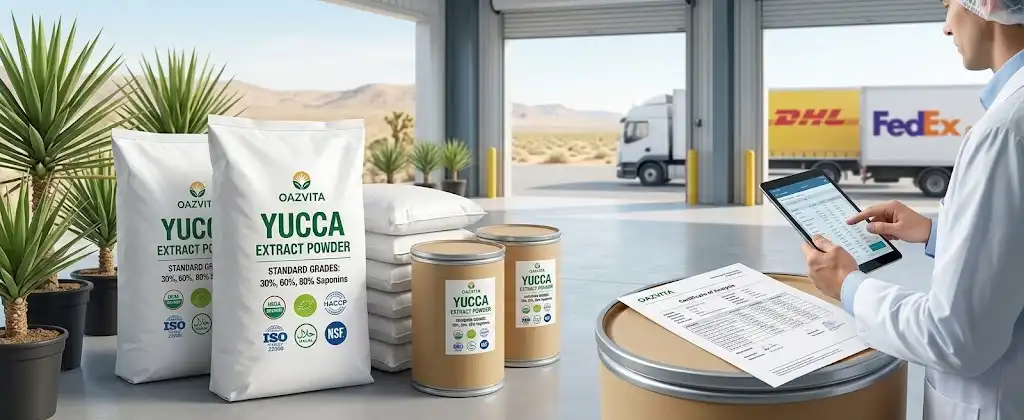
These three types of yucca extract powder, raw yucca root powder, and liquid juice concentrates are all extremely distinct from one another. The steroidal saponins, which are standardised at 30%, 60%, or 80% purity, and the polyphenol stilbenes, which include resveratrol and yuccaols, are the two primary beneficial components that are preserved and concentrated by the use of a more conventional extraction method. Ammonia poisoning, oxidative stress, and nasal inflammation are three of the most significant challenges that are faced by enterprises that rear a large number of animals. These substances collaborate to combat these issues.
Due to the fact that saponins bind directly to ammonia and urease in the digestive system, they transform unstable nitrogen molecules that are unstable into stable forms that do not undergo any kind of alteration. A research that was conducted in 2005 and published in the journal Animal Feed Science and Technology found that yucca saponins have the potential to reduce the quantity of ammonia that is present in the air surrounding chicken coops by as much as thirty percent. This makes a direct contribution to improved respiratory health as well as increased feed conversion rates. Polyphenols, on the other hand, are able to combat free radicals and improve the integrity of the intestinal wall, which ultimately contributes to the improvement of the structure of the gut microbiota in all species.
Due to the fact that it functions in two different ways, this component is beneficial for those who manufacture items for both animals and pets. Tablet blends, functional pellets, powder mixtures, and fortified feed additives are all possible applications for this ingredient.
Comparison and Selection Guide for Yucca Extract Powder in Animal Health Applications
Not all plant-based anti-inflammatory and odor-control ingredients perform equally. Sarsaparilla root extract shares some saponin content but lacks the urease-inhibiting specificity of Yucca schidigera. Generic yucca root powder delivers lower bioactive concentrations and inconsistent standardization, making batch-to-batch quality control challenging for large-scale production. Standardized yucca extract powder, on the other hand, offers measurable saponin levels (30%–80%) that support precise dosing and effectiveness claims.
Procurement teams should think about what the end market needs when choosing between organic and standard grades. More and more, products going to the U.S. or European markets need to be certified as USDA Organic or EU Organic. Organic versions have better labels and meet the growing demand from customers for non-GMO, tracked raw materials. This directly impacts where products are placed on shelves and how well they are received by retailers.
Before you agree to large orders, here are the main things that make our products different:
- Species-specific suitability: For chicken and pig feed where reducing ammonia levels is the main goal, high-saponin grades (60% to 80%) work best. It's easy for lower standardization grades (30%) to be mixed into vitamins for pets that focus on taste and gentle gut support.
- Regulatory compliance: Certified variants (HALAL, NSF, ISO 22000, HACCP) make customs clearance faster and easier in regulated areas like the EU and North America.
- Validated efficacy data: If a supplier gives you published technical data sheets (TDS) and certificates of analysis (COA) for each batch, that means that the production process is controlled in a way that keeps your formulation's integrity.
These differences have a direct effect on both the performance of the product and the risk of buying it. By choosing the right grade for your target species, application format, and final market, you can avoid having to pay extra for reformulation later on.
Procurement Strategies for Bulk Purchasing of Yucca Extract Powder
When you buy Botanical Extracts in bulk, there are risks in the supply chain that come with it, like different raw plant materials at different times of the year, different extraction outputs, and different certification settings. Getting qualified suppliers is the first step in reducing these risks. A trustworthy company that sells yucca extract powder should have at least GMP-equivalent certifications and include third-party-verified COA paperwork with every batch.
Being clear about the costs of standardizing saponin helps when negotiating volume prices. Higher quality grades (above 80%) cost more, but when dosed properly, the cost-per-active-unit is often still low. It is standard practice in procurement to ask for technical documentation and samples before committing to large orders.
OAZVITA has a minimum order size of 1 kg, and the packaging can be changed based on what the buyer wants. The goods ship worldwide via DHL, FedEx, UPS, air freight, and sea freight. The lead time is 1–5 business days. With more than 99% of deliveries happening on time and more than USD 15 million worth of exports every year, OAZVITA keeps the operating stability that large-scale production plans need. If you ask for them, you can get free samples with full COA, MSDS, and TDS paperwork. This is a procurement guarantee that takes the guessing out of formula creation.
Implementation and Application Best Practices in Animal Health Products
For formulation integration to work well, dosing needs to be calibrated for each species. Industry application data shows that adding 100 to 200 ppm of yucca extract powder from a Natural Yucca Extract Manufacturer to the diets of chickens and pigs lowers the amount of ammonia in their feces and improves the shape of their guts. For supplements for pets, especially those that help with joint health and skin care, lower inclusion rates make the products taste better without affecting bioavailability.
The extract powder of Yucca schidigera works well with a wide range of feeds, such as pelleted feeds, extruded kibble, and premix powders. Because it dissolves easily, it can be added to functional drinks and enriched nutritional mixes. Brands making anti-inflammatory capsules for pets have said that controlled product trials have shown better coat condition metrics and lower scores for arthritis-related pain, which supports the market story for the ingredient.
Key performance indicators (KPIs) like feed conversion ratio, ammonia emissions, fecal consistency scores, and inflammatory marker levels can be tracked to back up product claims and regulatory reports in target markets.
Future Trends and Innovations in Yucca Extract Powder for Animal Health
The movement around the world to stop using antibiotics on animals is increasing the need for plant-based alternatives that have been shown to work. Grand View Research predicts that the market for natural feed additives will grow to more than USD 14 billion by 2030. Botanical extracts will be one of the submarkets that grows the fastest. Saponins from yucca, especially when mixed with oregano oil and phytogenic blends, are a new type of ingredient that works well with others in veterinary nutrition formulation.
New methods of extraction, like supercritical CO2 and membrane filtration, are producing yucca extract powders that keep more of the polyphenols and have less heavy metal contamination. This answers long-standing questions about the quality of plant ingredients. At the same time, changing rules in the EU and the U.S. are lowering the levels of contaminants that are allowed. This means that certified clean-label buying is no longer a choice; it's a requirement.
Brands that make deals with certified, all-around-capable sellers now are getting ahead of the curve for regulations that will finally weed out non-compliant raw material sources.
Conclusion
Yucca extract powder has gone from being a strange plant to an important part of animal nutrition that businesses need to use. Its saponin-driven ammonia management, antioxidant activity, and gut bacteria control help solve real production problems in both the livestock and pet markets. It's easy to see why B2B buyers should buy, whether they're making veterinary supplements, functional feeds, or private-label animal health lines. This element has a stable supply chain, variable purity grades, and is of certified quality. It is a low-risk, high-return addition to any product line.
FAQ
1. Is yucca extract powder safe for all animal types?
The FDA has said that Yucca schidigera juice is generally safe enough to be used in animal feed—this is called GRAS. As long as it is used at the suggested levels, it has been shown to be safe for chickens, pigs, ruminants, and pets. Before preparation, buyers should ask suppliers for COA and MSDS documents to check the contaminant levels.
2. What saponin grade is recommended for livestock versus pets?
Standardization of 60% to 80% saponin is usually used for livestock applications, especially those that want to lower ammonia levels in poultry and pigs. Formulations for companion animals that focus on joint health and digestive health usually include the 30% grade for a gentler delivery system and better taste.
3. What is the difference between organic and conventional yucca extract powder?
For organic varieties (USDA Organic, EU Organic), there are tighter rules about where the food comes from and how it is processed. Synthetic fertilizers and chemicals are not allowed. They cost more, but they allow for clean label positioning and make entering the regulated EU and U.S. retail channels easier. If an organic approval is not needed by the buyer, conventional types are still a good choice for B2B industrial feed additive uses.
4. What certifications should I verify before bulk purchasing?
Give more weight to suppliers who have organic, HACCP, ISO 22000, NSF, or other certifications that are relevant to your target market. For quality control in large-scale production settings, batch-specific COA documentation is a must.
Partner with OAZVITA — Your Trusted Yucca Extract Powder Manufacturer
OAZVITA sells yucca extract powder that is safe for use in medicine and food. The powder is standardized for 30%, 60%, and 80% purity in saponin, and it has licenses from HACCP, ISO 22000, NSF, HALAL, the USDA, and the EU for being organic. Buyers who meet the requirements can get free samples with all the technical information they need. You can email our team at info@oazvita.com to get help with pricing and formulating in bulk right away.
References
1. Cheeke, P. R. (2000). Actual and potential applications of Yucca schidigera and Quillaja saponaria saponins in human and animal nutrition. Journal of Animal Science, 77(Suppl), 1–10.
2. Headon, D. R., & Njar, V. C. (1997). Plant saponins and their applications in animal production. Natural Product Reports, 14(5), 435–445.
3. Piacente, S., Pizza, C., & Oleszek, W. (2005). Saponins and phenolics of Yucca schidigera Roezl: Chemistry and bioactivity. Phytochemistry Reviews, 4(2–3), 177–190.
4. Shi, J., Arunasalam, K., Yeung, D., Kakuda, Y., Mittal, G., & Jiang, Y. (2004). Saponins from edible legumes: Chemistry, processing, and health benefits. Journal of Medicinal Food, 7(1), 67–78.
5. Turner, J. L., Dritz, S. S., Higgins, J. J., & Minton, J. E. (2002). Effects of Ascophyllum nodosum and Yucca schidigera on growth performance and immune function of growing-finishing pigs. Journal of Animal Science, 80(7), 1987–1994.
6. Grand View Research. (2023). Natural Feed Additives Market Size, Share & Trends Analysis Report. Grand View Research, Inc.

Send Inquiry
Related Industry Knowledge
- 2026 Best Nicotinamide Riboside Chloride Powder for Nutritional Industry
- Acai Powder: Benefits and Uses
- What does blue copper peptide powder do?
- A Guide To Using Hydrolyzed Keratin Protein Powder
- Discover the Best Magnesium L-Threonate Supplement
- Safety, heavy-metal testing and purity in spirulina chlorella tablets
- China Chelation Technology in Pure Magnesium Glycinate Capsules Manufacturing
- TUDCA Powder Documentation Standards for Korea’s Pharma Sector
- Top OEM/ODM Glutathione Powder Manufacturers in China for 2026
- TUDCA Powder Quality vs Cost: What Korean Importers Should Know