Why Hydrolyzed Keratin Can Be Great For Your Hair?
Jul 10, 2026
Today, hydrolyzed keratin protein powder is a key ingredient in many hair care Products because it repairs harm at both the cuticle and cortex levels. Native keratin doesn't dissolve and isn't available to living things. This hydrolyzed version, on the other hand, is made up of shorter peptide chains (usually between 400 and 33,000 Daltons) that get deep into broken hair shafts. Because it breaks down molecules, the protein can fill in structural gaps, restore elasticity, and make the hair easier to handle overall. This makes it an essential ingredient for companies making high-performance hair regrowth products.
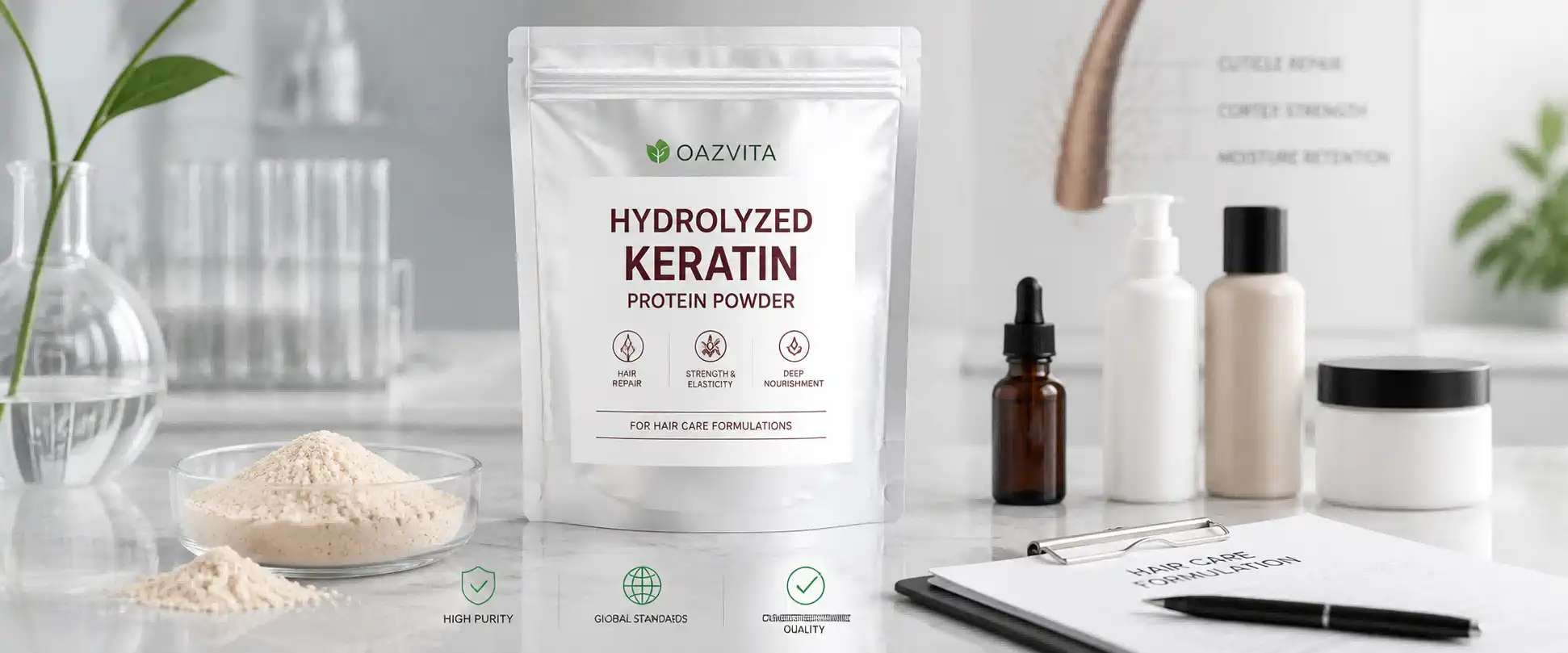
Understanding Hydrolyzed Keratin Protein Powder
Keratin naturally makes up about 95% of hair structure. It protects hair by making disulfide links and amino acid chains. These bonds weaken when hair is exposed to chemicals, heat styling, or environmental stress, which makes hair dry and brittle. Keratin that has been hydrolyzed stops this breakdown by using controlled enzymatic or acid hydrolysis to break down larger keratin molecules into bioavailable peptides.
Chemical Profile and Functional Mechanisms
The hydrolysis process creates a range of molecular weights that are best for different repair tasks. Molecular weight parts with less than 1,000 Daltons can get into the hair cortex and rebuild the structure inside. Higher molecular weight peptides, with a range of 2,000 to 3,000 daltons, cover the cuticle and form a protective film that keeps water in and smooths out the surface. This two-part process sets hydrolyzed keratin apart from other protein products.
Because it is made up of amino acids, this ingredient is very valuable. Hydrolyzed keratin, which is high in cysteine and methionine, gives damaged hair the sulfur-containing building blocks it needs to fix disulfide bonds. Studies show that regular use can boost hair's tensile strength by up to 40% and make it less likely to break when brushing and combing. Because the peptides are hygroscopic, they can also act as humectants, which means they pull moisture from the air to keep the hair shaft wet.
Superior Affinity for Hair Fibers
Hydrolyzed keratin has great substantivity, which means it can stick to hair surfaces even after being rinsed. This is because it is amphoteric, which means it can interact electrostatically with both negatively charged damaged areas and positively charged conditioned areas. Unlike silicones, which only cover the surface, keratin peptides become part of the hair structure and fix it in a way that lasts. The benefits of this build-up over time.
HPLC research shows that OAZVITA's Hydrolyzed Keratin Protein Powder is 90% pure, which means that it works the same way in all formulations. The substance dissolves completely in water and has a neutral pH range of 5.0 to 7.0. This means it can be used with different surfactant systems without causing precipitation or formula instability.
Comparing Hydrolyzed Keratin with Other Protein Powders
There are a lot of different protein options on the market for hair care ingredients, but each one has a specific job to do. By knowing these differences, procurement professionals can choose materials that are in line with what the product claims it will do and what the target consumer wants.
Hydrolyzed Keratin versus Collagen
Collagen peptides are often found in beauty products, but their main purpose is to improve the health of your skin and joints. Collagen has glycine, proline, and hydroxyproline in it, but not cysteine, which is needed for hair repair. The amino acid profile of hydrolyzed keratin is similar to that of human hair, which means that their structures are directly compatible. When it comes to reducing split ends and making hair more flexible, tests show that keratin-based formulations work much better than collagen alternatives.
Keratin Peptides versus Hydrolyzed Silk Protein
Both ingredients are hydrolyzed, but the differences in performance come from the materials they come from. Hydrolyzed keratin protein powder from Bombyx mori cocoons is where silk protein comes from. It adds shine and conditions hair lightly. But its amino acid makeup is very different from hair keratin, which makes it less able to fix broken links. The keratin peptides repair the cortex by literally filling in structural gaps, while the silk protein's main job is to condition the surface.
The spread of molecular weight also changes a lot. Most silk proteins stay between 500 and 1,500 daltons, which makes surface effects work best. The larger chemical range of hydrolyzed keratin, ranging from 400 to 33,000 Daltons, lets the cortex penetrate and the cuticle guard at the same time, providing full repair that silk protein can't match.
Organic versus Synthetic Considerations
Real hydrolyzed keratin comes from the controlled breakdown of animal sources, mostly sheep wool or feathers. Some companies sell "vegan keratin alternatives" that are made up of mixes of plant amino acids. These items might have good proteins in them, but they can't copy keratin's exact chemical structure or ability to form disulfide bonds. Genuine hydrolyzed keratin should be a top priority for B2B buyers in markets that are driven by effectiveness to back up repair claims.
OAZVITA gets its wool keratin from sources that are ethical and processes it according to strict quality standards to keep the amino acids' integrity. The product has been certified by HACCP, ISO 22000, NSF, HALAL, and both the EU and USDA as organic. This meets the needs of a wide range of markets and makes sure that the product can be tracked all the way through the supply chain.
Key Considerations for Purchasing Hydrolyzed Keratin Protein Powder
Finding good hydrolyzed keratin requires more technical testing than what is required for standard proteins. To make sure that the performance of a material meets the needs of formulations and legal standards, procurement managers have to look at a number of factors.
Purity and Molecular Weight Assessment
HPLC research proves the active concentration in the powder by checking the protein content. Premium grades, like OAZVITA's 90% purity standard, make sure that there aren't many fillers and that the performance is the same from batch to batch. The distribution of molecular weight has a direct effect on functioning. Suppliers should provide thorough chromatography data that shows the amount of peptides in different molecular ranges.
Lower molecular weight fractions (less than 1,000 Daltons) allow deep cortex penetration but might not be able to form films. Components with a chemical weight greater than 3,000 Daltons form walls that keep things out but let less in. Both ranges should be in the ideal blend so that formulators can repair the hair structure from the inside out.
Solubility and Formulation Compatibility
Full solubility in water without cloudiness or precipitation means that the hydrolysis and filtration are working correctly. Some lower-quality keratin derivatives become unstable when mixed with sodium laureth sulfate or similar cleansers, so performance should be tested in shampoos that use anionic surfactant systems. The amphoteric qualities of hydrolyzed keratin make it stable for use across a wide range of pH levels. However, formulation mistakes can be avoided by doing verification tests.
Because keratin peptides are water-soluble, they need to be stored in the right way. Things kept in places with a lot of humidity will soak up water, which will cause them to clump together and lose their freshness over time. Suppliers should put goods in cases that keep damp out and tell customers how to store them. For the full 24-month shelf life, OAZVITA suggests keeping them in cool, dry places.
Supplier Credentials and Documentation
Manufacturers with a good reputation give a Certificate of Analysis (COA), Material Safety Data Sheet (MSDS), and Technical Data Sheet (TDS) for every batch. These papers prove the amount of protein, amino acids, microbes, and heavy metals that were tested. Suppliers should also show that they follow good manufacturing practices (GMP) and keep any third-party licenses that are important to the markets they are trying to reach.
Quality standards in manufacturing around the world are very different. Hydrolyzed keratin is made in many countries, but the standard is always the same because the factories follow international safety rules. OAZVITA's certifications cover a wide range of international standards, which makes it easier for regulators in North America, Europe, Asia, and the Middle East to approve the product.
Pricing and Packaging Considerations
Pricing for bulk keratin protein powder items depends on where the raw materials come from, how complicated the processing is, and what certifications are needed. Depending on the pure grade and molecular specs, premium hydrolyzed keratin can cost anywhere from $45 to $85 per kilogram. Different companies have different minimum order quantities (MOQs). OAZVITA's MOQ starts at 1 kg, which lets formula developers try out different amounts before going to full production volumes.
The types of packaging should match how they will be used. Smaller amounts come in foil-lined bags with closures that can be used again and again, while big orders come in fiber bins lined with polyethylene. Using the right packaging keeps moisture and germs from getting in during international shipping.
Logistics and Lead Times
Getting ingredients from other countries requires coordination between storage, goods forwarding, and customs. Reliable suppliers keep enough merchandise on hand so that orders can be filled quickly. OAZVITA processes orders within 1–5 business days and ships them via DHL, FedEx, UPS, or specialized air/sea freight, based on the volume. Tracking tools let you see shipments in real time, which lets you plan production more accurately.
Procurement managers should look at how quickly and well-equipped their suppliers are to help them. Having access to technical experts who can answer questions about makeup, fix problems with compatibility, and suggest the best amounts of usage adds a lot of value on top of providing raw materials.
Manufacturing Process and Quality Assurance
By understanding how products are made, buyers can check for stability in quality and predict how performance might vary between sellers.
Hydrolysis Techniques
Enzymatic hydrolysis and acid hydrolysis are the two main ways that hydrolyzed keratin is made. Proteolytic enzymes, such as papain or pepsin, are used in enzymatic processes to specifically cut peptide bonds, which results in uniform molecular weight distributions. This method keeps the integrity of the amino acids, but it takes longer to process and costs more.
Acid hydrolysis uses hydrochloric acid or sulfuric acid in a controlled environment with pressure and temperature. This method speeds up the breakdown process, but if the parameters aren't carefully watched, it could lead to some amino acid degradation. Modern manufacturers use both methods in a certain order, starting with enzymatic pre-treatment and then mild acid hydrolysis, to get the best of both worlds: efficiency and quality.
The source of the raw materials has a big effect on the end product's properties. The amount of cysteine in wool-derived keratin is usually higher than in feather-derived alternatives. Processing must get rid of impurities while keeping the disulfide link structure that hair repair needs to work.
Quality Control Protocols
Consistency is ensured by rigorous testing at several stages of production. Inspection of the raw material makes sure that the source is real and checks for contaminants. Through molecular weight analysis, in-process tracking keeps track of the progress of hydrolysis and changes parameters to meet goal specs.
Tests on the finished product include finding out about amino acids, checking for microbial contamination, heavy metals, and solubility. Documenting each batch makes it possible to trace back the finished product to the raw materials, dates of processing, and test results. This openness makes it easy to act quickly if any quality issues arise after delivery.
Sustainable Production Trends
Environmental concerns are becoming more and more important in buying choices. Sustainable keratin production uses leftovers from the wool textile industry or feathers from food production systems that are gathered in an ethical way. This cuts down on waste while making useful ingredients. The clean beauty market wants things like recycling water, processing that uses less energy, and packaging that breaks down naturally.
Environmental management systems certified under ISO 14001 standards are used by OAZVITA's production partners. This shows a commitment to sustainable practices that brands and customers who care about the environment will appreciate.
OEM Customization Opportunities
In addition to standard bulk powder supplies, modern manufacturers also offer services for customizing formulations. OEM relationships let brands make their own keratin mixes with different molecular weights, extra amino acids, or ingredients that work well together, like hyaluronic acid or plant extracts.
These services speed up keratin protein powder product development by giving you formulations that have already been tested and are ready to be branded and put on the market. Small batch runs for trying the market, and large-scale production for well-known product lines are both possible with flexible production.
Conclusion
Scientists have proven that hydrolyzed keratin protein powder is a good way to fix damaged hair at both the cuticle and cortex levels by getting to the damaged molecules directly. Its special mix of amino acids, especially its high cysteine content, helps fix broken disulfide bonds that weaken hair's strength and flexibility. When B2B sourcing workers are making competitive hair care goods, they need to make sure they choose premium-grade hydrolyzed keratin that has been tested for purity, has the right molecular weight distribution, and has all the necessary certifications. Because the ingredient works well in a wide range of hair care products, from shampoos to intensive treatments, and is well-liked by customers, it is an important part of modern hair care development strategies.
FAQ
1. Is hydrolyzed keratin powder compatible with anionic surfactants in shampoos?
Because the material is amphoteric, it can be easily mixed with most surfactant solutions. Even in mixtures with sodium laureth sulfate or other similar anionic cleaners, it stays clear and doesn't mix. Testing in pH ranges from 5.0 to 7.0 shows that when properly mixed in, there is no precipitation or formula separation.
2. What molecular weight range optimizes hair repair performance?
Peptides with a molecular weight of less than 1,000 Daltons can get into the cortex and rebuild its structure from the inside, while fractions with a molecular weight of between 2,000 and 3,000 Daltons make protective cuticle films. Premium sellers offer mixed molecular weight ranges that allow for both deep repair and surface defense at the same time.
3. How does storage humidity affect product stability?
Hydrolyzed keratin is hygroscopic, which means it can easily absorb water from the air if it comes into contact with it. Powders that are stored properly in sealed cases in cool, dry places will not clump and will keep their free-flowing properties for 24 months. All packages should be packed in moisture-barrier materials by suppliers.
4. Can plant-based alternatives replicate keratin's repair capabilities?
For real hair repair to happen, keratin needs to have a certain disulfide bond structure and an amino acid profile that is high in cysteine. Plant protein blends may be good for conditioning hair, but they aren't as good at fixing broken hair bonds. If a brand wants to make claims about real repair, it should use real hydrolyzed keratin from animal sources.
Partner with OAZVITA as Your Trusted Hydrolyzed Keratin Protein Powder Supplier
OAZVITA provides Hydrolyzed Keratin Protein Powder that is pharmaceutical-grade and was designed specifically for B2B hair care companies that demand the highest quality. Our optimized 400–33,000 Dalton molecular weight spectrum, 90% HPLC-verified purity, and full range of foreign certifications—including HACCP, ISO 22000, NSF, HALAL, EU Organic, and USDA Organic—ensure that your products meet all global market regulations. We have a flexible MOQ that starts at just 1 kg, along with free samples and full analytical documentation that let you do a full evaluation before starting mass production. We can help you meet your development deadlines with processing times of 1 to 5 days and trusted choices like DHL, FedEx, and specialized goods. To make your product line stand out, our technical team gives formulation advice, OEM customization services, and ongoing support. You can talk about your individual needs and see our full list of high-quality hair care products by emailing info@oazvita.com.
References
1. Robbins, C.R. (2012). Chemical and Physical Behavior of Human Hair (5th ed.). Springer-Verlag Berlin Heidelberg.
2. Sandhu, S.S., Ramakrishna, S., & Oza, G. (2019). Keratin-based biomaterials: characterization and applications in regenerative medicine. Journal of Biomedical Materials Research Part A, 107(5), 1141-1157.
3. Barba, C., Martí, M., Manich, A.M., Carilla, J., Parra, J.L., & Coderch, L. (2010). Water absorption/desorption of human hair and nails. Thermochimica Acta, 503-504, 33-39.
4. Fernández, E., Barba, C., Alonso, C., Martí, M., Parra, J.L., & Coderch, L. (2012). Photodamage determination of human hair. Journal of Photochemistry and Photobiology B: Biology, 106, 101-106.
5. Nakamura, A., Arimoto, M., Takeuchi, K., & Fujii, T. (2002). A rapid extraction procedure of human hair proteins and identification of phosphorylated species. Biological & Pharmaceutical Bulletin, 25(5), 569-572.
6. Cruz, C.F., Costa, C., Gomes, A.C., Matamá, T., & Cavaco-Paulo, A. (2016). Human hair and the impact of cosmetic procedures: A review on cleansing and shape-modulating cosmetics. Cosmetics, 3(3), 26.

Send Inquiry
Related Industry Knowledge
- Nitrates for Cyclists: Does Beetroot Make You Faster?
- Hericium Erinaceus Extract Powder: Dosage, Science & How to Choose
- How Do Chewable Probiotic Gummies Compare to Capsules?
- Choosing a reliable shilajit resin supplement: testing & certification
- Buyer’s Guide: How to Choose the Best Pure NAD+ Powder
- Pure NMN Powder vs NMN Capsules: Key Differences & Benefits
- China OEM Manufacturing of Premium Black Seed Oil Softgels for Export
- Why Germany Chooses Our GMP-Grade NMN Powder for R&D Programs?
- China-Based Expertise in High-Purity Glutathione Powder for Global Markets
- Inositol Powder Market Opportunities in India’s Metabolic Therapies