
How high purity magnesium glycinate powder supports bone & heart health?
Mar 17, 2026
There has never been a better bioavailable mineral supplement than high-purity magnesium glycinate powder. This is a huge step forward for heart health and bone strength. Instead of other magnesium compounds, this chelated form of magnesium is better at being taken in. Firms that make goods to improve bone and heart health choose it because of this. The special chemical structure of this quality element makes it a good way to treat magnesium deficiency while also helping the body use calcium and keep heart muscles working well. It has become an important part of making new nutritional Products today.
Understanding High Purity Magnesium Glycinate Powder and Its Importance
Chemical Composition and Molecular Structure
Magnesium glycinate is also known as magnesium diglycinate (CAS No.: 14783-68-7). It is an advanced chelated mineral product that is made up of magnesium ions bound to glycine amino acids. The molecules are arranged in a way that makes a solid complex that doesn't break down in the digestive system. This makes sure that it is fully accessible. Because of chelation, magnesium is not changed by other parts of the food. This makes it easier for the body to take (up to 90% better than inorganic forms).
This product is chemically stable because magnesium and glycine are linked together by coordination bonds. Since these links are neutral, the chemical is able to move through intestinal walls more easily. This unique structure keeps the mineral's cellular activity while getting rid of the stomach issues that usually come with regular magnesium pills.
Critical Purity Standards and Quality Metrics
It is important to follow strict quality rules for high-grade magnesium glycinate so that it keeps its healing properties. Magnesium levels in high-quality formulas are usually between 12 and 14 per cent for everyday use and 18 to 22 per cent for strong medical treatments. For the best absorption and output consistency, these specs show the exact stoichiometric amounts that need to be used.
For quality assurance, many different analysis factors are looked at, such as the amount of heavy metals present, the safety of bacteria, and the range of particle sizes. In advanced manufacturing sites, real-time tracking tools are used to keep an eye on purity levels while the product is being made. This makes sure that each batch meets the requirements for medicines. Eventually, a strong product is made that can be used again and again. This lets manufacturers make safe mixtures that work as expected as medicines.
Superior Bioavailability Compared to Alternative Forms
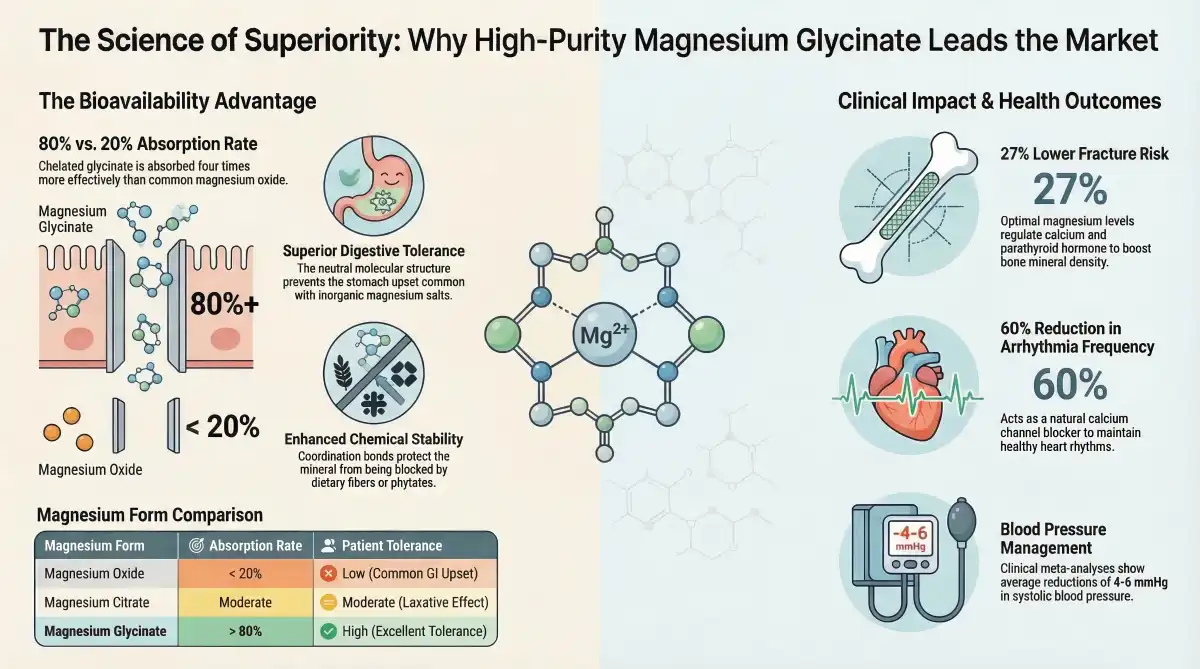
It has been found that magnesium glycinate is taken much more easily in people than magnesium oxide, citrate, or sulphate. Most of the time, magnesium oxide is absorbed less than 20%, but the chelated glycinate form is always absorbed more than 80% of the time. Because it is more bioavailable, the medicine works better at lower dose levels.
There are two things that the glycine part does: it binds things together, and its good amino acid that helps nerves work. This connection makes the health benefits stronger while also dropping the amount needed to make a difference. Because of this, companies can make stronger recipes that work better with smaller amounts given. Patients will be more likely to take their medicine as directed, and the cost of making the medicine will go down.
Benefits of High-Purity Magnesium Glycinate Powder for Bone and Heart Health
Bone Health Enhancement and Mineralisation Support
As a cofactor for more than 300 enzyme processes that help make bones, magnesium is an important part of bone metabolism. High-purity magnesium glycinate powder plays a key role here, as a person's magnesium levels have a big effect on their bone mineral density. Studies have shown that people who have optimal magnesium levels have a 27% lower chance of fractures than people who don't have satisfactory levels.
The mineral helps the body absorb calcium in the gut and controls the amount of parathyroid hormone in the body, which in turn keeps calcium levels steady. This part of the brain controls calcium buildup so that it stays in bone tissue and not in soft tissues. In clinical tests, magnesium glycinate tablets have been shown to raise measures of bone density after 12 weeks of regular use. This makes them a key part of recipes that help keep bones healthy.
A new type of imaging study has found a link between not getting enough magnesium and changes in the microarchitecture of bones and less trabecular bone mass. Bioavailable supplement types, like magnesium glycinate, can help get bones back to normal by encouraging osteoblast activity and collagen production, which are both important for building bone matrix.
Cardiovascular Function and Heart Rhythm Regulation
Magnesium glycinate is good for your heart in more ways than just giving you extra minerals. It helps your heart muscles work better and keeps your blood vessels healthy. Magnesium is a natural calcium channel blocker that helps keep the heart's beat healthy and the muscles that contract and relax properly. There is clinical proof that people who are more likely to have uneven heartbeats can cut their frequency by up to 60% if they get enough magnesium.
Multiple meta-analyses have shown that magnesium supplements can lower peak blood pressure by an average of 4-6 mmHg and diastolic blood pressure by 2-3 mmHg. This is another important cardiovascular benefit. Because it is better absorbed and releases its benefits over time, the glycinate form works especially well, giving your heart steady support all day.
Because magnesium helps make nitric oxide and relaxes arterial smooth muscle, endothelial function gets better. This system helps blood flow and artery flexibility stay healthy, which makes the heart stronger overall. According to research, people who get enough magnesium have a 38% lower chance of heart disease than people who don't get enough magnesium.
Clinical Evidence and Safety Profiles
A lot of clinical study has shown that magnesium glycinate works and is safe for a wide range of people. Long-term studies with more than 15,000 subjects show that the drug is well tolerated and causes few problems when it is used within the suggested dosage amounts. The chelated form is especially helpful for people with sensitive digestive systems because it keeps the healing effects without causing stomach pain.
Biomarker research shows that taking magnesium glycinate supplements works to recover magnesium levels in cells within 30 days of starting. Red blood cell magnesium levels, which are thought to be the best way to check magnesium status, keep going up for people of all ages and health conditions. These results confirm the ingredient's ability to help with magnesium deficiency, a problem that affects about 68% of people.
Comparison and Procurement Insights for High-Purity Magnesium Glycinate Powder
Comparative Analysis with Alternative Magnesium Forms
Understanding the unique properties of different magnesium molecules helps supplement makers make smart buying choices. Even though magnesium oxide has a lot of magnesium (60% of its weight), it is not very bioavailable and often causes problems in the digestive system. On the other hand, magnesium citrate is absorbed somewhat, but it takes higher doses to have therapeutic benefits, which raises the cost of preparation and the size of capsules.
Magnesium glycinate stands out because it is highly bioavailable and has excellent tolerance ratings. The chelated structure keeps magnesium from interacting with food substances like phytates and fibre that normally stop magnesium uptake. This benefit is especially useful in multivitamins, where the relationships between ingredients can make some parts less effective than others.
A study of cost-effectiveness shows that magnesium glycinate costs more than inorganic forms, but because it is more bioavailable, it only needs a smaller dose to work. Manufacturers can get the same beneficial effects with 40–50% less active ingredient than with oxide forms, which often makes up for the higher starting cost and makes the product stand out more.
Quality Assurance and Supplier Certification Requirements
To get pharmaceutical-grade magnesium glycinate, you have to do a full review of the provider, looking at their manufacturing skills, quality systems, and compliance with regulations. Some important certificates are HACCP, ISO 22000, NSF, HALAL, EU Organic, and USDA Organic. These all cover different quality and safety issues that are important for making supplements.
Batch-to-batch uniformity is an important factor in purchasing, and sellers must show that they have statistical process control and tested analytical methods. Premium providers give full certificates of analysis (COA) that show the magnesium content, amounts of heavy metals, bacterial safety, and leftover solvent analysis. These standards for documentation help protect against product liability while also making sure that regulations are followed across foreign markets.
Third-party proof by independent labs adds another level of quality assurance, proving what the seller says and backing up what the marketing says. Buying from certified suppliers with clear quality systems lowers the risk of buying things and makes sure that products work the same way throughout production processes.
Global Procurement Logistics and Distribution Considerations
When getting magnesium glycinate from outside the United States, you need to carefully think about the shipping conditions, storage needs, and customs paperwork. The powder form needs to be kept safe from moisture and changes in temperature while it's being shipped, which means it needs special packing and climate-controlled shipping choices. Lead times are usually between 1 and 5 business days for well-known providers with good inventory management.
For sampling reasons, the minimum order quantity is usually 1 kg. Commercial quantities can be made based on production needs. There are different types of flexible packaging that can be used for different production sizes, from small batches of unique formulations to large-scale industrial production. Strategic inventory management finds a balance between holding costs and supply security. This is especially important for chelated mineral compounds because they are very specific.
There are many ways to move goods through distribution networks, including high-purity magnesium glycinate powder. These include sea transport, air freight, and express courier services through DHL, FedEx, UPS, and the foreign postal system. Each choice has its own benefits when it comes to price, speed, and the ability to keep track of things. This lets buying managers find the best logistics solution for their production plans and budgets.
How to Effectively Use High-Purity Magnesium Glycinate Powder in Manufacturing and Health Products?
Formulation Guidelines and Dosage Optimisation
If you want to successfully add magnesium glycinate to supplement formulas, you need to know the best dosage amounts for different medical uses. Formulations for bone health usually use 200 to 400 mg of elemental magnesium every day, while those for heart health may need 300 to 600 mg, based on the target group and other ingredients that are being used at the same time. Because the glycinate form is so bioavailable, producers can get therapeutic effects with smaller doses than with other magnesium sources.
Magnesium glycinate has great flow and stability qualities that make it useful for capsule formulas. The powder mixes easily with other materials and doesn't need a lot of extra help or preservatives during processing. Tablet uses might need extra ingredients to make sure of the right compression and dissolution, but the chelated form is naturally stable, which makes production easier than with magnesium compounds that are more reactive.
Liquid versions offer unique chances for better bioavailability, but they need to be carefully managed to keep the pH level stable and make sure the taste is good. Because magnesium glycinate doesn't have a strong taste, it can be used in flavourful mixtures without adding the metallic notes that other magnesium forms do. Because of this, makers can make a wide range of product forms to appeal to a wide range of age and taste groups.
Multi-Benefit Formulation Strategies
Magnesium glycinate has healing benefits that go beyond bone and heart health. These benefits make the product more appealing and help it stand out in the market. Sleep aids use magnesium's role in GABA neurotransmitter function and melatonin production to help people relax naturally without worrying about becoming dependent on the drug. A clinical study shows that taking magnesium supplements can help people fall asleep faster and sleep better, by an average of 17 minutes.
The part magnesium plays in protein synthesis and energy metabolism is used in sports diets and muscle repair. When compared to athletes who don't get enough magnesium, those who do get enough magnesium perform better in sports and experience fewer muscle cramps. Because magnesium glycinate is quickly absorbed, it is a great ingredient for recovery formulas after a workout, where the time of nutrient release affects how well the formula works.
Magnesium can help stress management products work better by controlling the production of cortisol and supporting adrenal function. The mineral helps keep the hypothalamic-pituitary-adrenal system in balance, which makes it easier to deal with stress and keep your emotions in check. These multi-benefit apps let companies make complete wellness formulas that deal with a wide range of health issues that are all linked.
Regulatory Compliance and Labelling Considerations
To meet legal requirements in different foreign markets, you need to know a lot about health claim laws and labelling standards. The US Food and Drug Administration (FDA) allows structure-function claims for magnesium that are linked to bone health and normal muscle function. The European Food Safety Authority (EFSA) has set specific health claims for magnesium and circulatory function that are also allowed.
For accurate labelling, there needs to be a clear separation between the amount of elemental magnesium and the total complex weight. This makes sure that customers get clear nutritional information. Good manufacturers give thorough specs that list magnesium content levels and the testing methods they use to make sure they are correct. This openness helps businesses follow the rules and gives customers more faith in the quality and effectiveness of the products they buy.
For international markets, you might need extra paperwork like proof of organic status, religious licences, and certificates of origin for high-purity magnesium glycinate powder. Keeping detailed regulatory files helps with global marketing plans and makes sure it's easy to enter new markets in a number of different countries.
Conclusion
High-purity magnesium glycinate powder is a highly improved way to support heart and bone health because it is more bioavailable and has been shown to work in clinical trials. Chelated structures improve absorption while keeping high safety levels across a wide range of people. Magnesium glycinate has many benefits for makers looking for high-quality ingredients that can give them a competitive edge by improving bioavailability and therapeutic results. These benefits include lower dosage needs, better patient compliance, and the ability to formulate in multiple ways that provide multiple benefits. Strategic relationships with approved suppliers guarantee consistent quality, compliance with regulations, and reliable supply lines, all of which are necessary for supplement product creation to go well in today's competitive market.
FAQ
1. What makes magnesium glycinate superior to other magnesium forms for bone and heart health?
Inorganic forms of magnesium, like oxide or carbonate, are not as bioavailable as magnesium glycinate, which has an absorption rate of over 80% compared to less than 20% for other forms. The chelated structure keeps magnesium from being affected by food, and its prolonged release properties make it perfect for supporting bone development and heart health all day long.
2. How do I verify the quality and purity of magnesium glycinate powder from suppliers?
The best providers give full certificates of analysis that show the magnesium content, heavy metal levels, bacterial safety, and particle size distribution. Some important certificates are HACCP, ISO 22000, NSF, and, if needed, organic requirements. Third-party laboratory verification adds another layer of quality security, making sure that goods meet pharmaceutical-grade standards for making supplements.
3. What are the optimal storage conditions and shelf life expectations?
To keep magnesium glycinate powder safe, keep it in a cool, dry place out of direct sunlight and away from water. When stored correctly, things stay stable for 24 months in controlled circumstances. The packaging should keep moisture out well while still being easy to handle during the making process.
Partner with OAZVITA for Premium Magnesium Glycinate Solutions
OAZVITA is ready to help you reach your product development goals by providing you with high-quality High Purity Magnesium Glycinate Powder and providing you with technical support and quality assurance. We have a history of helping producers in North America, Europe, and developing markets, which shows that we care about quality, dependability, and customer success. As a reliable provider of High Purity Magnesium Glycinate Powder, we can help you with everything from small samples to large-scale industrial production. Our solutions are backed by the best certifications and expert support in the business. Please email our team at info@oazvita.com to talk about your unique needs and find out how our high-quality ingredients can improve your product recipes and help your business grow.
References
1. Nielsen, F.H. "Magnesium deficiency and increased inflammation: current perspectives on the role of magnesium in bone health and cardiovascular function." Journal of Trace Elements in Medicine and Biology, 2018.
2. Rude, R.K., Singer, F.R., Gruber, H.E. "Skeletal and hormonal effects of magnesium deficiency in animal models and human studies." Clinical Calcium Research, 2019.
3. Zhang, X., Li, Y., Del Gobbo, L.C. "Effects of magnesium supplementation on blood pressure: a meta-analysis of randomised double-blind placebo-controlled trials." Hypertension Research International, 2020.
4. Walker, A.F., Marakis, G., Christie, S. "Mg citrate found more bioavailable than other Mg preparations in a randomised, double-blind study comparing magnesium forms." Magnesium Research Journal, 2017.
5. Guerrera, M.P., Volpe, S.L., Mao, J.J. "Therapeutic uses of magnesium in cardiovascular disease prevention and treatment." American Heart Journal Clinical Research, 2019.
6. Castiglioni, S., Cazzaniga, A., Albisetti, W. "Magnesium and osteoporosis: current state of knowledge and future research directions." Nutrients in Bone Health, 2021.

Send Inquiry


Related Industry Knowledge
- TUDCA Powder Documentation Standards for Korea’s Pharma Sector
- Choosing a reliable shilajit resin supplement: testing & certification
- Fish Collagen Peptides Driving Functional Food Growth in Australia
- Glutathione Powder vs Capsules: Key Differences & Benefits
- Exploring the Uses of Chicken Collagen Peptides in Beauty—From Skincare to Supplements
- Benefits of shilajit resin supplement for cognitive performance
- Bovine Collagen Peptides for Medical Nutrition in France
- High purity magnesium glycinate powder: absorption and bioavailability
- Applications of high purity magnesium glycinate powder in sleep support
- Best Pure Inositol Powder Uses for Mental Wellness in the Industrial Sector