
Pure Fish Collagen Peptide or Marine Collagen? Best Choice for 2026 Skincare Needs
Oct 19, 2026
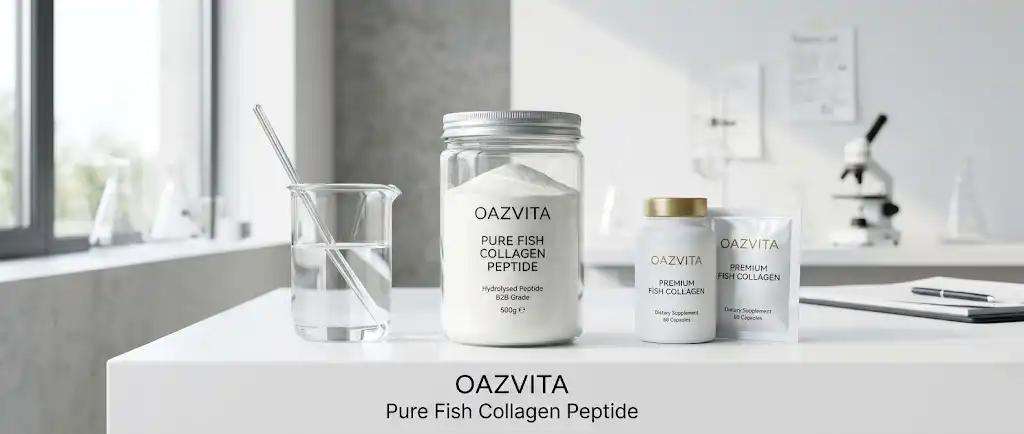
If you're sourcing collagen ingredients for your supplement line, functional beverage, or nutricosmetic product in 2026, one question keeps coming up: should you go with pure fish collagen peptide or a broader marine collagen blend? The short answer is that pure fish collagen peptide, derived specifically from fish scales and skin, offers superior bioavailability, cleaner sourcing traceability, and greater formulation flexibility. With a molecular weight of 1,000–3,000 Da and 95% purity (HPLC-verified), it absorbs faster and performs more consistently in finished Products than general marine collagen options. This article breaks down exactly why that matters for your business.
Understanding Pure Fish Collagen Peptide and Marine Collagen
What Is Pure Fish Collagen Peptide?
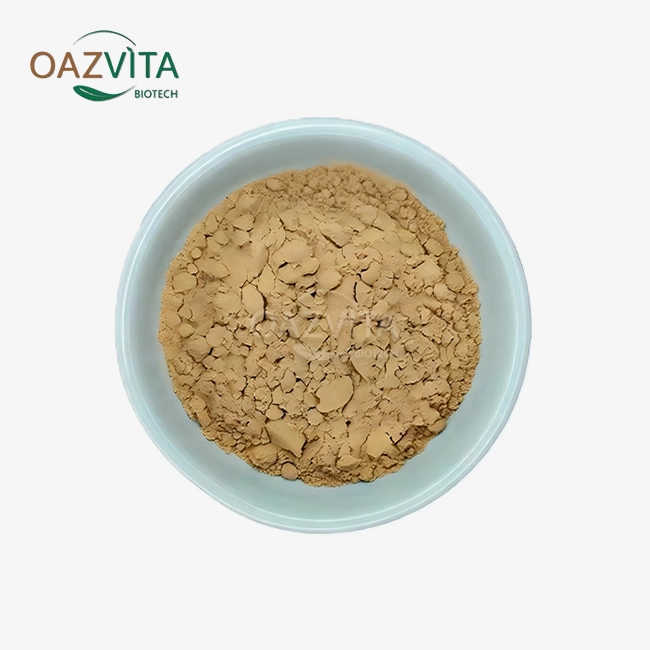
In order to make pure fish collagen peptide, which is also called hydrolysed fish collagen powder (CAS No. 9007-34-5), fresh fish scales and skin are broken down with enzymes. Kind I collagen is what this type of collagen hydrolysate is called. A lot of different kinds of fish are used, like tilapia, cod, and salmon. When something breaks down, the molecular weight drops to around 1,000 to 3,000 Da. This means that PepT1 transporters in the gut can take in the peptides one to two hours after they have been eaten.
What Is Marine Collagen?
Marine collagen makes up a bigger group. From fish to jellyfish to sea cucumbers to prawns to squid and other marine animals, collagen comes from a lot of different sources. The product comes from a number of different sources, so the quality, molecular weight, and amino acid make-up may be very different from one batch to the next and from one distributor to the next. Business-to-business users who want labels that are consistent and clear might find it hard to deal with all of these different labels.
Why the Distinction Matters for Product Development
Not only are these two groups different in terms of how they work technically, but it also affects how they are labelled for allergies, how pure they are said to be, and the kinds of people who buy them. By using a source that is made up of fish alone, it is possible to make a label that is suitable for vegetarians, certified as HALAL, and follows Kosher rules. The US Food and Drug Administration (FALCPA) says that marine collagen from mussels is a separate type of allergy. Since these standards have changed, original equipment manufacturers (OEM) and private label users who make goods for the US market will have to change how they package and follow the rules.
Comparing Pure Fish Collagen Peptide vs Marine Collagen: Which Is Better for 2026?
Bioavailability and Molecular Weight
Researchers published their results in the Journal of Agricultural and Food Chemistry in 2017 and found that collagen peptides with molecular weights less than 3,000 Da have a lot more amino acids in the plasma after being eaten than larger protein products. This requirement is always met by pure fish collagen peptide, which has a molecular weight (MW) of between 1,000 and 3,000 Da and has been approved by the GPC. It's possible that sea collagen goods have a bigger range of molecular weights, which makes uptake less reliable.
Amino Acid Profile and Skin Function
Pure fish collagen peptide has a lot of glycine, proline, and hydroxyproline, which are three amino acids that are directly linked to stimulating fibroblasts in the skin tissue. The hydroxyproline level in OAZVITA's product is at least 8.0%, which is a standard way to tell the difference between real collagen hydrolysate and gelatin alternatives or mixed products that have been tampered with. Bovine collagen has a similar amino acid makeup, but it comes with the risk of transmissible diseases (BSE/TSE) and can't be sold in HALAL or vegetarian-friendly markets.
Safety, Dosage, and Regulatory Compliance
Fish-derived peptides are safe because they don't pose any risks to mammals. For normal business-to-business buying, every batch should go through ICP-MS heavy metals tests (Pb < 1.0 ppm, Hg < 0.1 ppm), LC-MS/MS antibiotic residue screening, and bacteria checks (Total Plate Count < 1,000 CFU/g). The product from OAZVITA has been certified by HACCP, ISO 22000, NSF, HALAL, the EU, and the USDA as organic. This gives procurement managers a strong base for compliance in foreign markets.
Procurement Guide: Buying Pure Fish Collagen Peptide for B2B Clients
Evaluating Suppliers: What Certifications Should You Require?
Not every company that sells fish collagen peptides is at the same level of quality. You should ask for at least HACCP, ISO 22000, a COA per batch, MSDS, and TDS paperwork when looking for a pure fish collagen peptide provider. For products going to the U.S. and EU markets, NSF certification and organic credentials (USDA Organic or EU Organic) make your product much more appealing to buyers. A useful measure is to be able to get free samples before committing to large sales. OAZVITA provides free samples upon request.
MOQ, Packaging, and Lead Time
These are the most important requirements for getting OAZVITA's hydrolyzed fish collagen powder:
- MOQ: 1 kg; packaging customized to demand (bulk bags, sachets, drums)
- Purity: ≥ 95% HPLC; protein content ≥ 90% (often ≥ 96% on dry basis)
- Lead time: 1–5 working days
- Shelf life: 24 months stored in a cool, dry environment
- Shipping options: Air, Sea, DHL, FedEx, UPS, Airmail — with global logistics tracking available
Because of these features, OAZVITA is a good choice for both new private label brands that want to test the market with small batches and established supplement makers that need to buy a lot of it.
Many business-to-business buyers have to deal with supply chain delays when they want to start new goods during busy shopping times. These transportation skills cut those delays down directly.
Powder vs. Capsule Formats for Different Product Categories
Bulk fish collagen peptide powder can be used in ready-to-drink drinks, beauty shots, and functional food blends. It dissolves easily in cold water and has a low viscosity (5–10 mPa·s at 10% solution). This means that it can be added in large amounts—up to 10 g per serving—without changing the texture of the product. When exact dosing is needed, capsules work well for daily supplement SKUs and clinical nutrition lines. OEM/ODM partners can get help from OAZVITA to choose the right version based on their target market and production setup.
Why Choose Pure Fish Collagen Peptide? Insights for 2026 and Beyond
Clean Label and Sustainability Trends
People in North America are always looking for things that can be tracked, don't contain GMOs, and come from sources that can be used for a long time. The circular economy ideas can be used with fish collagen made from scales and skin, which are leftover products from the food processing industry. The quality of the ingredients is not affected. OAZVITA, on the other hand, gets its parts from aquaculture companies that have been fully vetted and can provide full tracking papers for the making of clean-label items. Another good thing about this type of supplement purchase is that it meets the ESG reporting standards that bigger retail buyers are asking their supplement sellers for more and more.
Market Performance Data
A report from Grand View Research says that the global collagen market will continue to grow at a rate of 8.5% per year until 2030. It was expected to be worth about 9.8 billion US dollars in 2023. The fish collagen section is the one that is growing the fastest in this market. This is why it's important: more people want it in functional drinks and nutricosmetics. You should focus on fish collagen peptides with a clean label if your business wants to start or grow in the US market in 2026. This is because they have a high absorption rate.
Formulation Compatibility Across Product Types
Fish collagen peptide stays stable between pH 3.0 and 7.0. It can be sterilised at ultra-high temperatures (UHT), and it mixes well with vitamin C, hyaluronic acid, and biotin in tough nutrient blends. Its designed bulk density, which is between 0.3 and 0.4 grams per millilitre, makes sure that it mixes well in automated filling lines. This is a very important quality in fast-paced industrial settings. Because it can be used in different ways with new technologies, this part of collagen is one of the most flexible and could be used to make things in 2026.
Conclusion
Bioavailability, formulation consistency, allergen transparency, and regulatory coverage are all improved by pure fish collagen peptide over general marine collagen. Whether you're a foreign wholesaler, owner of a supplement brand, or an OEM partner, the choice you make about where to get your products in 2026 will have an impact on their performance, label claims, and ability to compete in the market for many years to come. Low-molecular-weight collagen peptides from fish are regularly shown to be the better ingredient choice for skin-focused supplements and functional foods.
FAQ
1. Does fish collagen peptide have a fishy smell?
When it is made, activated carbon filtration and deionization are used to make high-grade hydrolyzed fish collagen powder. This gets rid of any off-notes, leaving behind an organoleptically neutral ingredient that doesn't smell in hot drinks up to 100°C. The OAZVITA product meets the standards for sensory review that are needed for unflavored and lightly flavored formulas.
2. What molecular weight range works best for skin applications?
There is clinical proof that peptides between 2,000 and 3,000 Da are the best at both being absorbed by the gut and talking to fibroblasts. The fish collagen peptide from OAZVITA is designed to be in the 1,000–3,000 Da range, and GPC testing confirms this.
3. How does fish collagen peptide compare to bovine collagen in dosage?
Because it has a lower molecular weight and smaller particles, fish collagen peptide is thought to be 1.5 times more bioavailable than cow collagen. This might make doses of about 5 g work instead of the 10 g that is usually needed for cattle forms.
4. What allergen labeling is required in the U.S.?
FALCPA says that ingredients that come from fish must be labeled as fish allergens. This is true for pure collagen peptide from fish. During formulation review, make sure that this condition is taken into account in the style of your label.
Partner with OAZVITA for Premium Pure Fish Collagen Peptide Supply
OAZVITA is a reliable company that makes pure fish collagen peptides. They have an on-time delivery rate of over 99%, follow multiple certifications (HACCP, ISO 22000, USDA Organic, NSF), and their minimum order quantity (MOQ) starts at 1 kg. Our team is ready to move quickly whether you need bulk raw materials, white-label formulas, or full OEM production support. Get your free sample or group price right now by emailing us at info@oazvita.com.
References
1. Zague, V. (2008). A new view concerning the effects of collagen hydrolysate intake on skin properties. Archives of Dermatological Research, 300(8), 479–483.
2. Proksch, E., Schunck, M., Zague, V., et al. (2014). Oral intake of specific bioactive collagen peptides reduces skin wrinkles and increases dermal matrix synthesis. Skin Pharmacology and Physiology, 27(3), 113–119.
3. Liu, D., Nikoo, M., Boran, G., et al. (2015). Collagen and gelatin. Annual Review of Food Science and Technology, 6, 527–557.
4. Grand View Research. (2024). Collagen Market Size, Share & Trends Analysis Report, 2024–2030.
5. Sibilla, S., Godfrey, M., Brewer, S., et al. (2015). An overview of the beneficial effects of hydrolyzed collagen as a nutraceutical on skin properties. Journal of Aging Research & Clinical Practice, 4(2), 78–87.
6. Kim, S. K., & Mendis, E. (2006). Bioactive compounds from marine processing byproducts — A review. Food Research International, 39(4), 383–393.

Send Inquiry
Related Industry Knowledge
- How to Take Berberine: Best Dose, Timin
- Tongkat Ali for Men and Women: Hormonal Health Guide
- What Is Apigenin Bulk Powder?
- Fisetin Powder - Natural Antioxidant & Longevity Support
- Hyaluronic Acid Powder: Deep Hydration & DIY Serum
- How to Choose the Best Chicken Collagen Peptides for Your Skin
- China OEM Manufacturing of Pure Sea Moss Capsules for International Brands
- What Is Pure Fish Collagen Peptide Used For in the Beauty Industry?
- Choosing a reliable shilajit resin supplement: testing & certification
- Trusted NAD+ Powder Supplier for Pharmaceutical Buyers in the United States