
What Is Apigenin Bulk Powder?
Sep 02, 2026
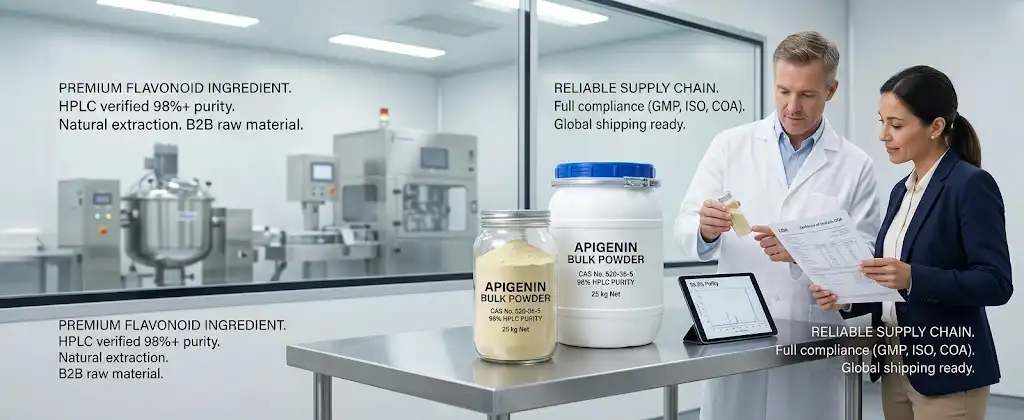
Apigenin Bulk Powder represents a high-purity, naturally derived flavonoid ingredient extracted predominantly from chamomile, parsley, and celery. As a raw active pharmaceutical ingredient (API) or nutraceutical dietary component, this powder serves as the foundational material for downstream manufacturing of capsules, functional beverages, topical formulations, and fortified food Products. Characterized by its chemical structure (CAS No. 520-36-5) and standardized to 98% purity via HPLC, apigenin powder addresses critical B2B needs, including consistent batch quality, regulatory compliance, and formulation flexibility for brands across health supplement, sports nutrition, and functional food sectors.
Understanding Apigenin Bulk Powder
The Chemical Foundation and Extraction Process
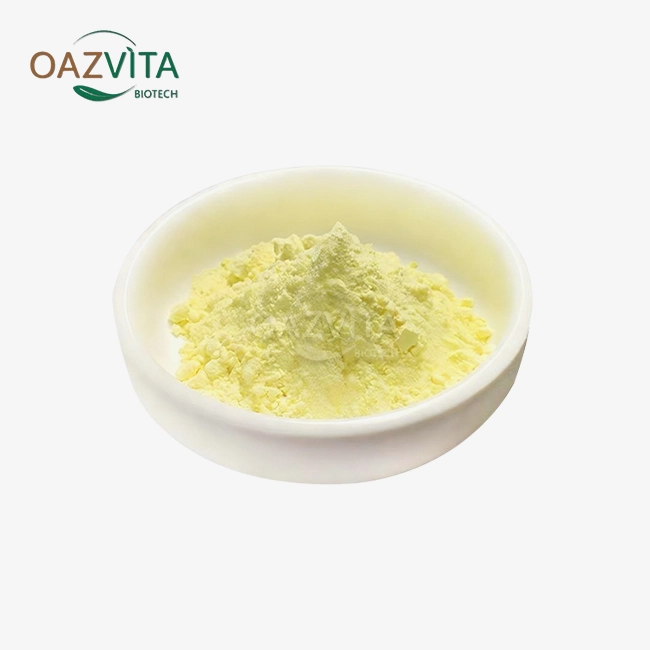
Apigenin is a flavone, which is a type of flavonoid. It is easy to spot because it looks like yellow crystals and has the formula C15H10O5. The process of industrial extraction starts with plant-based materials, mostly chamomile flowers (Matricaria chamomilla), which have a concentration of 0.8 to 1.2% by dry weight of apigenin. To get purity levels high enough for medicinal use, advanced producers use solvent extraction, column chromatography, and recrystallization. This makes Apigenin Bulk Powder, which stays stable when stored in the right way (in cool, dry places below 25°C) and has a recorded shelf life of 24 months when kept away from light and moisture.
To meet USP and EP standards, modern extraction methods focus on leaving as few leftover solvents as possible. This has a direct effect on the success of subsequent formulations. Purchasing teams should make sure that suppliers give them Certificates of Analysis (COA) that are specific to each batch and show the levels of heavy metals, microbes, and pesticides that were found. This care for the quality of the extraction keeps formulation failures from happening during the pressing or filling of tablets or capsules, where uneven particle size distribution or moisture content can slow down production.
Industrial Applications Across Multiple Sectors
This flavonoid can be used in a lot of different ways, not just to make supplements but also in new markets. There are companies in the nutraceutical business that use Apigenin Bulk Powder in sleep aids, stress relievers, and brain health goods. Because it is an antioxidant and an anti-inflammatory, it is very useful for sports nutrition companies that are making healing powders and nitric oxide boosters. Lowering oxidative stress caused by exercise makes the entire product image better.
Functional food companies add Apigenin Bulk Powder to energy drinks, health teas, and drinks that are fortified to meet customer demand for bioactive ingredients that come from natural sources. When compared to pre-encapsulated forms, powders are more flexible because they can be precisely dosed and easily mixed into different matrices without changing the taste profiles. Apigenin Bulk Powder's antioxidant properties are used by beauty and nutricosmetics brands in skin-healthy supplements that you can take. It is often mixed with collagen peptides and hyaluronic acid to make the effects stronger.
Regulatory Compliance and Quality Standards
There are global rules that control the trade of Apigenin Bulk Powder, and the rules in North America, Europe, and Asia are all different. In the US, the ingredient is generally recognized as safe (GRAS) as long as it is used according to the rules. In Europe, however, the European Food Safety Authority (EFSA) rules say that plant extracts must have special labels. People who work in procurement must make sure that sellers keep their ISO 22000, HACCP, NSF, HALAL, and, if necessary, EU and USDA Organic certificates up to date.
Certificate files are the most important part of the process of checking out a supplier. Material Safety Data Sheets (MSDS) and Technical Data Sheets (TDS) give production teams important information about how to handle materials that goes beyond basic quality documentation. Suppliers who provide full paperwork, such as allergen statements, non-GMO verification, and BSE/TSE-free declarations, show a dedication to openness that lowers legal risk for brands that are hitting multiple foreign markets at the same time.
Comparing Apigenin Bulk Powder and Other Forms
Bulk Powder Versus Finished Dosage Forms
Whether to use Apigenin Bulk Powder or pre-made capsules depends on how the product is made and how the business is run. Bulk powder gives brands more formulation freedom than ever before, letting them make their own blends of Apigenin Bulk Powder with ingredients that work well together, such as L-theanine, magnesium glycinate, or GABA. This adaptability is very important for brands that want to stand out by using unique formulation strategies or serving special markets that have specific dose needs. When working with large ingredients, production scalability improves by a huge amount, because automatic encapsulation and tableting lines can handle more work than people who fill capsules by hand.
When it comes to cost, buying in bulk is best for medium- to large-sized businesses. When you look at the costs per unit over production volumes of more than 10,000 units per month, buying bulk powder cuts costs by 30–45% compared to buying finished capsules. This cost benefit is even bigger for private label companies and OEM buyers who are launching multiple product lines. Standardizing ingredients across SKUs makes managing inventory easier and cuts down on source dependencies.
Bioavailability factors also play a role in choosing the form. While pills are convenient, bulk powder can be mixed into lipid-based delivery methods or micronized in ways that make absorption rates higher. According to research, reducing the particle size to 5–10 microns can boost dissolution rates by as much as 60%, which has a direct effect on how well the ingredient works. Brands that want their products to be as bioavailable as possible often work with contract manufacturers that can do advanced particle engineering before the final packaging.
Natural Versus Synthetic Sourcing
Natural Apigenin Bulk Powder extraction from plant sources has clear benefits for positioning a brand and how customers see it. Plant-based ingredients are in high demand because of clean label trends. In fact, market research shows that 67% of supplement users would rather use naturally sourced actives than synthetic ones. Natural extraction keeps the phytochemical structure that is already in the source plants, which may include synergistic chemicals that make the total activity stronger than Apigenin Bulk Powder alone.
Synthetic production methods offer higher levels of purity and less variation from batch to batch, which makes them appealing for pharmaceutical uses that need complete consistency. Synthetic methods, on the other hand, involve multiple steps of chemical synthesis that can introduce small impurities that need more steps of filtering. There are big differences in how much things cost. For example, natural extraction usually costs 15–25% more than synthetic production at the same level of purity. However, this extra cost is often justified by better marketing, which allows for higher retail prices.
When making procurement decisions, people should weigh the need for purity against the goals of market positioning. Natural sourcing and organic certification are good for products that are aimed at mainstream health food channels. On the other hand, synthetic purity may be more important for precise dosing in sports nutrition formulas. OAZVITA has both naturally enhanced and synthetically enhanced choices, so buyers can choose the ones that fit best with their brand strategy and the tastes of the people they want to reach.
How to Source and Buy Apigenin Bulk Powder Effectively
Critical Supplier Evaluation Criteria
To find trustworthy Apigenin Bulk Powder makers, you need to do a thorough evaluation of many factors. The basic requirement is manufacturing certifications. For example, ISO 22000 certification proves food safety management systems, and GMP certification proves production capabilities for pharmaceuticals. When a supplier has more than one approved production line, it means that their business is mature and can handle a wide range of order numbers without sacrificing quality.
Transparency in the supply chain is what sets great sellers apart from average ones. Find out from possible partners where they get their botanicals and whether they work directly with farmers or use commodity dealers. Direct sourcing relationships usually make it easier to track down products and lower the risk of contamination that comes with having multiple levels of supply chains. Ask source farms for proof of where the raw materials came from, such as phytosanitary certificates and pesticide testing results.
Protocols for quality control should include tracking of the process as well as testing of the finished product. Modern suppliers use real-time HPLC analysis during the extraction process, which lets them make changes right away to keep purity levels at the right level. All processing factors should be listed in the batch record paperwork. This creates an audit trail that makes troubleshooting easier if the specifications don't match up. Suppliers who offer third-party laboratory validation through independent testing facilities show that they are serious about objective quality assurance.
Understanding Pricing and Minimum Order Quantities
Apigenin Bulk Powder prices are based on quality levels, order numbers, and the state of the market. On the market right now, 98% HPLC-grade material costs between $180 and $280 per kilogram for orders of 25 to 100 kg. For larger orders, discounts are given for buying more. Minimum order quantities (MOQs) are different for each supplier, but competitive manufacturers keep their MOQs flexible, starting at 1 kg for testing samples and doing small-scale production trials. This makes it easy for new brands and private label buyers to see how the market reacts before committing to bigger inventory positions.
The structure of payment terms has a big effect on how buying teams handle their cash flow. Standard terms in the business are a 30% deposit and the remaining 70% due before shipment. However, experienced buyers can negotiate net-30 or net-60 terms. When doing business with new suppliers, letters of credit are a good way to protect your foreign deals. Instead of just looking at the price per kilogram, you should look at the total landed costs, which include shipping, customs duties, and any possible storage fees.
How fast and reliably deliveries happen for Apigenin Powder Ready to Ship depends on how well global operations work. Suppliers who work with more than one carrier, like DHL, FedEx, UPS, and specialized pharmaceutical messengers, show that they can handle pressing orders or packages that save money. For stock items shipped by air freight to North American destinations, lead times are usually between 1 and 5 working days. Sea freight, on the other hand, has travel times of 20 to 30 days and lowers shipping costs by 60 to 70%. OAZVITA keeps inventory on hand so that orders can be filled quickly. They also offer custom packaging options that make the receiving and quality control processes easier.
Safe Usage Guidelines and Potential Side Effects
Dosage Recommendations Across Applications
To turn Apigenin Bulk Powder specifications into dosing for finished products, you need to know about bioavailability factors and how the products are supposed to be used. Apigenin Bulk Powder amounts that work for general health are thot to be between 50 and 300 mg per day, but the best levels depend on how the supplement is delivered and what other ingredients are in it. Encapsulated products usually aim for 100 to 200 mg per serving, while beverage formulas may include 25 to 50 mg to find a good mix between effectiveness and taste.
Formulation scientists have to take into account that Apigenin Bulk Powder only dissolves in very small amounts in water (0.00135 mg/mL) when they are making liquid products. Several methods for dissolving substances, such as complexing with cyclodextrins, adding them to liposome-based delivery systems, or micellizing them with phospholipids, make dissolution profiles much better. Powder blends that are meant to be mixed directly into liquids work better when they are co-processed with natural emulsifiers or instantizing processes that make them easier to mix without sticking.
Apigenin Bulk Powder's safety reports show that it is very well tolerated across all groups that have been tested. No major side effects have been recorded in clinical studies that used doses of up to 800 mg per day for long periods of time. Giving full product information, like suggested use statements and contraindication warnings, protects both manufacturers and end users and shows that they are following the rules.
Extraction Purity and Quality Control Impact
The way an extraction is done has a direct effect on both safety and effectiveness. When compared to ethanol extraction, supercritical CO2 extraction creates the cleanest profiles with the least amount of solvent waste. However, the higher processing costs make the ingredients 20–30% more expensive. Ethanol-based methods are still the standard in the industry for most tasks. They provide high purity when the solvent is properly evaporated, and residue levels are tested to make sure they are below regulatory limits, which are usually less than 50 parts per million for ethanol.
Screening for contaminants is an important part of quality control that can't be skipped. To meet FDA rules and export standards for European markets, heavy metal tests should show that lead levels are below 3 ppm, arsenic levels are below 1 ppm, and mercury levels are below 0.1 ppm. Total plate counts must be less than 1,000 CFU/g, and E. coli must be tested for specifically. coli, Salmonella, and Staphylococcus aureus were found to be harmful. Aflatoxin standards are usually set at 5 parts per billion (ppb) total aflatoxins, which makes mycotoxin research even more important for Botanical Extracts.
The results of stability tests give us information about the best way to store things and when they should be thrown away. Accelerated stability studies on well-characterized Apigenin Bulk Powder ingredients show that they don't break down much when kept in sealed containers at 40°C and 75% relative humidity for three months. This information leads to careful 24-month shelf-life suggestions for regular storage conditions. However, material that is kept properly often stays in good shape well past its stated expiry dates.
Making an Informed Procurement Decision
Supplier Evaluation and Contract Negotiation
Building long-lasting relationships with suppliers starts with thorough audits that look at their manufacturing capabilities, financial stability, and customer service systems. Site visits show how much is being made, how to maintain equipment, and how the building is organized in a way that written information alone can't. Virtual facility tours are now a good option, especially when looking at foreign suppliers. However, for important supply ties, nothing beats an on-site evaluation.
When negotiating a contract, the parties should talk about specification tolerances, sampling protocols, and ways to settle disagreements. Standard purchase agreements usually allow differences of 2% to 3% from the stated Apigenin Bulk Powder specifications. Tighter tolerances (±1%) can be negotiated for higher prices, tho. Set up clear sampling processes that require representative samples from each production lot to be approved before they can be shipped. For verification reasons, give the right to an independent laboratory to test the samples.
Long-term supply agreements guarantee both price stability and capacity, which are important for brands that want to grow. When suppliers make volume commitments that last between 6 and 12 months, they can get raw materials at good prices, which saves buyers money and makes sure that supplies will always be available, even when demand changes with the seasons. Technical support, formulation advice, and priority setting are some of the things that these partnerships usually cover. Apigenin Bulk Powder markets are sometimes affected by shortages that affect the whole industry.
Emerging Market Trends and Strategic Positioning
Apigenin Bulk Powder demand is expected to grow at a compound annual growth rate (CAGR) of 7 to 9 percent through 2028 for nutritional uses. This is because of rising consumer interest in health and fitness. The fastest-growing section is sleep health, as more and more people look for natural options to pharmaceutical sleep aids. Brands that put Apigenin Bulk Powder in herbal sleep complexes with valerian, passionflower, and melatonin can charge more for their products and stand out from rivals that only use one ingredient.
Apigenin Bulk Powder can now be added to more functional drinks thanks to new innovations. Flavonoids are added to more and more ready-to-drink recovery drinks, adaptogenic coffee alternatives, and drinks for relaxing after a workout because they are good for you and people like them. For these uses, powder needs to be processed in a certain way, with instantization treatments and flavor-neutral grades that mix easily into liquids without settling or changing the taste.
Changes in regulations in key markets affect how buying methods are used. New guidelines from the FDA on "healthy" claims and continuing talks about structure-function claims for food ingredients create both chances and duties to follow the rules. Partnering with suppliers who keep up-to-date on regulatory information and offer help with paperwork for product registration cuts down on the time it takes to get new formulations on the market and lowers the risk of rejection in regulated markets.
Conclusion
When you buy Apigenin Bulk Powder, you need to carefully look at the purity requirements, seller certifications, and dependability of the supply chain to make sure that the quality of your finished goods stays the same. Because the ingredient can be used in supplements, foods, and cosmetics, it is a useful addition to a wide range of product lines aimed at health-conscious customers. Strategies for buying things that work well balance low costs with quality control, choosing partners that can help with growth by offering flexible minimum order quantities, thorough paperwork, and quick technical support. As market demand keeps growing, building strong relationships with reliable suppliers early on gives businesses a competitive edge by keeping costs low and making sure they have enough supplies during busy times.
FAQ
1. What distinguishes bulk apigenin powder from consumer capsules for industrial applications?
Apigenin Bulk Powder gives formulators more freedom and lower costs, which are important for B2B manufacturing. Retail capsules have set amounts and fillers that are good for direct consumption. Bulk powder, on the other hand, can be mixed with other ingredients to make it more effective, and it can be added to a wide range of delivery methods, such as drinks, gummies, and skin care products. When industrial buyers buy ingredients in bulk instead of pre-made capsules, they save 30 to 45 percent on costs. The benefits of scalability grow as production volumes rise above 10,000 units per month.
2. Which certifications matter most when evaluating apigenin powder suppliers?
ISO 22000 and HACCP certifications show that you can manage food safety, and GMP certification proves that you can make medicines that meet strict standards. For markets in North America, NSF approval and USDA Organic marks make you more marketable. EU Organic certification and following EFSA rules should be important to European buyers. Comprehensive suppliers offer batch-specific COAs that show heavy metal testing, microbial analysis, and pesticide residue screening for Apigenin Bulk Powder. These meet the requirements for importing in many places.
3. Can apigenin bulk powder specifications be customized for unique applications?
Reliable manufacturers allow for customization, such as improving particle size, instantization treatments for use in beverages, and Apigenin Bulk Powder organic certification. The technical team at OAZVITA works together to create new formulations. They change the details to fit your delivery format needs while still meeting 98% HPLC purity standards. Custom packing choices, from 1 kg foil bags to 25 kg fiber drums, can be made to fit different production sizes and storage needs.
Partner with OAZVITA for Your Apigenin Bulk Powder Supplier Needs
OAZVITA offers pharmaceutical-grade Apigenin Bulk Powder that is 98% pure by HPLC and has a lot of certifications to back it up, such as ISO 22000, HACCP, NSF, HALAL, and both EU and USDA Organic credentials. Our approach is flexible enough to handle orders as low as 1 kg MOQ, and we offer free samples and full analytical documentation (COA, MSDS, TDS) for every batch. We know how important it is for your production plans that your supply chain is reliable. That's why we keep lead times between 1 and 5 working days and offer shipping choices via DHL, FedEx, UPS, and sea freight to keep your logistics costs as low as possible.
In addition to providing raw materials, our expert team can help you reach your product development goals by giving you advice on preparation and customization services. We can change the specs to fit your needs, whether you need instantized grades for use in beverages, micronized particles for better digestibility, or Apigenin Bulk Powder organic-certified material for use on clean labels. Get in touch with our purchasing experts at info@oazvita.com to talk about your Apigenin Bulk Powder needs, ask for samples, or find out how our OEM/ODM services can help you get your product to market faster.
References
1. Journal of Agricultural and Food Chemistry. (2019). "Flavonoid Extraction Methods and Bioavailability Enhancement Strategies for Functional Food Applications."
2. Nutraceuticals World Annual Ingredient Report. (2022). "Global Market Analysis: Botanical Extracts in Dietary Supplements and Functional Foods."
3. International Journal of Pharmaceutical Sciences. (2021). "Quality Control Parameters for Botanical Active Pharmaceutical Ingredients: A Regulatory Perspective."
4. Food Safety Magazine. (2023). "Supply Chain Traceability Requirements for Natural Ingredients in International Trade."
5. Sports Nutrition Insider Market Research. (2022). "Emerging Ingredients in Recovery and Performance Enhancement Formulations."
6. Cosmetics & Toiletries Science Applied. (2020). "Plant-Derived Antioxidants in Nutricosmetics: Formulation Considerations and Stability Testing."

Send Inquiry

Related Industry Knowledge
- Nettle Extract Powder Uses and Plant Profile
- Does berberine really help you lose fat?
- Natural Astaxanthin Powder: Benefits, effects, intake & dosage
- Natural Astaxanthin Powderr: The Ultimate Guide to Nature’s Most Potent Antioxidant
- Blue Copper Peptide Powder: The Skin Regeneration Secret You Need to Know
- How is the quality of pure curcumin powder tested?
- Applications of Vitamin D3 Powder Bulk
- A Complete Guide to Consuming Shilajit Drops for Maximum Benefits
- Pure NMN powder for cognitive health: mechanism and evidence
- NR Chloride Powder Quality Audits for Japanese Pharmaceutical Buyers