How to Take Berberine: Best Dose, Timin
Oct 13, 2026
If you work in supplement manufacturing, functional food production, or nutraceutical sourcing, understanding how berberine hydrochloride performs across dosage ranges and timing windows matters — not just for end-user results, but for how you position your product line. Berberine HCl bulk (CAS: 633-65-8) from OAZVITA is supplied at 97% HPLC purity, sourced from natural botanical origins like Coptis chinensis and Berberis vulgaris. This guide covers what procurement teams need to know about dosing rationale, formulation timing, supplier evaluation, and how to source responsibly at scale.

Understanding Berberine HCL Bulk: What You Need to Know
Berberine hydrochloride bulk is the active ingredient that hasn't been enclosed, tableted, or mixed yet. It is a powder. To make finished vitamin Products, you start with this. As a business-to-business buyer, knowing the product's physical and chemical makeup helps you make smart choices about how to formulate it.
Chemical Identity and Physical Properties
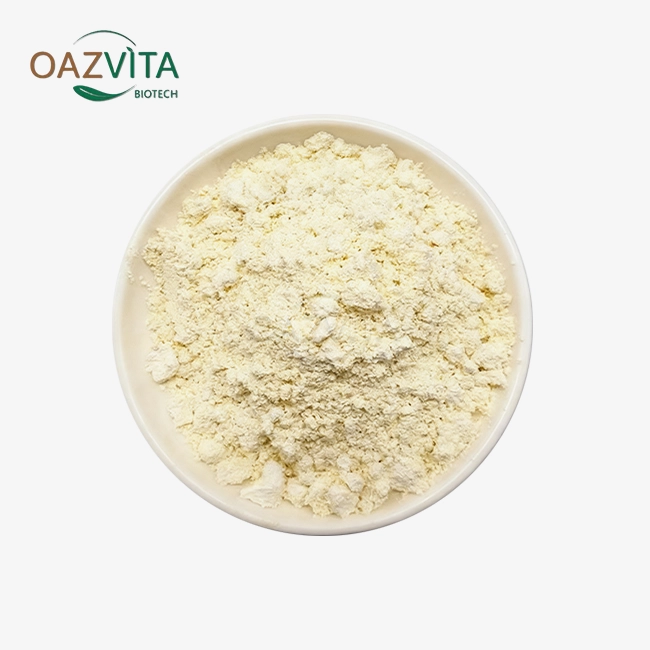
The formula for berberine HCL is C20H18ClNO4, and its molecular weight is 371.81 g/mol. It looks like a bright yellow crystalline powder and tastes very bitter. Its melting point is around 200°C when it breaks down. It doesn't dissolve well in cold water (about 1:400), but it does dissolve in hot water and water that has been mixed with ethanol. These features directly affect how it mixes with other ingredients in capsules, tablets, or drinks.
Bulk Powder vs. Finished Formulations
When you buy berberine HCl bulk, you get the active compound itself, without any fillers or other substances that have been processed. This lets your production team decide on the amount per unit, the size of the capsules, and how well they work with other ingredients. Finished pill goods give up that freedom in exchange for ease of use. When it comes to convenience and cost, the bulk powder format is almost always the best choice for big makers and OEM/ODM businesses.
Why Purity Grade Matters for Manufacturing
OAZVITA's berberine hydrochloride bulk is checked by HPLC at a 97% level. When making supplements, the amount of active ingredient per gram is directly related to how pure the material is. For example, a 90% assay product needs more powder per dose to be as effective as a 97% material. Plant-matrix toxins can also be introduced by lower purity and change the color, smell, and market acceptance. Before making a deal with a supplier, you should always ask for a Certificate of Analysis (COA).
Best Dosage and Timing for Berberine HCL Bulk Usage
Data on dosage and timing help makers figure out the active ingredients in each dose, the claims on the label, and the structure of the formulation. This part lists the support that industry standards offer.
Standard Daily Dosage Ranges
For metabolic support, published research and pharmacopeial guidelines always say 500 mg per dose, taken two to three times a day for a total of 1,000 to 1,500 mg/day. This range is used in many commercial products that aim to control blood sugar and manage fats by activating the AMPK pathway. For gut bacteria modulation and intestinal support, which are two main uses for berberine hydrochloride powder, functional foods and drinks usually contain smaller amounts of 300–500 mg twice a day.
Timing Relative to Meals
Most of the time, berberine hydrochloride should be taken 20 to 30 minutes before a meal. This timing lines up the presence of the active compound with changes in blood sugar after a meal, which is the main process that metabolic supplement makers are interested in. Berberine has a short half-life, so it's best to take it over two or three meals.
Comparing Berberine HCL Bulk with Other Forms and Suppliers
Not all berberine products work the same way. The type of salt and the quality of the supplier both affect how well your final product works.
HCL vs. Sulfate and Other Salt Forms
One main reason why the hydrochloride salt form is better than berberine sulfate or the free base alkaloid is that it is more stable in stomach acid. It is not as bioavailable as berberine sulfate, and it is not as consistent when it comes to standardizing quality. The HCL salt form also flows better during high-speed packaging, which is good for industrial lines that use capsules to save time and money.
Supplier Qualification: What to Require
Picking a supplier isn't just about price. Before giving out a deal, serious buying teams look at these qualifications:
- Purity documentation: COAs that have been HPLC-tested for each batch, preferably backed up by verification from a third-party lab
- Regulatory certifications: OAZVITA can get regulatory certificates for HACCP, ISO 22000, NSF, HALAL, EU Organic, and USDA Organic.
- Stability data: Shelf-life paperwork proving the stability of the material under certain storage conditions (cool and dry, 24 months).
- Sample policy: Free samples are available for pre-order review, and they come with MSDS and TDS.
These standards keep your brand safe from inconsistent supplies and make it easy for your quality assurance team to check the work. If you only choose a provider based on price, you may end up paying more to change the formula later on than you saved in the beginning.
Reading Pricing vs. Total Value
There is often a secret cost to cheap berberine hydrochloride powder, like test results that aren't uniform, particles that aren't the same size, or not enough paperwork. A 97% HPLC-grade material costs a little more than a 90% alternative, but it gives you more active compound per kilogram, which lowers your cost per finished dose. Always change prices to cost-per-milligram of active ingredient when comparing quotes.
Practical Guidance for B2B Procurement of Berberine HCL Bulk
After setting criteria for suppliers, the next step is to handle the operational side of bulk procurement.
MOQ, Packaging, and Lead Time
OAZVITA's berberine HCl bulk starts at a 1 kg MOQ, and the packaging can be made to fit the size of your order. Standard industrial quantities are sent in drums that hold 25 kg. A lead time of one to five working days starts when an order is confirmed. You can ship by air, sea, DHL, FedEx, UPS, or airmail post. All of these choices have logistics that can be tracked to help you plan your supplies.
Sample and COA Validation Process
Before putting in a final order, ask OAZVITA for a free sample and have it looked at by someone else. Check the microbial counts, heavy metals panel, leftover liquids, and analysis. Check the given COA, MSDS, and TDS papers against each other. This step of validation is required for all serious procurement teams. It usually takes 5–10 business days, but it depends on the testing lab.
OEM and Private Label Options
OAZVITA can make finished pill or powder formulas for brands that don't want to buy raw materials. This is called OEM/ODM production. You can get a complete berberine supplement that includes the recipe, encapsulation, and packaging for your brand. The minimum order quantity (MOQ) is customizable. This route works for brands that want to get into the US market quickly without having to spend money on manufacturing facilities.
Case Studies and Industry Insights: Success with Berberine HCL Bulk
Berberine hydrochloride is at the heart of a number of popular supplement brands in North America that focus on digestive health. One trend that kept coming up was that brands that used 97% HPLC-grade materials and paid for third-party purity testing had much lower product return rates and higher repeat buy rates than brands that used lower-grade inputs.
Market Trends Driving Demand
Since 2020, sales of berberine supplements around the world have steadily increased. This is because more people are looking for natural ways to support their metabolism. The US market has the most demand for berberine, and functional food and drink companies are adding it to more and more drinks and protein bars as a botanical active.
Regulatory Environment Outlook
US-based brands need to make sure that their berberine-containing products follow the rules set by the FDA for Dietary Supplements under DSHEA. COA paperwork, allergen statements, and clean-label certifications, such as USDA and non-GMO ones, are offered by OAZVITA; they help with product registration and market entry in North America and other countries.
Industry Adoption Across Segments
Besides being used in supplements, berberine HCL is also becoming more popular in veterinary nutrition as a natural antimicrobial feed additive and in topical dermatological preparations that aim to balance skin flora. This makes the business case for buying in bulk stronger in areas other than making supplements.
Conclusion
Berberine hydrochloride is still one of the botanical actives in the nutraceutical business that has the most study behind it. When you're a business-to-business buyer, the choices you make about things like purity grade, source certifications, dosage architecture, and time strategy affect both how well the product works and how trustworthy the brand is. We offer 97% HPLC-grade berberine HCl bulk at OAZVITA. We offer full paperwork, variable minimum order quantities, and quick turnaround times. Starting with tested, high-purity raw materials is the best way to make a product that works and sells, whether you are beginning a new line of products or increasing the amount that you make.
FAQ
1. What amount of berberine hydrochloride should be used in vitamin forms?
Standard formulations aim for 500 mg per dose, taken two to three times a day for a total of 1,000 to 1,500 mg per day. Change the amount based on what you want to use it for; gut health products usually use lower doses than metabolic support formulas.
2. How can I be sure that the berberine HCl bulk I want to buy is pure before I buy it?
Ask your supplier for a COA with HPLC assay data. Before completing your purchase order, send a sample to a separate laboratory to be checked by a third party. This will give you extra peace of mind.
3. Can berberine HCL be used to make drinks that are liquid?
Yes, but you need to control the solubility. Berberine HCL doesn't mix well with cold water. To stop precipitation and hide taste in liquid uses, heating, co-solvents, or micro-encapsulation are often needed.
4. What kinds of licenses should a reputable berberine provider have?
At the very least, look for certifications from HACCP, ISO 22000, NSF, HALAL, EU Organic, and USDA Organic. All of these are owned by OAZVITA, and each batch comes with COA, MSDS, and TDS paperwork.
Source Berberine HCL Bulk From OAZVITA — Your Verified Manufacturer
Many names in North America, Europe, and Asia trust OAZVITA to make and supply berberine HCl bulk. We have free samples, full certification packages, a minimum order quantity of 1 kg, and lead times of 1 to 5 days for our 97% HPLC-grade berberine hydrochloride. Our team helps with formulas, makes OEM products, and manages your account personally. Please email us at info@oazvita.com right now to get your free sample and price quote.
References
1. Yin, J., Xing, H., & Ye, J. (2008). Efficacy of Berberine in Patients with Type 2 Diabetes. Metabolism: Clinical and Experimental.
2. Zhang, Y., Li, X., Zou, D., et al. (2008). Treatment of Type 2 Diabetes and Dyslipidemia with the Natural Plant Alkaloid Berberine. Journal of Clinical Endocrinology & Metabolism.
3. Pérez-Rubio, K. G., González-Ortiz, M., Martínez-Abundis, E., et al. (2013). Effect of Berberine Administration on Metabolic Syndrome, Insulin Sensitivity, and Insulin Secretion. Metabolic Syndrome and Related Disorders.
4. Cicero, A. F., & Baggioni, A. (2016). Berberine and Its Role in Chronic Disease. Advances in Experimental Medicine and Biology.
5. Imenshahidi, M., & Hosseinzadeh, H. (2019). Berberis Vulgaris and Berberine: An Update Review. Phytotherapy Research.
6. United States Pharmacopeia (USP). (2022). Dietary Supplement Compendium: Berberine Hydrochloride Monograph. USP-NF.

Send Inquiry
Related Industry Knowledge
- Apigenin: Health Benefits, Sources, and Safety
- A Formulator’s Guide to Unlocking Milk Thistle’s Full Potential
- Apigenin: Testosterone Levels and Other Potential Benefits
- What is the benefit of vitamin D3 powder?
- The Ultimate Chewable Collagen Gummies Guide
- Pure Creatine Monohydrate Gummies vs. Powder: Finding Your Perfect Fit
- Choosing a reliable shilajit resin supplement: testing & certification
- What Is Pure NAD+ Powder and How Does It Work in Anti-Aging
- India’s Growing Demand for Pharmaceutical-Grade Inositol Powder
- High purity magnesium glycinate powder: absorption and bioavailability