What is better, ashwagandha or ginseng?
Sep 22, 2026
Both ashwagandha and ginseng root extract powder are adaptogenic botanicals backed by centuries of traditional use and growing clinical evidence. The honest answer is that neither is universally "better" — each serves a distinct formulation purpose. Ginseng, standardized to concentrated ginsenosides, excels in energy metabolism, cognitive support, and immune modulation. Ashwagandha, rich in withanolides, leans toward stress attenuation and hormonal balance. For supplement brands, sports nutrition manufacturers, and functional food producers, the optimal choice depends entirely on your target consumer, product category, and ingredient positioning strategy.
Understanding Ashwagandha and Ginseng: Key Differences and Origins
Botanical Roots and Traditional Use
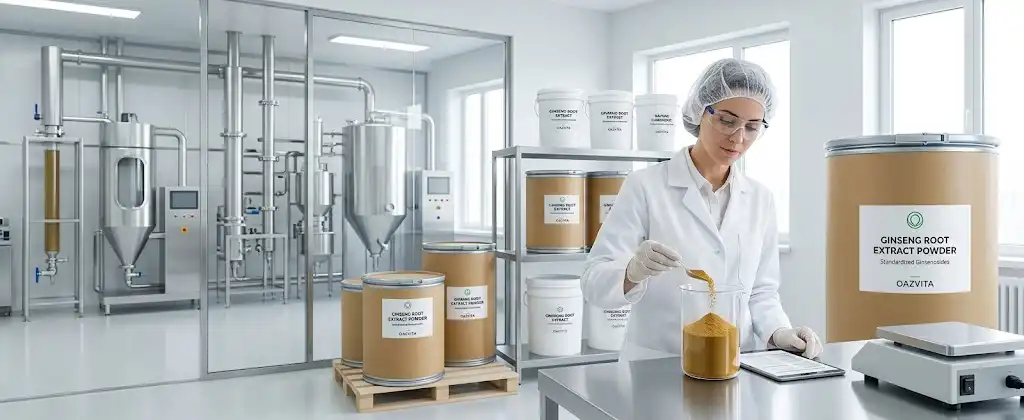
Ashwagandha, also known as Withania somnifera, is a herb that is used in the practice of Ayurvedic medicine. India and North Africa are the primary regions where it is cultivated. It is the withanolides, which are steroidal lactones, that are found in its roots that are responsible for its power to transform and quiet people down. In some regions of North America and East Asia, Panax ginseng C.A. Meyer is cultivated for a period of time ranging from four to six years. Ginsenosides may be extracted from plants by the use of solvents, and then they can be dried using sprays. These triterpene saponins, in particular Rb1, Rg1, and Re, are the most important components of regulated supplements at the moment.
Extraction Quality and Standardization
When a business buys from another business, the difference between a refined extract and raw root powder is very important. Most raw ashwagandha root has between 1% and 5% withanolide. Most high-quality extracts have between 5 and 35%. In the same way, raw ginseng root powder only has 1% to 3% ginsenosides, but HPLC or UV methods can be used to standardize ginseng root extract powder to get levels from 5% to 82%. Standardization gets rid of differences between batches, which is necessary for output that follows GMP.
Health Benefits Comparison: Ashwagandha vs Ginseng Root Extract Powder
Buying teams can choose ingredients that work with what the product says it will do and meet customer needs when they know the medical profile of each herb.
Ashwagandha's primary strengths include:
- Stress and cortisol reduction: Getting rid of worry and cortisol: A 2019 double-blind study in Medicine found that taking 240 mg of ashwagandha powder every day for 60 days greatly reduced both blood cortisol levels and stress levels.
- Sleep quality and hormonal support: Better sleep and higher testosterone levels in adult men: Studies show that it can help them sleep better and have higher testosterone levels, which makes it appealing for wellness and men's health lines.
- Muscle recovery: Ashwagandha KSM-66 extract is used in rehab products by sports nutrition makers because it has been shown to lower the signs of muscle damage caused by exercise.
Ginseng root extract's primary strengths include:
- Cognitive performance and mental clarity: Researchers have found that ginsenosides Rg1 and Rb1 change how acetylcholine messages are sent between neurons and lower signs of oxidative stress in brain tissue. This has an effect on cognitive performance and mental clarity.
- Immune regulation and anti-fatigue activity: Ginsenosides activate natural killer (NK) cells and manage the production of cytokines, supporting claims that a ginseng extract powder for supplement use will make the immune system stronger.
- Energy metabolism: Unlike stimulants, ginseng helps the mitochondria make ATP without overstimulating the adrenal glands. This makes it great for products that give you long-lasting energy.
These personalities don't clash; instead, they get along great. A lot of good supplement brands now have both herbs in one SKU so they can cover all adaptogens.
Market Solutions and Product Forms: Choosing the Best for Your Business
Powder, Capsule, or Extract: What Fits Your Line?
There is a wide variety of forms of both components that are available on the market. Some examples of these forms include bulk powder, capsule extract, water-soluble grains, and concentrates that may be used in the production of lollipops. Because it is so simple to combine after being spray-dried, ginseng root extract powder is an excellent ingredient for functional beverages, protein bars, and powdered tablets that include carbonation. Ashwagandha KSM-66 or Sensoril formats are more often used in tablet and candy forms since they have a bitter taste and need to be concealed in beverages. This is due to the fact that they are utilised.
Organic vs. Conventional: Pricing and Compliance
People in the United States and Europe who wish to purchase goods that have clean labelling and that do not contain genetically modified organisms (GMOs) may satisfy their desires by purchasing organic versions of these commodities, which cost 20–40% more than conventional versions. For firms that want to reach a large number of people, it is generally more beneficial to purchase regular GMP-grade Products that have been tested for the presence of pesticide residue. It is imperative that procurement teams always make sure to get a Certificate of Analysis (COA), Material Safety Data Sheet (MSDS), and Technical Data Sheet (TDS) prior to placing a significant purchase.
Procurement Insights: Sourcing High-Quality Ginseng Root Extract Powder and Ashwagandha
What to Look for in a Supplier
It takes more than just price comparison to find a reliable plant extract provider. When procurement teams look at bids, these are the main things they should look at:
- Certification stack: From the certification stack, you should give more weight to sellers who are approved by HACCP, ISO 22000, NSF, HALAL, the EU, and the USDA. These credentials show that the business is honest and allow them to sell their goods in North America and Europe.
- Third-party testing: To make sure the ginseng root extract powder is safe, reputable sellers provide independent lab tests to look for heavy metals, germs, pesticide residues, and ginsenoside assay.
- Traceability and raw material origin: The best places to get Panax ginseng are areas where it is grown in Korea and China. People in North America trust American ginseng, which is Panax quinquefolius grown in the United States.
- MOQ flexibility and lead time: Large and small brands can save money on testing costs by working with companies that have low minimum order sizes (1 kg) and quick wait times (1–5 working days).
All of these requirements lower the risk in the supply chain and make sure that the law will not bite when you try to sell your product in any country.
Making the Decision: Which Herb Is Better for Your Product Line?
What you choose to do will be influenced by a number of factors, including the product group that you are targeting, the rules and regulations that are in effect in your location, and the product group to which you belong.
If you want to assist people in dealing with stress, sleep, or their hormones, the withanolide profile of ashwagandha is a good scientific rationale to include it in your product. Since ancient times, people have been making use of a herb called ashwagandha. If you use ginseng root extract powder that has been standardised, you will be able to be assured that the ginsenoside levels in your energy beverages, cognitive vitamins, immunity mixtures, or functional sports nutrition are as high as they promise to be. The reason for this is that the industry as a whole practices standardisation of ginseng root extract powder.
Both adaptogens are increasingly being included in the formulas of high-end health enterprises in the United States. This trend is anticipated to continue in the near future. The "stack" method is likely to be well-liked by those persons who are well-informed and aware of the differences between the two plants. This is owing to the fact that it attracts greater attention to the product and enables the production of many health claims for a single stock-keeping unit (SKU). Additionally, the use of a KSM-66 ashwagandha extract in combination with a medium-level ginsenoside standardisation (10–20%) is very advantageous in terms of both the price and the benefits that it offers. At a price that is within your financial capabilities, you will be offered a multitude of adaptogenic benefits.
OAZVITA provides customers with a diverse selection of packaging options, a distribution network that is operational in any part of the world, and the capability to sell both ingredients with documentation that has been verified. This suggests that your brand may simply shift from being developed to being sold instantly, without the need to wait for products to be delivered. This is a significant advantage.
Conclusion
Ginseng and ashwagandha are both good for you, but neither is very good. Each meets a different need in business and medicine. A ginseng root extract powder with its ginsenoside-based profile is great for defense, energy, and brain function. Ashwagandha has a chemical called withanolide that helps with stress, healing, and keeping hormones in check. If people who work in procurement know about these differences, they can choose better places to buy things, make claims about their products that can be backed up, and lower their legal risk. The best pill brands won't choose between the two by 2025; they'll use both in their recipes.
FAQ
1. What dosage of ginseng extract is standard in supplement formulations?
In the majority of supplements that are available for purchase, the amount of standardised Panax ginseng root extract ranges from 100 mg to 400 mg. The percentage of ginsenosides found in these products ranges from 5 to 20 percent. In the pharmaceutical industry, higher testing (40–80%) is used for various applications. If you want to make a claim about your health, you need to be sure that the dosage is in accordance with the law.
2. Is it safe to combine ashwagandha and ginseng in one formula?
Based on what we know currently, it seems that the mixture is safe for persons who are in good health. Ginseng and ashwagandha are two examples of spices that do not all function in the same manner. Ginseng alters the characteristics of natural killer (NK) cells as well as the functioning of mitochondria, but ashwagandha has a greater impact on the HPA axis. Nevertheless, manufacturers must test the components in a variety of dosage forms to ensure that they are compatible with each one.
3. How do I verify the authenticity of ginseng extract in bulk shipments?
In addition to the COA, you should also request the results of the HPLC fingerprint analysis. It is expected that these reports will provide confirmation of the quantities of each ginsenoside (Rb1, Rg1, and Re). Be sure to review the TDS and MSDS documents that the vendor has provided for you. DNA barcoding is a novel method that may be used to ensure that the plants that you purchase are genuine.
4. What certifications should a reliable ginseng extract powder supplier hold?
Each and every run is required to have a certificate of analysis (COA) and be in compliance with GMP, ISO 22000, and HACCP. Having certification from the USDA Organic, EU Organic, or NSF helps your product seem more trustworthy to the authorities, which is important if you want to sell it in the United States and the European Union.
Partner With OAZVITA for Certified Ginseng Root Extract Powder
HACCP, ISO 22000, NSF, HALAL, EU Organic, and USDA Organic systems all approve of the ginseng root extract powder that OAZVITA sells. It is made from dried Panax ginseng roots. The minimum order size is 1 kg, and the wait time is 1–5 working days. You can also get free samples and full paperwork, such as COA, MSDS, and TDS. We can help you get your goods out there, from the concept stage to full-scale production. As a trusted ginseng root extract powder supplier, we ship with DHL, FedEx, and UPS all over the world. Send us an email at info@oazvita.com right now to get your free sample.
References
1. Chandrasekhar, K., Kapoor, J., & Anishetty, S. (2012). A prospective, randomized double-blind study of the efficacy of ashwagandha root extract. Indian Journal of Psychological Medicine, 34(3), 255–262.
2. Reay, J. L., Kennedy, D. O., & Scholey, A. B. (2005). Single doses of Panax ginseng reduce blood glucose levels and improve cognitive performance. Psychopharmacology, 179(2), 401–411.
3. Pratte, M. A., Nanavati, K. B., Young, V., & Morley, C. P. (2014). An alternative treatment for anxiety: A systematic review of human trial results reported for the Ayurvedic herb ashwagandha. Journal of Alternative and Complementary Medicine, 20(12), 901–908.
4. Kennedy, D. O., & Scholey, A. B. (2003). Ginseng: Potential for the enhancement of cognitive performance and mood. Pharmacology Biochemistry and Behavior, 75(3), 687–700.
5. Lopresti, A. L., Smith, S. J., Malvi, H., & Kodgule, R. (2019). An investigation into the stress-relieving and pharmacological actions of ashwagandha extract. Medicine, 98(37), e17186.
6. Baeg, I. H., & So, S. H. (2013). The world ginseng market and the ginseng (Korea). Journal of Ginseng Research, 37(1), 1–7.

Send Inquiry
Related Industry Knowledge
- How great kava powder is made: processing steps explained
- Pure MCT Powder or MCT Oil? Best Choice for Keto Dieters
- Bulk Tea Saponin Powder: Supply for Fertilizers
- Hericium Erinaceus Extract Powder: Benefits, Uses & Science Explained
- What Is Pure Fish Collagen Peptide Used For in the Beauty Industry?
- Asia-Pacific Outlook for High-Purity NAD+ Precursors
- Top Nicotinamide Riboside Chloride Powder Uses in Healthcare You Should Know in 2026
- China OEM Manufacturing of Premium Black Seed Oil Softgels for Export
- Bovine Collagen Peptides Trusted by Medical Nutrition Firms in France
- What Is Glutathione Powder and How Does It Work in Skincare?