
Kava Extract Powder: Grinds, Preparation, and Why Strength Varies
Sep 16, 2026
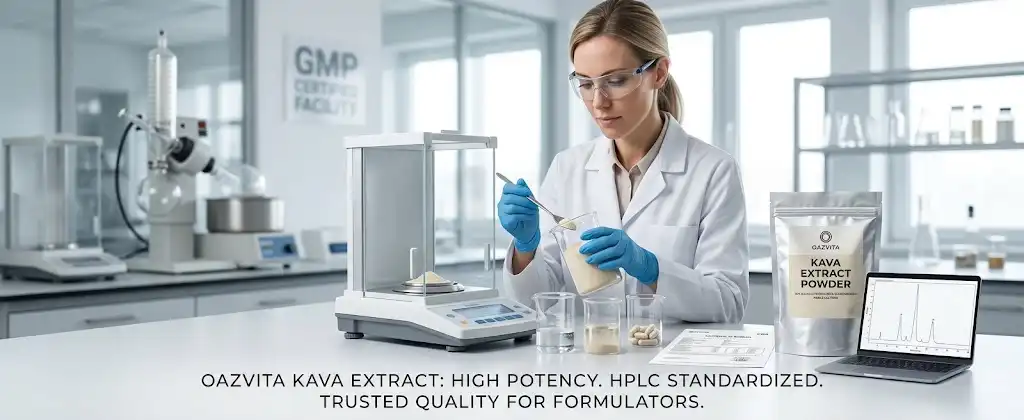
If you source botanical ingredients for supplement formulations, functional beverages, or wellness Products, understanding how kava extract powder behaves across different grinds, preparation methods, and production variables is genuinely essential. This guide walks through what separates a mediocre extract from a high-performing one — and why that distinction matters for your bottom line.
Understanding Kava Extract Powder: Origins, Types, and Properties
From Pacific Roots to Modern Formulation
For more than three thousand years, the plant known as Piper methysticum, often known as Kava, has played a significant role in the social and religious life of Vanuatu, Fiji, and Tonga. Indigenous people used to prepare it by first masticating, or pounding, the side roots, and then floating the substance in water. This was done in the past. The standardized Kava Extract Powder that is utilized in health goods now is based on the same root system that was employed in the past, particularly the dried rhizomes and lateral roots of Noble kinds.
The transition from raw root to concentrated powder was made for a specific purpose because of this. It is difficult to maintain dose control on a wide scale when using traditional grinding since it contains fibrous plant materials that have varying quantities of kavalactone. Through the use of a standardized extract, which provides precise levels of kavalactone, typically ranging from thirty percent to seventy percent according to HPLC analysis, this issue may be resolved.
Kavalactones and the Chemotype System
Every kava product has a chemotype, which is a six-digit number that rates the amount of the six primary kavalactones. These kavalactones are desmethoxyyangonin, dihydrokavain, yangonin, kavain, dihydromethysticin, and methysticin. In premium Noble extracts, the emphasis is placed on chemotypes that begin with "2-4" (dihydrokavain and kavain dominating), which are known to help relax muscles and settle the mind without causing you to feel drowsy for an extended period of time.
In the case of B2B formulators, this is of immediate significance. If you have a chemotype that is high in dihydromethysticin, you will experience fatigue for an extended period of time. The use of this as a sleep aid is OK, but it is not recommended for use as a recovery supplement or as a functional drink during the day.
Preparation of Kava Extract Powder: Best Practices for Optimal Use
How Grind Size Affects Commercial Processing
The grind size has a measurable effect on how well the oil is extracted. Fine-milled powder, which is usually 80 to 120 mesh, has a bigger surface area, which makes it easier for kavalactone to be released when it is processed with a solvent or water. For making traditional drinks, coarser grinds work better because the slower spread makes the start profile softer.
Fine-milled standardized extract mixes easily and doesn't clump when used to make capsules or tablets. Spray-drying with cyclodextrin or maltodextrin carriers makes water-dispersible grades of kavalactones, which overcome the natural hydrophobicity of kavalactones without affecting their solubility.
Commercial Preparation Methods
When making kava on an industrial scale, you need to pay attention to both the method and the material. For B2B producers, these planning methods for kava extract powder are the most useful:
- Aqueous extraction (traditional-inspired): Effective for beverage-grade powders. Kavalactones are mixed with water by mechanically stirring them. It has a moderate yield and a cleaner flavor, so it can be used in functional teas and ready-to-drink wellness products.
- Ethanol extraction leads to higher kavalactone amounts and more uniform standardization. The amount of residual liquid must follow the rules set by ICH Q3C. It works best for pill fills, tinctures, and soft creams that are very concentrated.
- Supercritical CO₂ extraction gives you the purest extract with the least amount of heat-sensitive compound breakdown. It keeps the purity of the chemotype better than solvent-based methods and doesn't leave behind any liquid residue, which makes it perfect for clean-label formulations.
Each way can be used in the real world. The best choice depends on the format of your final product, the regulations in your market, and the type of people you want to buy it. The recommended dosage for standardized extract is between 100 mg and 250 mg of total kavalactones per dose. However, the exact inclusion rate depends on how the extract is made.
Why Strength Varies: Factors Influencing Kava Extract Powder Quality
Raw Material Origin and Cultivar Selection
Changes in Kava Extract Powder potency start long before it is extracted. The location of the roots, the type of soil, the time of harvest, and the variety classification all have a direct effect on the amount of kavalactone that is produced. Noble cultivars grown in the volcanic soils of Vanuatu tend to have higher levels of kavalactone than material from other areas. These are the only types of plants that are suggested for industrial use.
The most dangerous risk is Tudei (Two-Day) kava. These types that aren't Noble have a lot of Flavokawain B, a chemical that has been linked to liver damage. Reliable sellers keep strict records that show they only buy from Noble. A supplier that can't prove the identity of a cultivar at the root level is a procurement liability.
Extraction Method, Storage, and Shelf Stability
Besides the quality of the raw materials, the process of extraction also affects whether the potency is retained or lost. When it comes to strength and consistency, supercritical CO₂ and pharmaceutical-grade ethanol extraction always do better than water-only methods. But even a carefully removed powder can break down quickly if it is not handled properly.
UV light, heat, and oxidation can damage kavalactones. Bulk extract powder should be kept in clear, vacuum-sealed containers that are cool and dry, ideally below 25°C and with a relative humidity below 60%. At OAZVITA, we guarantee that our awa extract will stay fresh for 24 months when stored in this way, and we back this up with COA, MSDS, and TDS paperwork for each batch.
Comparison and Procurement Considerations for Kava Extract Powder
Extract Powder vs. Other Kava Formats
Procurement teams often ask how concentrated high-potency kava root extract stacks up against raw root powder, tinctures, or kava wine when they are looking at their options for sourcing. The differences are actually important:
Raw root powder needs a lot of it (usually 10–15g per serving) and gives different amounts of kavalactone. Tinctures are easier to use than liquids, but they make shelf life and labeling more difficult. Kava wine is hard to spread because it is only available in a few places. Standardized kava root extract powder, on the other hand, controls and measures the active ingredient's release and easily mixes into useful drinks, pills, gummies, and powders.
Organic vs. Conventional and Supplier Evaluation Criteria
Organic approval has direct business value for nutricosmetic brands and clean-label supplement lines. Both the USDA Organic and the EU Organic have certified OAZVITA's kava extract as organic. This means that it meets the tracking standards that more and more markets are looking for.
These things should be at the center of your due diligence process when looking for a kava extract supplier: proof of purity through third-party HPLC testing, cultivar documentation showing Noble-only sourcing, and a full compliance portfolio. OAZVITA has certificates for HACCP, ISO 22000, NSF, HALAL, EU Organic, and USDA Organic. They offer COA, MSDS, and TDS for each batch, and the minimum order quantity (MOQ) is 1 kg. Lead times are between 1 and 5 working days.
Ensuring Safety and Compliance with Kava Extract Powder
Regulatory Landscape and Quality Assurance
Everywhere in the world, kava is subject to a convoluted set of regulations. In the United States, it is marketed as a food supplement in accordance with the regulations of the DSHEA. In some member states of the European Union, the restriction that had previously been placed on kava products was removed, provided that the ingredients could only come from the noble root. Certain product warnings are required by both the Therapeutic Goods Administration (TGA) in Australia and Health Canada in Canada.
With regard to business-to-business (B2B) customers, being prepared for compliance involves only dealing with suppliers whose documentation is capable of withstanding legal examination in the market that you are attempting to penetrate. In the case of heavy metals, microbiological limitations, Flavokawain B levels (which should be kept below 0.1%), and residual solvents, it is advised that third-party laboratory testing be conducted. In terms of acquiring your Kava Extract Powder, you should not consider it a possibility.
The product's integrity is also preserved by ensuring that it is handled in a secure manner throughout the shipping and packing processes. When it comes to bulk packages, it is recommended to utilize inner liners that act as moisture barriers. Additionally, selecting the appropriate carrier may assist in controlling the amount of exposure to high temperatures that occurs during transportation.
Conclusion
Purchasing teams can better judge kava extract powder sources when they know how grinding, preparation methods, and quality factors affect each other. The things that make an ingredient reliable or irregular can be found, and they are worth finding out. These include being able to connect back to the cultivar, keeping records of the chemotype, and being clear about the extraction method. The foundation of the extract determines how well it works, whether it's in a functional drink, a sleep aid, or a clean-label wellness capsule.
FAQ
1. How quickly do kavalactone effects become active after ingestion?
When it starts working depends on how it's taken and whether it's with food. When taken as a pill, the results usually show up 20 to 40 minutes later. Because they are better at getting into oral surfaces, water-dispersible grades in drinks may work faster. Chemotype is also important; extracts that are high in kavain tend to work faster than those that are high in dihydromethysticin.
2. Is standardized extract powder stronger than raw root powder?
A lot more than that. The average amount of kavalactone in raw root powder is 3–10%, and the consistency can vary. Standardized Kava Extract Powder gives 30–70% kavalactones per measured dose, which cuts down on the amount needed and makes the mixture more accurate. It is clear that the extract form is more reliable for commercial production where exact dosage is necessary.
3. What should I verify before finalizing a kava extract supplier?
Make sure there is proof of the Noble cultivar, a Flavokawain B content of less than 0.1%, an HPLC-verified kavalactone percentage, and all the necessary GMP, ISO, and organic approvals. For each batch of production, ask for a COA and an MSDS. If a supplier refuses to share this information, buyers should be worried.
Source Your Next Batch with OAZVITA — Trusted Kava Extract Powder Supplier
OAZVITA exports more than USD 15 million worth of approved awa extract every year to brands in North America, Europe, Asia, and the Middle East. They have a proven on-time delivery rate of over 99%. We sell kava extract powder that is certified organic by the EU, HACCP, ISO 22000, NSF, HALAL, and the USDA. If you'd like a free sample or full batch paperwork, just let us know. Flexible packaging starts at 1 kg and can be shipped by DHL, FedEx, UPS, air, or sea. To get a price quote for a sample or a lot of products, email us at info@oazvita.com.
References
1. Lebot, V., Merlin, M., & Lindstrom, L. (1997). Kava: The Pacific Elixir. Healing Arts Press.
2. Sarris, J., LaPorte, E., & Schweitzer, I. (2011). "Kava: A Comprehensive Review of Efficacy, Safety, and Psychopharmacology." Australian & New Zealand Journal of Psychiatry, 45(1), 27–35.
3. Bone, K., & Mills, S. (2013). Principles and Practice of Phytotherapy. Churchill Livingstone. https://www.elsevier.com/books/principles-and-practice-of-phytotherapy/bone/978-0-443-06992-5
4. Lebot, V., & Lévesque, J. (1989). "The Origin and Distribution of Kava (Piper methysticum Forst. f., Piperaceae): A Phytochemical Approach." Allertonia, 5(2), 223–280.
5. European Medicines Agency. (2014). Assessment Report on Piper methysticum G. Forst., Rhizoma. EMA/HMPC.
6. Teschke, R., Sarris, J., & Lebot, V. (2013). "Kava Hepatotoxicity Solution: A Six-Point Plan for New Kava Standardization." Phytomedicine, 20(5), 383–391.

Send Inquiry

Related Industry Knowledge
- Rhodiola Rosea: How to Take It for Best Results
- How Yucca Extract Powder Helps Reduce Ammonia In Livestock Feed
- The Rise & Benefits of Berberine
- Bulk Tea Saponin Powder: Supply for Fertilizers
- Hydrolyzed Keratin: Benefits, Uses, More
- Blue Copper Peptide Powder Skincare Routine: How to Layer Peptides
- Hydrolyzed Keratin: The Secret Sauce for Happy Hair
- Applications of Vitamin D3 Powder Bulk
- Do Chewable Probiotic Gummies Really Work? The Sweet Truth About Chewy Gut Health Supplements
- Pure NMN powder application: longevity, metabolism and fitness