
D-Mannose for UTIs: What Midlife Women Should Know
Nov 04, 2026
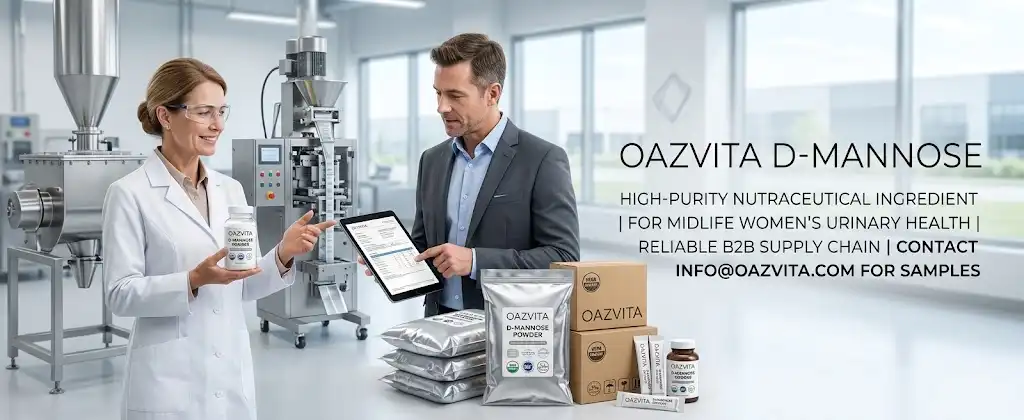
Women over 40 face a measurably higher risk of recurrent urinary tract infections as estrogen levels decline and urinary tract tissue changes. D-mannose powder — a naturally occurring simple sugar derived from fruits like cranberries and birch wood — has emerged as one of the most discussed non-antibiotic urinary health ingredients in the nutraceutical market. This guide breaks down what brands, OEMs, and distributors need to know about sourcing and formulating with high-purity D-mannose, and why this ingredient is gaining serious commercial traction in the midlife women's wellness category.
Understanding D-Mannose Powder and Its Role in UTI Prevention
What Is D-Mannose Powder?
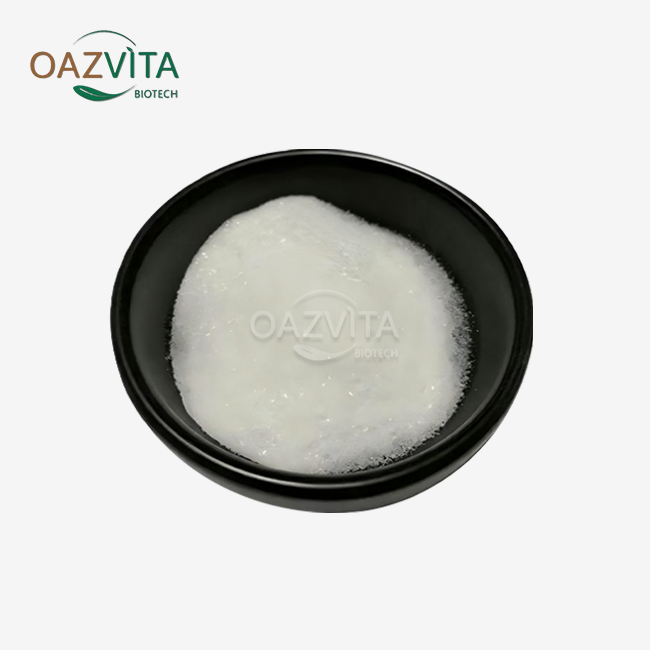
Its CAS number is 3458-28-4, and it is the C-2 epimer of glucose. This powder is also known as D-Mannopyranose powder. To make it for business use, enzymes are used to convert hemicellulose that comes from non-GMO corn or birch wood. The end result is a very low-glycemic powder that is white and crystalline. It is about 60% as sweet as sucrose. This is very helpful for people whose metabolisms are fragile.
How It Works Against E. coli
It's easy to understand: D-mannose attaches to FimH lectins on the fimbriae of type 1 piliated E. coli. E. coli can't stick to the cells that line the inside of the bladder because of this other binding. E. coli is responsible for about 90% of UTIs, and when people eat D-mannose, it goes straight into their urine without changing form. In other words, it gets to the place where the action is happening quickly.
Why Midlife Women Are a Priority Market
The loss of estrogen during menopause makes the tissue in the urinary tract thinner. This changes the microbiome in the area, which makes it easier for uropathogens to stick to the tissue. There was a study in 2014 in the World Journal of Urology that showed D-mannose powder greatly decreased the number of recurrent UTIs compared to a control group. This ingredient meets a need that brands for women 40 to 65 years old knew they had but hadn't been able to meet.
Safety, Dosage, and Side Effects of D-Mannose Powder
Clinical Safety Profile
Professionals have always found that D-mannose is safe for healthy people to use. Because it skips over regular glucose processing, it doesn't raise blood sugar very much. In other words, it can be mixed with Products for women who want to take care of their urinary health and lose weight or improve the health of their metabolism.
Recommended Dosage Ranges
A lot of research has shown that 1.5 to 2 grams a day can help prevent an episode and up to 3 grams a day during an active episode, but this should be split into two or three servings. This works well with single-serve stick packs that come in powder sachets, which are becoming more and more popular among people over 40. When it comes to capsules, each one usually has 500 mg, and two capsules are a meal.
Side Effects and Contraindications
If you use D-mannose in small amounts, it's safe. Some people have had mild gas or loose stools when they took higher doses. Brands should make it clear that supplements shouldn't be taken by people who have rare problems with how their bodies use mannose. OEM formulators who want to make goods for people with or close to diabetes should put clear directions on the labels and talk to regulatory counsel because each market has its own rules about what labels can say.
Comparing D-Mannose Powder with Other UTI Solutions
D-Mannose vs. Cranberry Supplements
PACs in cranberries also stop bacteria from sticking together, but they target a wider range of bacteria. D-mannose, available as mannose raw powder, goes straight for the spot on E. coli where FimH binds, which makes the process more accurate. A lot of good formulas have both: D-mannose to quickly break down adhesions and cranberry extract to help the urinary tract in general.
D-Mannose vs. Antibiotic Prophylaxis
Resistance to antibiotics is a problem that is getting worse for health around the world. The CDC says that every year more than 2.8 million Americans get illnesses that can't be cured with antibiotics. Urinary health products that say they are antibiotic-free choices are part of a market trend that is being pushed forward by both customers and the government. People who care about their health will like that D-mannose doesn't change the gut microbiome.
Powder vs. Capsule Format for Brands
Each style has its own pros and cons. You can use more powder per serving, and it mixes well with vitamin C, plant extracts, or probiotics. With pills, it's easy to know how much to take, and they seem to stay stable on the shelf longer. If a company wants to reach women in their 40s and 50s, they might want to try both types of ads to see what works best. Because OAZVITA's MOQ is variable and starts at 1 kg, this can be done without too much inventory risk.
Procurement Insights – How to Source High-Quality D-Mannose Powder
Certifications That Matter
When you buy a lot of D-mannose, you need to make sure it is certified. Organic suppliers have been approved by HACCP, ISO 22000, NSF, HALAL, the EU, and the USDA. It is best to find those. This proof shows that the item meets the basic needs for the European and North American markets. All of these things are in OAZVITA's D-mannose powder, which is 99% pure by HPLC and has a 30–80 mesh specification. Each batch comes with paperwork for COA, MSDS, and TDS.
Quality Parameters B2B Buyers Should Verify
Before making a big order, procurement teams should make sure they have the following things:
- Purity level: 99% HPLC minimum for nutraceutical-grade applications
- Particle size: 30–80 mesh for encapsulation and sachet compatibility
- Heavy metal profile: Must comply with USP or EU Pharmacopoeia limits
- Endotoxin levels: Critical for products destined for clinical nutrition applications
- Moisture and bulk density: Directly impact flowability in high-speed encapsulation lines
- The particle size (30–80 mesh) is good for bags and packaging.
- Heavy metal profile: Must be within the limits set by the USP or the EU Pharmacopeia
- Levels of endotoxin are important for products that will be used in clinical nutrition.
- High-speed sealing lines can flow better when there is less moisture and more mass.
Supplier Reliability and Lead Times
Consistency in the supply chain, not just licenses, is what makes long-term buying work. For buyers looking for D-mannose powder in stock, OAZVITA offers shipping by air, sea, DHL, FedEx, UPS, and airmail post. You can expect to wait one to five working days for your package to arrive, and more than 99% of them do. Simple storage rules apply: keep it cool and dry, and it will last 24 months. Some buyers can get free samples and all the technical information they need. This makes the first test quick and low-risk.
Maximizing UTI Prevention with D-Mannose – Practical Applications and Case Studies
Integration with Complementary Ingredients
D-mannose performs well in multi-ingredient urinary health formulas. Supplement brands have successfully combined it with:
- Probiotics (specifically Lactobacillus rhamnosus and L. reuteri) to address microbiome-level urinary defense
- Cranberry extract (PAC-standardized) for broader E. coli anti-adhesion synergy
- Vitamin C to maintain urinary pH and support tissue health
These ingredient stacks align with the evidence base and resonate with midlife women seeking science-backed daily wellness routines.
Real-World Formulation Applications
Functional beverage producers have used D-mannose's stability in acidic environments (pH 3.0–5.0) to create citrus-flavored urinary health drinks. Its heat stability up to approximately 130°C allows integration into gummy manufacturing when added at the cooling phase to avoid browning reactions. Dietary supplement brands have launched stick pack sachets combining D-mannose with cranberry and probiotics — a format seeing consistent growth in the women's wellness segment across U.S. retail channels.
Market Positioning for Midlife Women's Brands
The 40–65 female demographic actively researches supplement ingredients before purchasing. Brands that lead with mechanism transparency — explaining how D-mannose targets E. coli specifically — tend to build stronger repeat purchase behavior than those relying solely on lifestyle messaging. This presents an opportunity for distributors and private label buyers to differentiate on education-driven positioning.
Conclusion
D-mannose powder is an ingredient that has been studied a lot and is already used in the market by companies that want to help women in middle age keep their urinary tracts healthy. It is an important ingredient for product development because it kills E. coli as it should, is very safe, can be used in many powders and capsules, and is becoming more and more popular with customers. Getting pharmaceutical-grade D-mannose from a certified source with a steady supply and quick turnaround has a direct effect on both the quality of the product and how competitive it is in the market. This is especially true for B2B buyers who are starting a new product line or making a current one bigger.
Frequently Asked Questions
1. How quickly does D-mannose take effect?
Most clinical data suggest urinary levels of D-mannose peak within 30 minutes of ingestion, with sustained presence for several hours. For prophylactic use, consistent daily intake over several weeks produces the most documented benefit.
2. Can D-mannose be used alongside antibiotics?
Yes. D-mannose does not interfere with antibiotic activity. Some clinical protocols include D-mannose alongside a short antibiotic course for acute cases, then continue D-mannose alone for ongoing prevention.
3. What is the difference between organic and synthetic D-mannose?
Chemically, the molecule is identical. Organic-certified D-mannose (available from OAZVITA) carries market premium potential, particularly in the U.S. natural products channel. Corn-derived, enzymatically processed D-mannose remains the industry standard for cost-efficiency at scale.
4. Is D-mannose safe for women with blood sugar concerns?
Because approximately 90% of ingested D-mannose passes directly into urine without significant metabolic conversion, its glycemic impact is minimal. Still, individuals with diagnosed metabolic conditions should seek guidance before introducing new supplements.
Partner with OAZVITA – Your Trusted D-Mannose Powder Supplier
OAZVITA sells D-mannose powder that is pharmaceutical-grade (99% HPLC, 30–80 mesh). It has all the right licenses, like HACCP, ISO 22000, NSF, HALAL, EU Organic, USDA Organic, COA, MSDS, and TDS. Our company makes D-mannose powder, and you can trust us. We give away free samples, have flexible MOQs starting at 1 kg, can help with OEM/ODM formulations, ship products all over the world, and have lead times of 1–5 days. Our team is ready to help you find the goods you need, whether you need to make more or get into a new market. Send us an email at info@oazvita.com right now to get your free sample.
References
1. Kranjčec, B., Papeš, D., & Altarac, S. — World Journal of Urology, 2014.
2. Schaeffer, A. J., & Nicolle, L. E. — New England Journal of Medicine, 2016.
3. Ofek, I., Hasty, D. L., & Sharon, N. — FEMS Immunology & Medical Microbiology, 2003.
4. Stapleton, A. E. — Infectious Disease Clinics of North America, 2003.
5. Gupta, K., Trautner, B. W. — JAMA, 2014.
6. Hickling, D. R., & Nitti, V. W. — Reviews in Urology, 2013.

Send Inquiry
Related Industry Knowledge
- Maca Powder: Benefits, Taste, and How To Use It
- The Complete Guide To Organic Ashwagandha Extract And The Scientific Studies Proving Its Benefits
- Tea Saponin Is A Smart Choice For Eco-Friendly Fertilizer
- Can I take berberine hcl every day?
- Hyaluronic Acid Powder: How to Mix, Make & Use for the Best Results for Your Skin
- How purity and certification define the best creatine monohydrate powder?
- Cordyceps Sinensis Extract Powder: A Guide to Its Benefits
- What are Shilajit drops used for?
- China OEM Capabilities in Apple Cider Vinegar Energy Gummies Production
- What makes pure NMN powder a standout NAD+ precursor?